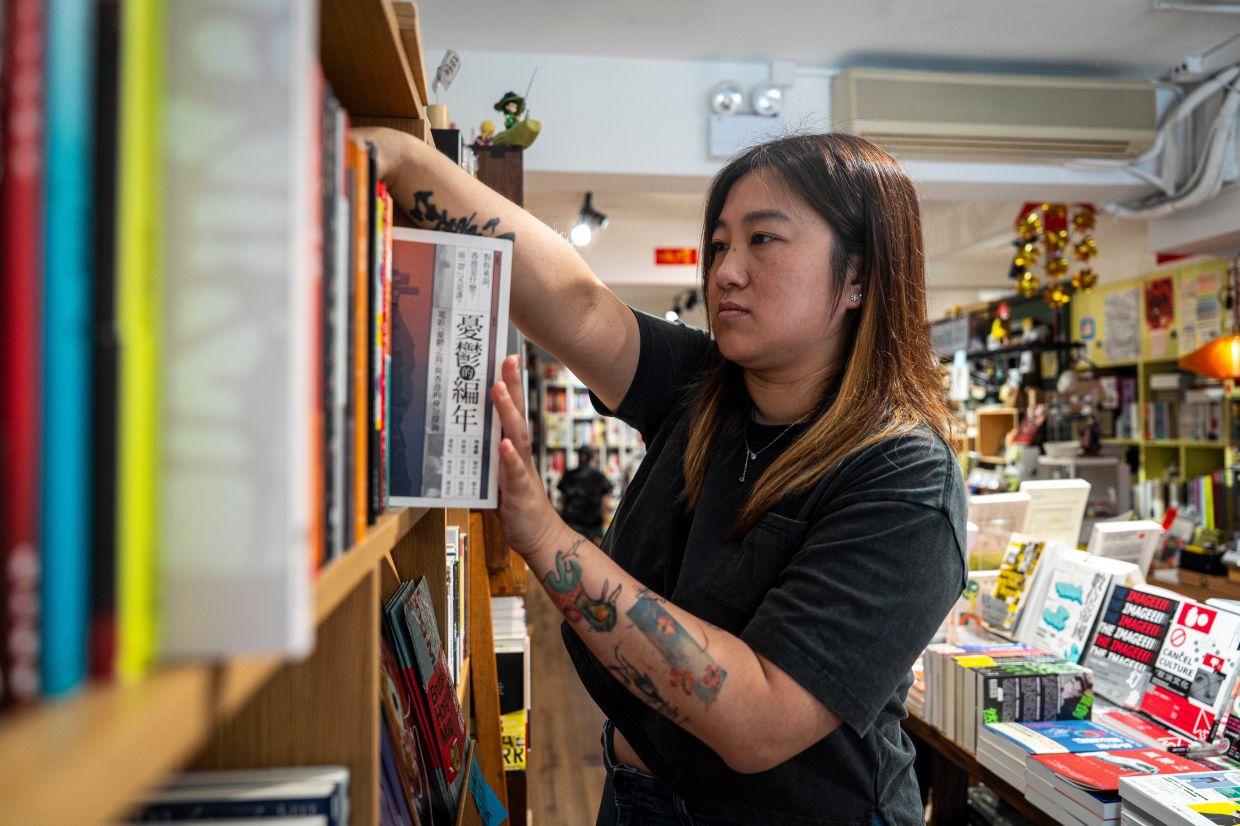
Hong Kong police have moved to detain two individuals on suspicion of selling materials deemed seditious and accepting financial support from overseas political groups, operating under powers granted by the territory's 2024 national security legislation. The arrests, made on Wednesday 24 June, represent another significant enforcement action targeting the remaining space for political dissent in the former British colony. Local media sources, including Ming Pao, have identified one of those detained as Leticia Wong, proprietor of Hunter Bookstore, though official police statements have refrained from releasing names. Wong, a former district councillor with a track record of pro-democracy advocacy, has emerged as a notable figure continuing to speak out even as prominent activists have faced imprisonment following the 2019 pro-democracy protests that shook the territory.
The arrests carry particular symbolic weight given their timing, arriving just seven days before Hong Kong commemorates the 29th anniversary of its handover from British to Chinese sovereignty in 1997. For international observers and critics of Beijing's governance approach, the detention underscores what they characterise as an accelerating erosion of the civil liberties framework that underpinned the "one country, two systems" arrangement established during the transition. The period since the imposition of the national security law has witnessed mounting restrictions on the types of publications that can be openly sold, the events that can be held in public spaces, and the fundraising mechanisms available to civil society organisations. Wong's bookstore, situated in the Sham Shui Po district, had already become a focal point for official scrutiny and pressure in preceding months.
According to the government statement released Thursday morning, the two detained individuals managed the shop where authorities allege seditious items were displayed and publications with seditious content were sold. The authorities claim these materials included items designed to incite hatred against Hong Kong's government, judicial system, and law enforcement institutions. Beyond the publishing concerns, officials assert that the pair received remittances originating from foreign political organisations, a charge that carries separate legal implications under Hong Kong's asset-proceeds legislation. The government's formal statement, however, did not specify which particular publications or external organisations formed the basis of the allegations, leaving key details of the case obscure for public scrutiny.
Wong's bookstore had already become a lightning rod for government attention well before this week's arrests. In March of this year, police detained the owner and employees of another independent bookshop, with reports suggesting the action related to the sale of seditious materials, specifically including a biography of jailed pro-democracy figure Jimmy Lai. Those individuals were subsequently released on bail, though the case remains unresolved. The Lai biography had become a flashpoint for political controversy, with pro-Beijing media outlets criticising an independent book fair held at Wong's store for possessing undertones of what they termed "soft resistance" to the government. This framing demonstrates how authorities and their allied media have expanded the category of what constitutes seditious material to encompass not merely explicit political calls but also the circulation of biographical works about imprisoned activists.
Wong has previously documented what she characterised as systematic pressure from government authorities targeting her business operations. During an interview conducted last year with international news agencies, she detailed a pattern of official harassment, noting that government authorities had taken measures against her shop on 92 separate occasions between July 2022 and June 2025. These interventions ranged from unannounced inspections to conspicuous police patrols positioned outside the premises and formal letters warning of alleged regulatory violations. Beyond direct government action, Wong also recounted receiving an anonymous letter that prompted an organisation planning to hold an event at her bookstore to cancel the reservation, further constraining the venue's capacity to host public activities. This accumulated pattern of obstruction existed before the formal arrests, suggesting a deliberate campaign to restrict the bookstore's operations.
The national security law under which the arrests were made represents a watershed moment in Hong Kong's recent governance trajectory. Implemented in 2024, the legislation grants authorities expansive powers to investigate and prosecute conduct classified as seditious, with definitions sufficiently broad to encompass publishing decisions and fundraising arrangements that would likely receive protection under the international human rights standards Hong Kong previously aspired to maintain. The Hong Kong government has consistently maintained that both the national security law and its predecessor legislation are essential safeguards for the territory's stability and prosperity. Officials argue that freedom of speech remains robustly protected within the city, assertions that face mounting scepticism from international human rights organisations, which have documented a contracting space for political expression and activism.
For regional observers across Southeast Asia, the Hong Kong developments carry implications extending beyond the territory's immediate circumstances. Malaysia and other countries in the region contend with their own questions about balancing security concerns with civil liberties protections. The Hong Kong model demonstrates one approach to these tensions, though critics argue it has fundamentally tilted the balance toward security at the expense of open discourse. Independent bookstores and publishers throughout the region have watched Hong Kong's trajectory with concern, recognising that the expansion of sedition laws and restrictions on what constitutes acceptable publishing could establish precedents influencing governance approaches elsewhere.
The bookstore sector specifically has become emblematic of broader struggles over information flows and intellectual space in Hong Kong. That such modest commercial enterprises have become focal points for law enforcement resources suggests authorities view independent publishing and book distribution networks as significant vectors for political messaging. This perspective reflects a more expansive security doctrine that treats cultural and intellectual work as politically consequential in ways that may not align with conventional understandings of what constitutes genuine security threats. The targeting of bookstores and booksellers also disproportionately affects individuals like Wong who have limited resources to mount sustained legal defences, effectively concentrating power in the hands of state authorities.
The case remains in its early stages, with formal charges not yet filed and the detained individuals's legal representation and status still uncertain. The government statement's refusal to disclose identifying information about those arrested or specify which publications triggered the investigation leaves significant dimensions of the case opaque to public understanding. This opacity itself reflects the operational style of contemporary Hong Kong security enforcement, where detailed public justifications for enforcement actions have become less common. For Wong and others engaged in independent publishing, the uncertainty surrounding legal standards and enforcement priorities compounds the practical difficulties of operating bookstores in the current environment. The distinction between protected speech and prohibited sedition has become increasingly subjective and difficult for operators to navigate.
The arrests also occur within a broader context of accelerating change in Hong Kong's political and legal landscape. The territory that once served as a regional hub for publishing and intellectual exchange has witnessed a substantial emigration of writers, publishers, and intellectuals who view the security environment as incompatible with their professional work. This intellectual and cultural exodus represents a long-term loss to Hong Kong's international standing and soft power. For Malaysia and other Southeast Asian countries assessing their own governance trajectories, the Hong Kong example offers cautionary lessons about how security legislation, once enacted, tends toward expansive rather than constrained application over time. The experience suggests that frameworks initially justified as necessary responses to specific security concerns can become mechanisms for suppressing legitimate political discourse and cultural expression that falls outside narrow acceptable parameters defined by authorities.

