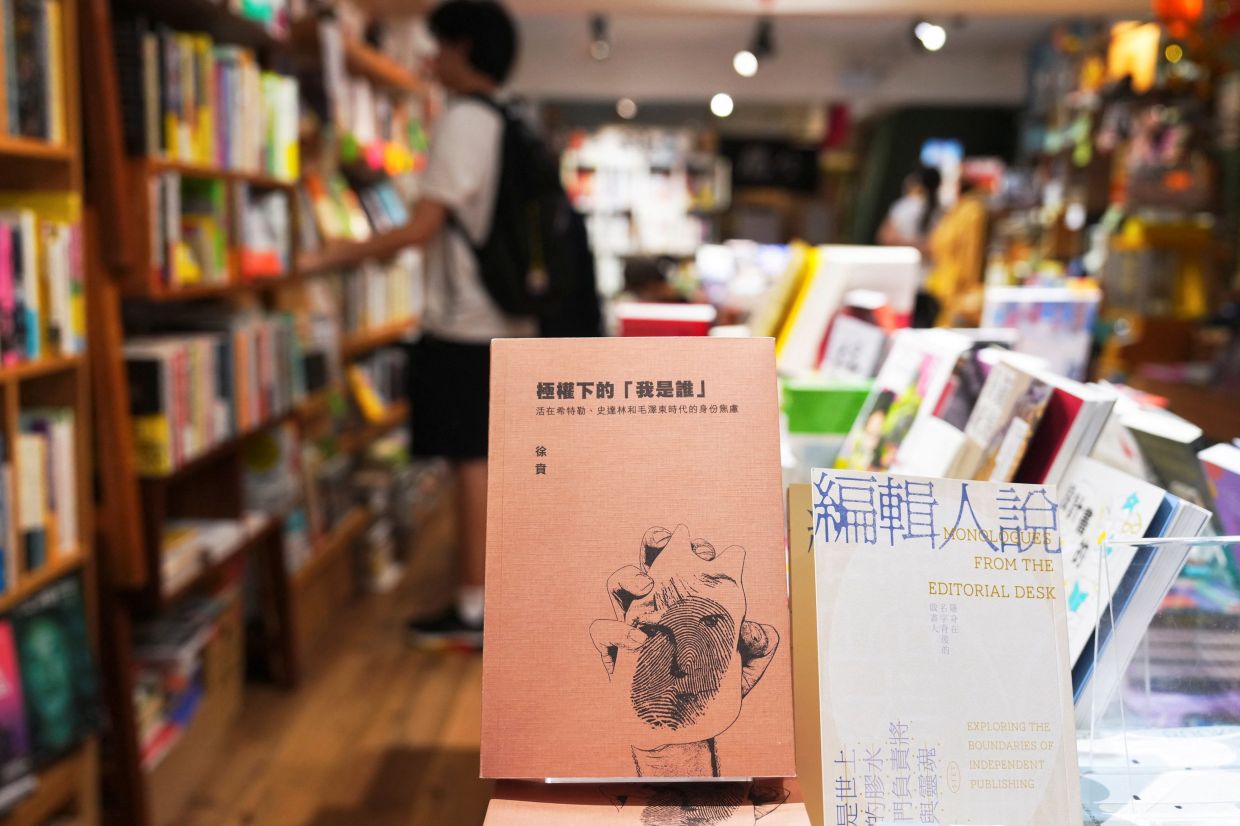
Hong Kong's chief security official has instructed booksellers to take responsibility for ensuring that titles on their shelves do not threaten national security, intensifying pressure on the city's publishing sector just a day after police arrested five individuals connected to two independent bookstores. The warning underscores mounting concerns among publishers, booksellers, and international observers about the increasingly murky boundaries between permitted and prohibited content under Hong Kong's national security legislation.
Secretary for Security Chris Tang drew parallels between bookselling and food retail during remarks made to reporters at the legislative building on Thursday. He suggested that just as food vendors must guarantee their products are safe and non-toxic, booksellers carry a parallel obligation to prevent the distribution of materials that could endanger national security. Tang's analogy, however, glossed over a critical distinction: the definition of "poisonous" content remains contested and fluid, leaving booksellers navigating an uncertain landscape where the boundaries shift without clear official guidance.
Wednesday's police operation marked the third wave of arrests targeting independent bookstores within four months, intensifying what observers describe as a systematic squeeze on Hong Kong's historically vibrant literary culture. Officers conducted raids on Have A Nice Stay, established by former journalists, and Greenfield Book Store, an established fixture in the city's reading community. Police alleged that the five arrested individuals had displayed and sold seditious materials intended to stir up hatred against Hong Kong's government, judiciary, and law enforcement agencies—charges that remain vague and subject to interpretation.
When questioned whether authorities would publish a formal list of prohibited books, Tang rejected the approach, arguing that such a compilation would undermine effective law enforcement. He contended that specifying which titles "intend to harm the country" through an official registry would essentially provide a roadmap for circumventing restrictions. This refusal to delineate prohibited content has left booksellers in an untenable position: they face legal liability for stocking problematic materials yet cannot definitively determine what qualifies as problematic without reference to formal guidance.
The closure of Have A Nice Stay exemplifies the chilling effect of this regulatory ambiguity. The bookstore announced it would shut down on August 30, citing financial pressures and an "elusive red line" as contributing factors. In a social media statement, management acknowledged their inability to review every single volume in their inventory and admitted lacking the capacity to make reliable judgments about which titles might be deemed "problematic" under current enforcement standards. This admission reflects a broader crisis of confidence affecting Hong Kong's independent publishing ecosystem.
Previous crackdowns have targeted bookstores for stocking politically sensitive titles. In March, police arrested staff and the owner of Book Punch, a popular independent retailer, on suspicion of selling seditious publications. Among the confiscated materials was a biography of Jimmy Lai, the pro-democracy media magnate who was convicted and sentenced to 20 years imprisonment in a national security case. The inclusion of Lai's biography among prohibited materials signals that even historical accounts of prominent political figures now face scrutiny under expanded security legislation.
June saw yet another enforcement action when Hong Kong police arrested two booksellers suspected of distributing seditious publications and receiving financial support from foreign political organizations. These successive operations suggest a coordinated campaign to reshape the city's literary landscape, with authorities prioritizing political control over intellectual freedom. The pattern demonstrates that independent bookstores have become focal points for regulatory pressure, with each raid serving as a warning to the broader publishing community.
Taiwan, which positions itself as a democratic alternative to mainland China's political system, has taken note of Hong Kong's deteriorating press freedom. President Lai Ching-te publicly commented on the situation through a Facebook post, emphasizing the critical role that independent bookstores play in preserving free thought and intellectual diversity. His intervention reflects broader regional concern that Hong Kong's trajectory foreshadows potential threats to press freedom across the Indo-Pacific region, particularly for island democracies or semi-autonomous territories within China's sphere of influence.
Taiwan's own publishing sector has felt the reverberations of Hong Kong's security crackdown. According to Liang Wen-chieh, deputy minister of Taiwan's Mainland Affairs Council, Taiwanese publishers have begun engaging in self-censorship when selecting titles for Hong Kong book fairs. Publishers are making conservative choices about which works to exhibit in Hong Kong, fearing that controversial titles—even those legal in Taiwan—might trigger investigations or confiscation. This voluntary restriction of cross-strait cultural exchange represents a de facto extension of mainland censorship practices into Taiwan's democratic publishing sphere.
The implications for Malaysia and Southeast Asia warrant careful consideration. Regional publishers and booksellers increasingly recognize that enforcement actions in Hong Kong may establish precedents or signal shifting attitudes toward politically sensitive content across Asia-Pacific markets. Malaysian publishers, who operate in a media environment already subject to various regulatory restrictions, must now assess how Hong Kong's trajectory might influence regulatory approaches in their own jurisdiction. The concept of an "elusive red line" that booksellers cannot reliably perceive mirrors concerns long voiced by Malaysian media professionals navigating their own complex regulatory environment.
The bookseller arrests also reflect broader questions about the future of intellectual freedom in major Asian financial centers. Hong Kong's decades-long reputation as an open marketplace for ideas faces fundamental challenge. When security officials acknowledge that banned book lists are impractical yet simultaneously prosecute booksellers for stocking prohibited materials, they create a system where compliance becomes impossible and entrepreneurial risk becomes unbearable. This paradox threatens to transform the city's literary culture from a cosmopolitan exchange of ideas into a restricted ecosystem where commercial caution supersedes intellectual curiosity.
For the regional business community, Hong Kong's enforcement pattern sends troubling signals about the future operating environment for media, publishing, and information-related enterprises. The vagueness surrounding prohibited content creates reputational and legal risks that extend beyond individual booksellers to their suppliers, distributors, and customers. Publishers throughout Southeast Asia, accustomed to working within their own regulatory frameworks, now face the prospect of managing content policies across multiple jurisdictions with divergent and shifting standards. The convergence of security concerns with commercial pressure has begun reshaping the regional publishing landscape in ways that may prove difficult to reverse once intellectual caution becomes normalized business practice.

