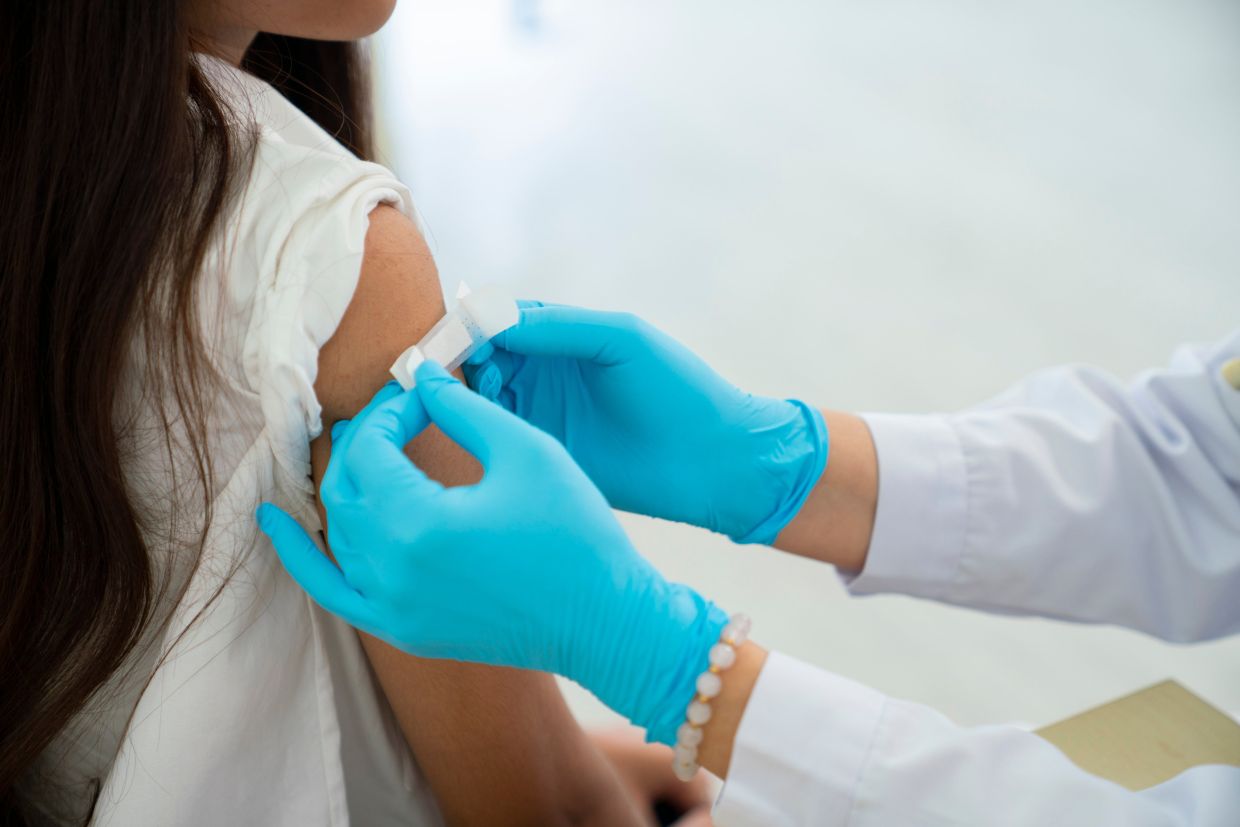
Hong Kong's health authorities are pushing back against moves by some jurisdictions to loosen childhood vaccination requirements, arguing that any changes to immunisation schedules must be grounded in rigorous scientific evidence rather than political preference. The Centre for Health Protection (CHP) issued the statement on Tuesday amid international shifts in vaccination policy, emphasizing that delaying or altering established immunisation protocols poses significant risks to children's health and public wellbeing.
The timing of Hong Kong's defence reflects growing tensions globally over vaccine policy. United States President Donald Trump signed an executive order on Monday that would restrict several vaccines to "certain high-risk groups or populations" rather than administering them universally to children. The order specifically targets recommendations for respiratory syncytial virus monoclonal antibodies, hepatitis A and B, meningococcal B, meningococcal ACWY, and dengue vaccines. More significantly, the US federal government intends to challenge state laws requiring school vaccination, claiming such mandates violate parental rights, religious freedom, disability accommodations, and equal protection principles.
Under Hong Kong's Childhood Immunisation Programme (HKCIP), the regulatory framework is far more comprehensive and non-negotiable. Children from birth through Primary Six must receive vaccinations protecting against eleven infectious diseases: tuberculosis, poliomyelitis, hepatitis B, diphtheria, pertussis, tetanus, pneumococcal infection, chickenpox, measles, mumps and rubella. Additionally, the programme provides human papillomavirus (HPV) vaccinations to eligible primary school girls to prevent cervical cancer. This structured approach has achieved remarkable results, with the CHP noting that immunisation coverage remains exceptionally high across the territory, keeping childhood infectious disease incidence at near-elimination levels.
The CHP's position reflects a fundamental principle: vaccination schedules represent the culmination of decades of epidemiological research and clinical trials. Officials argue that arbitrary modifications without supporting evidence create public health vulnerabilities that persist for years. "Vaccination schedules should not be altered arbitrarily without reliable scientific data or medical research supporting such changes, in order to avoid posing significant and irreversible public health risks to children," the centre stated. This framing positions vaccination policy squarely within evidence-based medicine rather than ideology or parental preference alone.
Hong Kong's stance takes on particular resonance given recent local controversies surrounding vaccination and parental rights. Last month, the parents of an infant named Danny, who was placed under Social Welfare Department guardianship, filed for judicial review of custody decisions partly centred on vaccination arrangements. The parents expressed opposition to the medical intervention and sought a writ of habeas corpus from the High Court, arguing the department's decision to vaccinate the child contradicted their wishes. The case highlights tensions between state-mandated health protocols and family autonomy, issues that US policymakers now aim to escalate.
Centre controller Dr Edwin Tsui Lok-kin acknowledged the critical role of parental cooperation and professional trust in maintaining Hong Kong's vaccination success. "Thanks to the trust and support of parents, schools and healthcare professionals towards the HKCIP over the years, immunisation coverage has remained extremely high, successfully keeping the incidence of related childhood infectious diseases in Hong Kong at extremely low levels," he said. This appeals to collective achievement while implicitly warning that erosion of public confidence could undermine decades of progress in disease prevention.
The government has also invested effort in defending specific vaccination products, particularly combination vaccines for measles, mumps, rubella (MMR) and varicella (MMRV). Officials countered concerns by emphasizing that these combinations are "proven to be safe and effective, with the ability to provide sufficient protection." They highlighted a practical advantage often overlooked in policy debates: combination vaccines reduce the number of injections children receive, thereby lowering the risk of missed doses. "These combination vaccines are currently widely used around the world," the CHP noted, positioning Hong Kong within global best practice rather than as an outlier.
For Malaysian and Southeast Asian readers, Hong Kong's reaffirmation of vaccination policy carries strategic implications. The region's health systems face similar pressures as anti-vaccination sentiment spreads across social media and alternative health networks. While Malaysia's vaccination programme has maintained high coverage rates, the emergence of influential figures questioning vaccination schedules creates vulnerability. Hong Kong's explicit warning that "delaying vaccinations reduces protection against relevant infectious diseases" serves as a cautionary reminder that herd immunity thresholds are fragile and can collapse rapidly when coverage drops below critical levels.
The contrast between Hong Kong's evidence-based mandate and the US pivot toward parental discretion reflects fundamentally different public health philosophies. Hong Kong treats vaccination as a collective responsibility embedded in law and administrative policy, while the Trump administration frames it as a matter of individual choice and parental authority. For developing regions in Southeast Asia with limited healthcare infrastructure and vaccine access, this divergence matters considerably. If wealthy nations normalize vaccination avoidance, international vaccine supply chains and pricing dynamics could shift, affecting poorer countries' ability to sustain immunisation programmes.
Beyond policy rhetoric, Hong Kong's approach rests on a historical claim: success. The city has virtually eliminated measles, polio, and other once-devastating childhood diseases through consistent immunisation. Officials argue this track record justifies maintaining current schedules unchanged. The CHP's framing—that alterations require "reliable scientific data" rather than ideology—attempts to depoliticize vaccination by grounding decisions in epidemiology and clinical evidence. Whether this argument persuades sceptical parents remains uncertain, particularly as anti-vaccination messaging becomes more sophisticated and emotionally resonant than technical health communications.
Looking forward, Hong Kong's position suggests that Asian health authorities may increasingly diverge from Western permissiveness on vaccine policy. As the US scales back recommendations and challenges state mandates, Hong Kong and potentially other regional governments face a choice: maintain stringent vaccination requirements or accommodate growing anti-vaccine sentiment. The CHP's forceful statement suggests Hong Kong intends to hold the line, betting that scientific evidence and successful outcomes will ultimately outweigh alternative narratives questioning vaccine necessity and safety.

