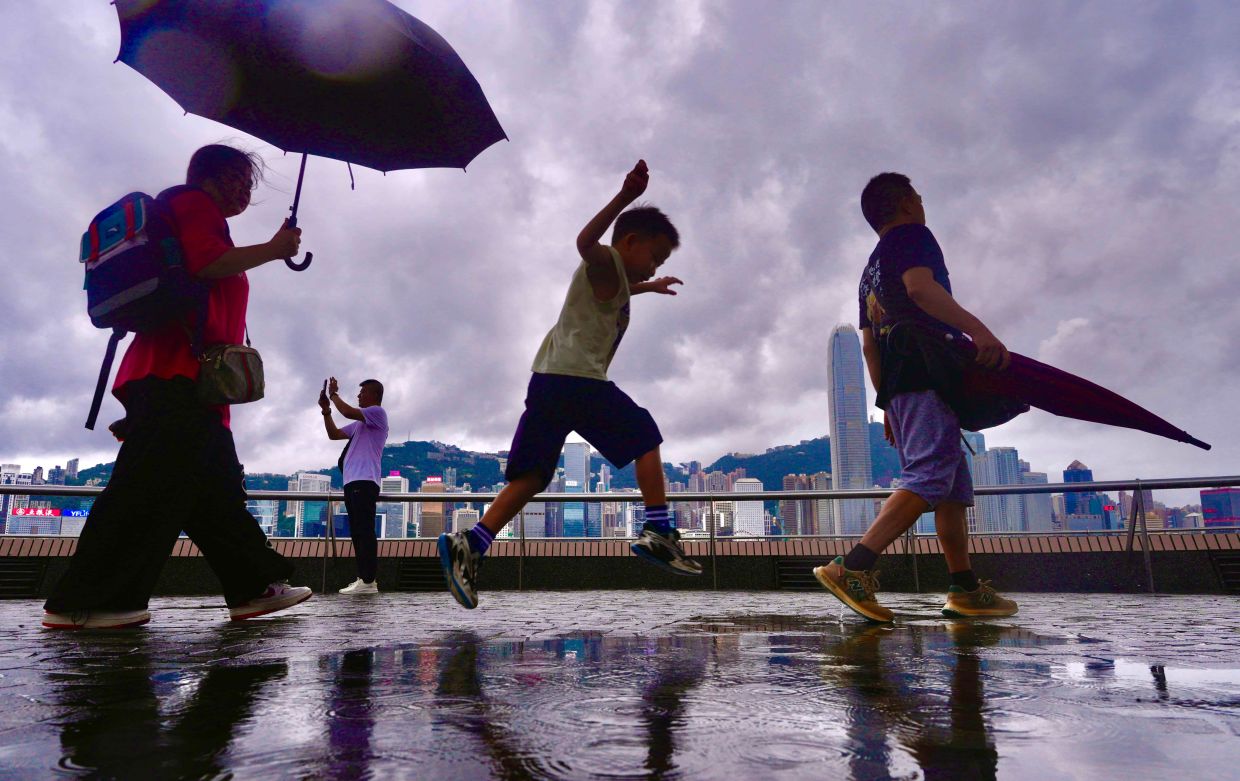
Hong Kong's sweltering summer ordeal finally ended on Friday morning when a widespread downpour swept across the territory, delivering much-needed respite from a relentless week of oppressive heat. The Hong Kong Observatory responded by issuing an amber rainstorm warning at 8:40 am, which remained in effect for three hours before being lifted as conditions stabilized. The timing of the rainfall could not have been more welcome, as the city had endured one of its most punishing heat stretches in recorded history, with temperatures consistently reaching dangerous levels across virtually all districts.
The meteorological system that brought relief to Hong Kong was driven by upper-air disturbances combined with a southwesterly airstream, creating conditions that generated showers and squally thunderstorms throughout the day. While the amber warning represents the lowest tier in Hong Kong's storm alert system, its issuance underscored the intensity of the weather system making landfall. The Observatory noted that additional showers were expected to continue in some areas on Saturday, particularly during the morning hours when thunderstorms would be most likely, though residents could anticipate sunny intervals during the afternoon as the system continued its eastward progression.
The heat wave that preceded the rainfall had been building gradually throughout the week, with temperatures consistently surging past 34 degrees Celsius across multiple districts. This relentless warmth tested the resilience of the urban population and placed considerable strain on the city's power infrastructure as air conditioning demand reached peak levels. The Observatory's central station recorded a maximum temperature of 33°C or higher for nine consecutive days—a stark achievement that established a new record for the longest unbroken period of extreme August heat in the city's contemporary meteorological history.
The most alarming moment came on Sunday when the Observatory registered a peak temperature of 36.9°C, shattering records that had stood since measurements began in 1884. This reading represented not merely a typical summer hot day but rather an unprecedented climatic event for Hong Kong, signifying a notable shift in the city's weather patterns and raising questions about the long-term trajectory of urban temperatures in this densely populated region. The significance of breaking a 140-year-old temperature record cannot be understated, as it suggests that climate conditions may be evolving in ways that challenge historical assumptions about seasonal variations.
For Malaysia and other Southeast Asian observers, Hong Kong's experience carries particular resonance. The region regularly experiences tropical and subtropical heat, and Malaysian cities like Kuala Lumpur and Penang contend with consistently high temperatures year-round. However, the specific character of Hong Kong's heat wave—its sustained intensity over consecutive days rather than isolated peaks—demonstrates how even tropical regions accustomed to warmth can face genuine climatic stress when conditions exceed historical norms. The psychological and physiological impacts of prolonged extreme heat on urban populations represent emerging challenges that require serious planning and public health consideration across the region.
The broader implications of this weather event extend beyond simple meteorological curiosity. Hong Kong's infrastructure, from public transportation systems to urban design, was developed and optimized under temperature assumptions that are now being exceeded with greater frequency. Similar concerns apply throughout Southeast Asia, where cities were built according to historical climate baselines that may no longer reflect actual conditions. The cascading effects on power grids, water consumption, and workforce productivity during extreme heat periods represent economic and social costs that governments and businesses cannot ignore.
Experts forecast that the respite provided by Friday's rain will prove temporary. The Observatory predicted that very hot weather would return early the following week, accompanied by scattered showers that would provide only intermittent relief rather than sustained cooling. This pattern of intense heat punctuated by brief wet periods characterizes the transition season between summer and autumn in Hong Kong's subtropical climate, and residents should prepare for continued elevated temperatures before more substantial seasonal change arrives.
The public health dimension of Hong Kong's heat wave deserves emphasis for regional policymakers. Extended periods of dangerous temperatures increase risks of heat-related illness, particularly among vulnerable populations including the elderly, young children, and individuals with chronic health conditions. Healthcare systems must remain vigilant during such periods, as emergency departments often experience surges in heat-related admissions. Additionally, the psychological toll of sustained extreme heat can affect mental health and social cohesion, factors that sometimes receive insufficient attention in climate adaptation planning.
Looking forward, Hong Kong and other densely populated Southeast Asian cities must grapple with the reality that record-breaking temperatures, once considered rare anomalies, may become increasingly routine phenomena. Urban planners, engineers, and policymakers face mounting pressure to redesign cities for resilience in hotter conditions—through expanded green spaces, improved building standards for thermal efficiency, and infrastructure modifications that reduce heat absorption. The relief provided by Friday's rain, while genuine, merely punctuates an underlying transformation in the region's climate that demands serious long-term adaptation strategies and sustained political commitment.

