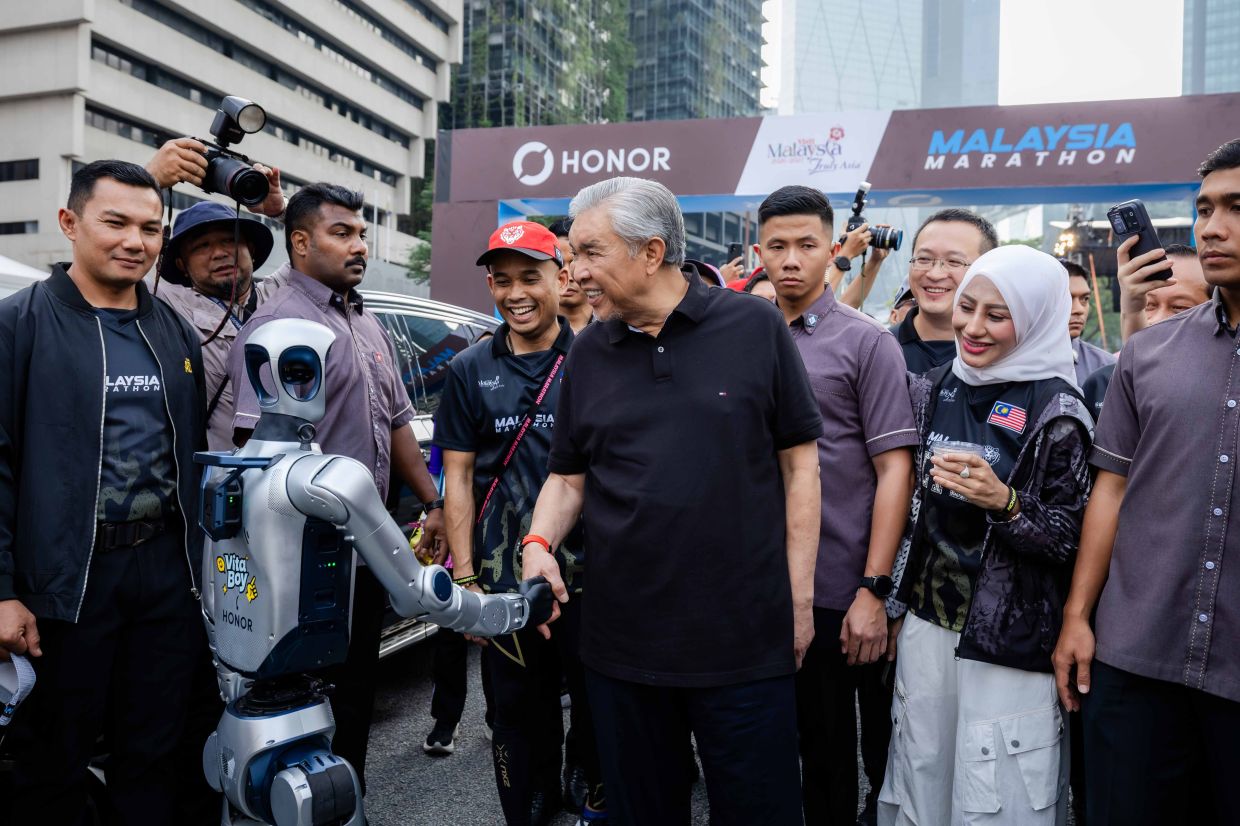
HONOR has achieved a significant technological milestone by deploying its advanced humanoid robots outside Chinese borders for the first time, selecting Malaysia Marathon 2026 in Kuala Lumpur as the venue for this landmark international expansion. The debut represents both a validation of the robots' engineering capabilities and a calculated move to establish the brand's presence in the rapidly growing Southeast Asian tech market.
The HONOR Robotics D1, the company's flagship model, arrived in Kuala Lumpur carrying considerable credibility from its previous achievements. In the Beijing Yizhuang Humanoid Robot Half Marathon, this machine had shattered existing human performance records by completing the race in 50 minutes and 26 seconds, sustaining a peak velocity of 14.5 metres per second throughout. Bringing such a proven performer to an international stage demonstrates HONOR's confidence in its technology's readiness for real-world deployment beyond controlled domestic environments.
The transition from Beijing's climate to Malaysia's tropical conditions introduced unexpected engineering challenges that ultimately served as a valuable stress test. Malaysia's intense heat and humidity created significantly more demanding operating conditions than the robot experienced during its record-breaking Chinese debut. Extended exposure to sustained high temperatures placed considerable strain on battery management systems, forced the mechanical systems to operate at elevated performance thresholds, and required sophisticated cooling solutions to prevent thermal degradation. Successfully navigating these environmental obstacles validated the robot's durability and adaptability, proving that HONOR's engineering addresses not merely laboratory specifications but genuine global deployment scenarios.
The Malaysia Marathon 2026 programme featured two distinct HONOR robot deployments. The D1 undertook the more ambitious 10-kilometre challenge, tackling the full marathon distance in Malaysia's unforgiving outdoor setting. Running parallel to this showcase, the HONOR Robotics A1 participated in the 5-kilometre category, which received ceremonial recognition through a flagoff by Deputy Prime Minister Datuk Seri Dr Ahmad Zahid Hamidi alongside multiple cabinet ministers, entertainment personalities, and ordinary race participants. This dual-robot approach allowed HONOR to demonstrate technological versatility while capturing broad public attention across different event segments.
The symbolic resonance of the robots' participation extended beyond technical demonstration. Coinciding with Malaysia's National Day celebrations, HONOR organised a remarkable patriotic display in which the humanoid machines marched alongside approximately 1,000 local schoolchildren carrying what organisers described as the longest Jalur Gemilang ever unfurled nationally. This choreography deliberately positioned robotics not as a threatening technological force but as a cooperative partner capable of enhancing national pride and collective human endeavours. The imagery subverted common anxieties about humanoid automation by presenting these machines as collaborators in celebrations of national identity rather than replacements for human participation.
HONOR's strategic messaging around this Malaysian venture emphasises a philosophical reorientation in how technology should relate to human society. Company statements positioned the initiative as transcending mere technical achievement, instead reframing robotics as instruments through which technology evolves from passively serving human needs toward actively participating alongside humans in meaningful shared experiences. This conceptual shift attempts to reshape public perception of automation from a labour-displacement threat toward a narrative of technological partnership and human empowerment.
The company's Malaysian market position provides important context for understanding this international robotics debut. According to Counterpoint Research data, HONOR achieved the number-one market share position in Malaysia during the first quarter of 2026, suggesting the brand has successfully cultivated substantial consumer goodwill and brand loyalty within the country. This dominant market standing gave HONOR both the platform and the incentive to undertake a high-visibility deployment of its most advanced technology, leveraging existing consumer affinity to generate positive associations with the robotics programme.
HONOR's expansion into humanoid robotics represents a logical progression within a broader technological ecosystem spanning consumer smartphones, artificial intelligence applications, and now autonomous robotics platforms. The company frames this evolution as continuous development across interconnected technology domains, each building upon previous innovations and consumer relationships established through earlier product categories. This sequential approach allows HONOR to maintain narrative coherence while introducing increasingly sophisticated technologies to audiences already familiar with the brand.
The Malaysia Marathon appearance carries implications for regional technology adoption and consumer sentiment across Southeast Asia. Malaysia's prominence as a developed Asian economy with substantial technological infrastructure makes it an ideal testing ground for emerging robotics applications. Success in this market may embolden HONOR to expand humanoid robot demonstrations throughout Southeast Asia, potentially reshaping how competing technology companies approach the region's innovation landscape. The positive reception in Kuala Lumpur could catalyse broader adoption conversations in Singapore, Thailand, and Indonesia, where similar events might provide platforms for robotics showcases.
Looking forward, HONOR has signalled commitment to sustained Malaysian market engagement, promising continued development of technology that prioritises human-centred design and warm user experiences. This language suggests the company recognises that technical superiority alone proves insufficient for sustained market success; instead, robots must be designed and deployed in ways that resonate with local cultural values and social expectations. Malaysia's multicultural, digitally progressive society provides an excellent proving ground for testing how humanoid robotics can be integrated into diverse communities with varying technological comfort levels and cultural frameworks.
The Malaysia Marathon robots ultimately symbolise a transitional moment in global technology adoption, where artificial systems move from laboratory showcases toward public participation in everyday social events. This shift requires not merely engineering refinement but also careful attention to how communities perceive and relate to autonomous machines. HONOR's Malaysian debut, by embedding humanoid robots within a celebration of national identity and community participation, attempts to naturalise these technologies within the social fabric rather than presenting them as alien intrusions. Whether this approach succeeds in reshaping regional attitudes toward humanoid robotics will significantly influence how such technologies are received across Southeast Asian markets in coming years.

