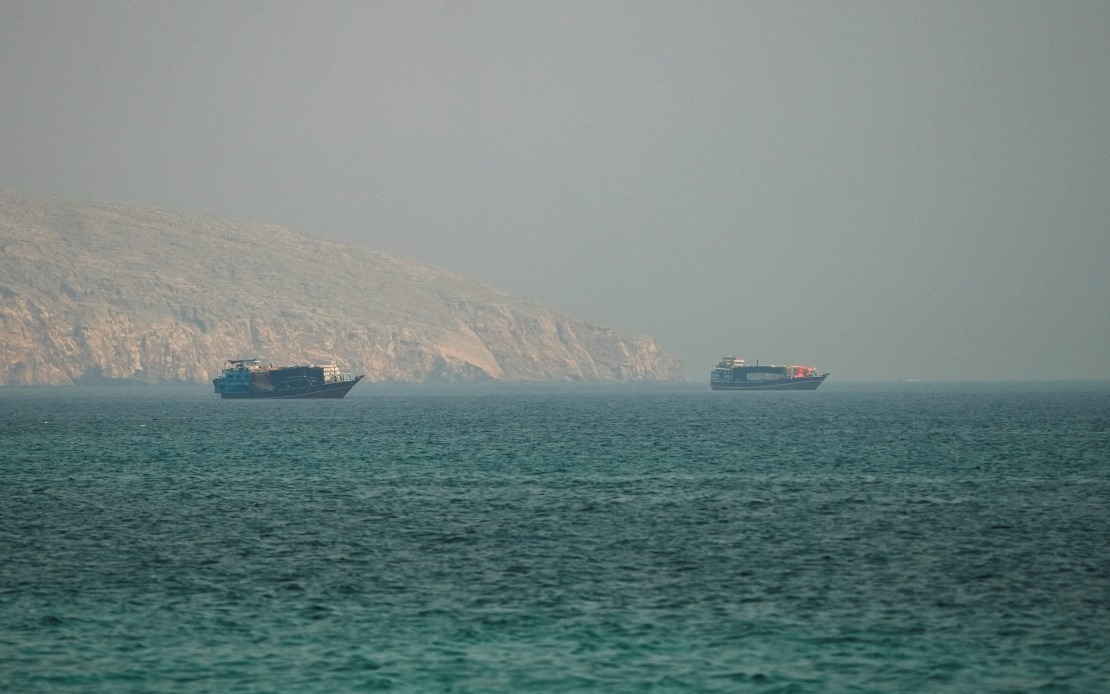
Maritime security officials have declared the threat environment in the Strait of Hormuz to remain at critical levels, with the UK Maritime Trade Operations issuing updated guidance for vessels navigating one of the world's most strategically important waterways. The assessment comes after a series of attacks targeting commercial shipping in the region, which have prompted reciprocal military operations between Washington and Tehran and raised fresh concerns about freedom of navigation through this vital chokepoint.
The UKMTO's Joint Maritime Information Centre confirmed that despite the heightened risk profile, the expanded southern route through the Strait of Hormuz remains open and accessible to international shipping. This reassurance is particularly significant for maritime operators who depend on transit through the waterway to transport goods between the Persian Gulf and global markets. The agency's formal notification underscores efforts to maintain commercial traffic flows even as security conditions remain volatile.
Maritime operators transiting the strategically vital passage are being advised to prepare for direct radio communication with naval assets patrolling the area on very high frequency channels and to maintain heightened situational awareness. Additionally, shipping companies have been cautioned to acknowledge the presence of designated mine-danger zones that require careful navigation. These precautions reflect the layered security challenges now endemic to Hormuz transit, where commercial vessels face multiple hazards beyond conventional maritime risks.
The recent cycle of attacks and counter-strikes represents an escalation in the long-standing competition between the United States and Iran for influence and control over the Persian Gulf region. Washington has responded to incidents involving merchant shipping by conducting precision strikes against Iranian military assets and supporting infrastructure, framing these operations as defensive measures necessary to protect commercial interests and maintain open sea lanes. The strategic logic driving American military operations centres on ensuring unimpeded access to energy supplies and maintaining the rules-based international order that underpins global commerce.
Tehran's position reflects a fundamentally different interpretation of maritime rights and regional sovereignty. Iranian authorities assert that vessels should coordinate passage with Iranian officials and maintain adherence to routes that Tehran has designated, rejecting what they characterise as arbitrary external imposition of transit corridors. In response to what Iran views as provocative American military activities, Tehran has launched drone attacks against US military installations across the Gulf region and into neighbouring Jordan, demonstrating its capacity for extended-range precision strikes and its willingness to escalate beyond the immediate maritime domain.
The cycle of escalation presents particular complications for smaller nations and non-aligned states that depend on Hormuz transit for energy security and trade. Malaysia, as a significant maritime trading nation and energy importer, faces potential disruptions to supply chains and elevated shipping costs if tensions continue to intensify. The strait's centrality to global energy markets means that even localised security incidents can ripple through international oil and gas prices, affecting economies far from the Persian Gulf.
Recent diplomatic efforts suggest awareness among all parties that unlimited escalation serves no productive purpose. Pakistan's mediation efforts have resulted in a memorandum of understanding signed last month between Washington and Tehran, establishing a framework for de-escalation and exploring pathways toward longer-term settlement of core disputes. This agreement signals recognition that military confrontation risks catastrophic consequences for regional stability and global economic functioning, particularly given the critical role that Hormuz plays in energy distribution.
However, the implementation prospects for the memorandum remain uncertain given continuing military operations despite the agreement's signature. The willingness of both parties to resume armed activities even while formal peace negotiations proceed suggests that underlying strategic competition continues unabated and that diplomatic progress may prove fragile. The pattern of tactical escalations interspersed with diplomatic engagement has characterised US-Iran relations for decades, and current developments fit this established pattern.
The broader implications for Southeast Asian nations warrant careful monitoring. Malaysia and its ASEAN neighbours depend significantly on stable conditions throughout the Indian Ocean and Arabian Sea for maritime commerce and energy supplies. Prolonged volatility in Hormuz risks driving shipping companies to seek alternative routes, potentially increasing pressure on congested waterways closer to Southeast Asia and elevating shipping premiums across regional routes. Additionally, any significant disruption to energy supplies from the Gulf would directly affect regional economies dependent on Persian Gulf hydrocarbon imports.
The UK Maritime Trade Operations continues to update guidance based on changing conditions, with affected maritime companies advised to maintain active monitoring of official channels and to implement robust security protocols. The agency's assertion that expanded routes remain available attempts to provide operational flexibility for shipping companies seeking to minimise exposure to highest-risk areas, though this alternative routing necessarily increases transit distances and voyage times.
Longer-term resolution of the US-Iran competitive dynamic likely requires addressing underlying concerns beyond maritime security, including sanctions regimes, regional proxy conflicts, and broader strategic positioning in the Gulf. The current posture of extended deterrence combined with tentative diplomatic engagement suggests that both parties recognise the costs of unlimited escalation while remaining unwilling to make fundamental concessions. For maritime operators and energy-importing nations, this ambiguous middle position creates persistent uncertainty about future conditions in one of the world's most critical commercial arteries.

