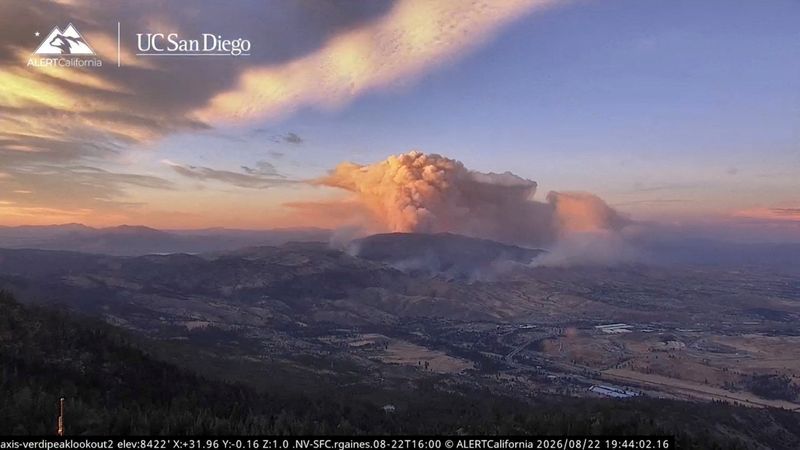
In the digital age, smartphones and social media platforms have flooded newsrooms with an unprecedented volume of photographs and video footage capturing everything from natural disasters to political upheaval. Yet this abundance of visual content masks a growing problem: the technology that enables ordinary people to document events in real time now competes with artificial intelligence sophisticated enough to fabricate entirely believable imagery or convincingly alter recordings of real events. Reuters, the world's largest news agency, has responded by establishing specialised teams dedicated to visual verification—a painstaking discipline that distinguishes authentic documentation from cleverly constructed deception. Each day, these journalists sift through hundreds of submissions, validating perhaps a dozen for publication.
The motivation for Reuters to lean heavily on crowdsourced imagery is fundamentally practical. Despite maintaining roughly 2,600 journalists stationed across approximately 200 locations globally, the organisation cannot maintain a physical presence at every location where news unfolds. Breaking events occur constantly and unpredictably—an unexpected protest, a border incident, a natural disaster—often in remote regions or in moments when professional news crews are nowhere nearby. Eyewitness accounts accompanied by photographs and videos have become indispensable to contemporary journalism. When ordinary citizens capture events firsthand and submit their material, they extend Reuters' reach far beyond what its staff alone could achieve. This approach aligns with the news agency's foundational Trust Principles, established during the World War Two era, which emphasise delivering unbiased, dependable reporting and continuously enhancing service quality. Verified public imagery has proven instrumental in establishing major international stories—from documenting a U.S. missile strike on an Iranian school that killed numerous children to providing detailed evidence of the Minneapolis shootings that sparked nationwide protests.
The challenge intensifying daily involves artificial intelligence's exponentially improving capacity to generate or manipulate visual material. Where early AI-generated images carried obvious tells—hands with impossible numbers of fingers, garbled background text—contemporary systems produce far more convincing results. This advancement stems partly from technological progress and partly from malicious actors strategically feeding real-world data into AI systems. They train these models on photographs of actual people, locations, and events, then weaponise the technology to create misleading derivative images of genuine incidents. When Venezuelan President Nicolás Maduro's capture in January circulated on social media, AI-generated images depicting him in handcuffs proliferated, creating false visual evidence of a real event. Reuters has similarly tracked AI-generated political advertisements designed to deceive voters ahead of the 2026 U.S. midterm elections. Beyond AI-generated content, bad actors routinely repurpose legitimate footage, extracting videos of past protests or demonstrations and mislabeling them as contemporary events occurring elsewhere, transforming factual material into disinformation through deceptive framing.
Ranging across these minefields, Reuters' visual verification team operates according to established protocols designed to authenticate imagery. The first critical step involves locating and contacting the original creator—identifying the person who actually captured the photograph or video, verifying their identity, and when possible conducting interviews to understand their firsthand experience. Such direct contact establishes accountability and allows journalists to ask clarifying questions about what occurred in the moment.
Metadata attached to digital files provides crucial corroborating evidence. Embedded information can reveal the precise location and timestamp when an image was captured, along with the device used to create it. When such metadata exists, it substantially strengthens verification efforts. Reuters journalists cross-reference their findings against publicly available information—weather records indicating conditions on specific dates, satellite imagery showing geographical features and temporal changes, archived street-view photography, and official reports documenting events. Even seemingly minor details matter considerably. The angle and length of shadows visible in images reveal what time of day photography occurred, helping establish whether a video genuinely documents an event according to the timeline being claimed. Photographs captured from multiple angles by different eyewitnesses corroborate accounts and provide perspective verification impossible with single submissions.
The verification team employs artificial intelligence detection tools as auxiliary verification mechanisms. These systems, trained to identify traces of AI manipulation or generation, scan submitted images for digital fingerprints of synthetic origin. Yet these tools remain imperfect—they sometimes yield inconclusive results, and visual verification journalists cannot always draw definitive conclusions from the signals they produce. False negatives and false positives both occur. The technology cannot be trusted independently; instead, AI detection functions as one element within a broader investigative framework requiring human judgment. Ultimately, experienced journalists within the Reuters newsroom make the determination whether submitted material qualifies for publication, a responsibility that grows increasingly demanding as malicious actors develop more sophisticated manipulation techniques.
For Malaysian and Southeast Asian audiences, understanding this verification process carries particular relevance. The region experiences intense information warfare, with doctored imagery and manipulated video footage regularly weaponised during elections, sectarian tensions, and border disputes. When misinformation spreads across WhatsApp, Facebook, and TikTok—platforms that dominate regional media consumption—the damage to public discourse and social cohesion compounds rapidly. Citizens accustomed to questioning the authenticity of viral imagery demonstrate healthier media literacy than those accepting such content uncritically. By transparently explaining how professional news organisations authenticate material, Reuters provides a template other regional publishers might adopt. As artificial intelligence becomes increasingly accessible, the capacity to generate convincing fakes will proliferate beyond the reach of well-resourced newsrooms. Educating the broader public about verification principles—seeking original creators, checking metadata, comparing multiple sources, consulting official records—represents a crucial step toward building societies more resilient against disinformation campaigns designed to manipulate perception and undermine trust in institutions.

