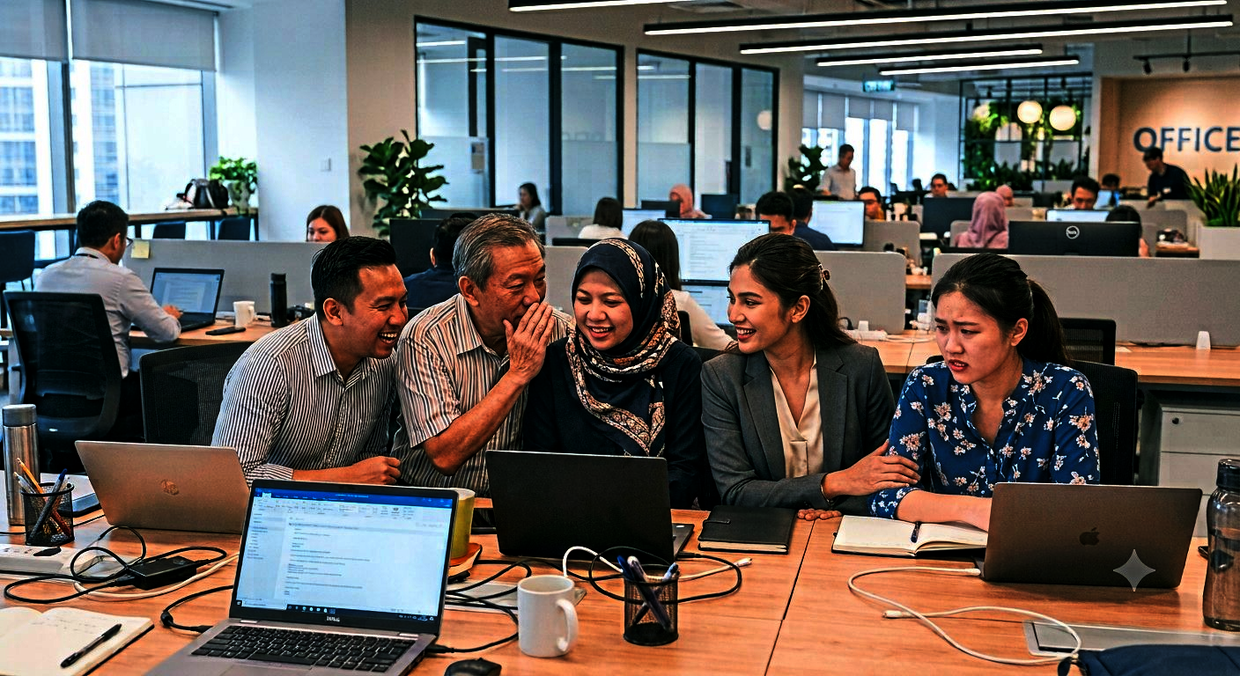
Conversations that spiral into judgment and blame have become an inescapable feature of modern life, occurring not just in formal settings but across the mundane spaces where we gather—office pantries, family dining tables, messaging groups, and social media feeds. What begins as casual discussion frequently transforms into something more damaging, shifting focus from ideas to individuals, from opinions to condemnations. This pattern occurs so frequently that many Malaysians have grown accustomed to it, yet the cumulative effect on our collective mental health remains largely unexamined and underestimated.
The Malaysian Mental Health Association has documented rising anxiety and burnout across workplaces and communities, but the conversation often centres on major stressors and clinical conditions. Less attention is paid to the quiet, corrosive impact of daily interactions that lack kindness or empathy. These smaller wounds accumulate silently, eroding our sense of safety and belonging long before they manifest as diagnosable psychological distress. The emotional toll of habitually negative discourse operates beneath conscious awareness, which makes it particularly insidious—we may feel drained without fully understanding why.
When dialogue consistently devolves into gossip or blame, it fundamentally changes the chemistry of our relationships and communities. Consider the anxiety that accompanies even passive participation in character assassination. Even without contributing words, hearing someone torn apart in their absence creates an unsettling suspicion: if they are treated this way when absent, what will be said of us when we leave the room? This fear silently poisons trust, making people more guarded and less willing to be vulnerable. The conversation may last fifteen minutes, but the psychological residue persists for hours or days.
This pattern deepens when every interaction becomes an opportunity to find fault. Whether discussing parenting decisions, lifestyle choices, political views, or personal appearance, a culture of constant criticism sends a pernicious message: mistakes are unforgivable and acceptance is conditional. Under such pressure, people naturally withdraw. They become less authentic, less willing to share struggles or unconventional ideas, less capable of being human in each other's presence. Communities built on this foundation gradually lose their capacity for genuine connection.
Critical distinction must be drawn between toxic conversation and legitimate disagreement. Honest debate about difficult topics strengthens societies; constructive criticism improves institutions; genuine dialogue that seeks understanding deepens relationships. These conversations require courage and vulnerability. They involve acknowledging complexity and resisting the urge to reduce people to their worst moments. The difference lies in intent and impact. One form builds understanding and refines thinking; the other prioritises judgment and domination. One creates space for growth; the other contracts into blame.
Cultural wisdom across Southeast Asian societies has long recognised this principle. The concept of preserving harmony and avoiding unnecessary harm exists not as weakness but as mature recognition that words carry weight. Modern psychology simply validates what generations of experience already demonstrated: a careless remark spoken in moments of frustration can wound for years. The brain stores these emotional experiences, and repeated exposure to unkind dialogue literally changes how our nervous system operates, keeping us in states of heightened stress.
The challenge for Malaysian communities lies in reclaiming the practice of intentional conversation. This does not mean avoiding disagreement or pretending differences do not exist. Rather, it involves approaching contentious topics with awareness that the person on the other side of the debate is someone deserving of dignity. It requires distinguishing between what needs to be said and what merely feels gratifying to express. It demands that we occasionally do something remarkably difficult: walk away from engaging in conversations that do not serve truth or connection.
Workplaces across Malaysia increasingly recognise that psychological safety—the sense that one can speak honestly without fear of humiliation—directly correlates with productivity and innovation. Yet this safety begins with everyday choices about how we speak. Do we create space for people to admit uncertainty? Can colleagues express unpopular views without becoming targets? Does our communication lift people up or wear them down? These questions have organisational consequences, but they begin with individual choices about conversation.
Families and friend groups face similar dynamics. The WhatsApp group that begins with genuine connection can gradually become a venue for venting that solidifies negative perspectives and excludes those with different views. The family dinner that could deepen bonds often devolves into rehearsing frustrations with absent family members. These patterns are not inevitable. They can be interrupted through intentional choices—suggesting topics that build rather than diminish, redirecting conversations toward solution rather than blame, naming it when discussion becomes destructive.
The path forward requires both individual awareness and cultural shift. Individually, we can examine our own participation in toxic conversations, recognising that silence is not neutrality but complicity. We can build the uncomfortable courage to redirect harmful dialogue or simply excuse ourselves. Culturally, Malaysian communities can begin honouring what many traditional values already teach: that the way we speak matters profoundly, that compassion is strength not weakness, and that building each other up is more valuable than tearing each other down.
For communities facing rapid change, competing values, and genuine disagreement about important questions, this capacity for respectful dialogue is not optional. It is foundational. Every conversation is an opportunity to either reinforce isolation and judgment or to strengthen connection and understanding. The accumulation of these moments shapes the emotional climate in which we all live and the kind of society we are creating.

