In an era when most entertainment is engineered for instant gratification, a growing movement among independent game developers is moving in the opposite direction—creating deliberately punishing experiences that embrace failure as a central narrative and mechanical element. These games, often narrative-driven and set in darkly imaginative worlds, reject the accessibility-first design philosophy that dominates mainstream gaming, instead positioning emotional and psychological discomfort as a feature, not a bug. For players willing to endure them, developers argue, these experiences offer something increasingly rare: a space to sit with failure, learn from it, and emerge transformed.
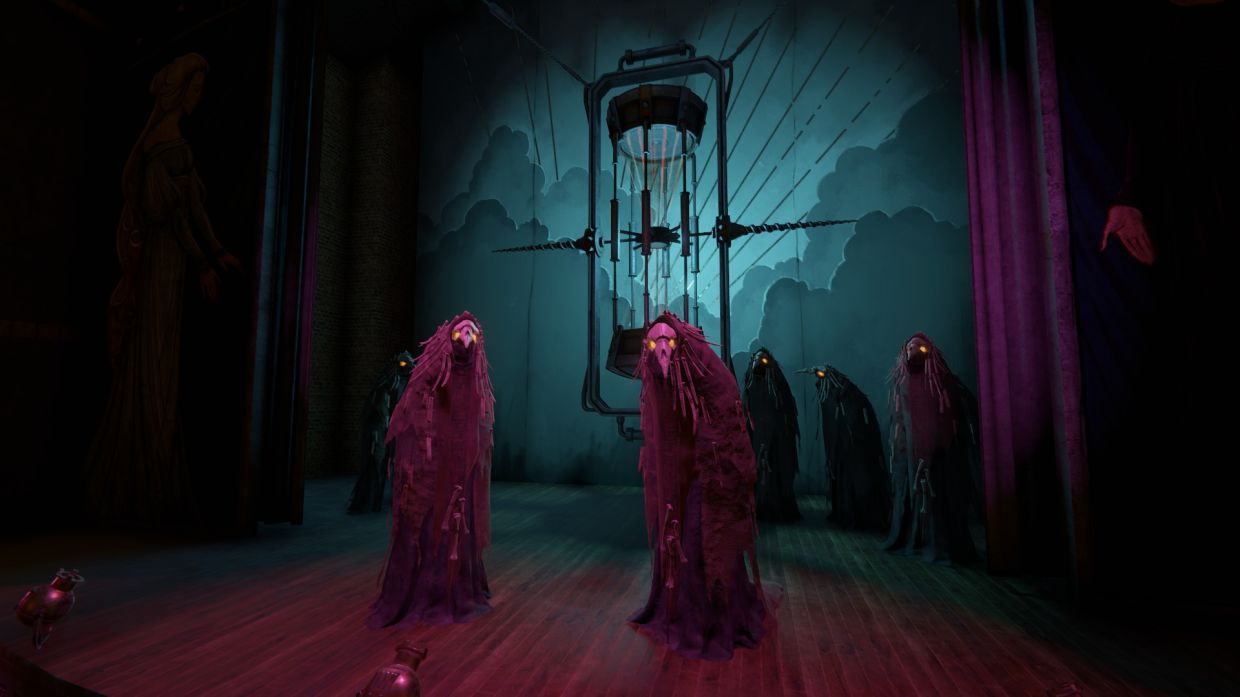
The Russian studio Ice-Pick Lodge has become synonymous with this uncompromising approach. Game director Alexandra Golubeva, who has shaped the studio's narrative direction, describes their design philosophy as deliberately confrontational. Rather than smoothing rough edges to appeal to broader audiences, Ice-Pick Lodge doubles down on the jarring and the unsettling. Their games feature sparse art direction, reused character models that create an almost theatrical artificiality, and storylines that subvert player expectations at crucial moments. This is not accidental minimalism born from budget constraints, but rather an intentional aesthetic choice—much like how filmmaker Lars von Trier has leveraged bare-bones sets to create psychological intensity rather than distraction.
The thematic content of these games underscores their commitment to discomfort. Dialogues between characters wrestle with profound philosophical questions about ambition, legacy, and the inevitability of loss. One character—a stern judge—observes that "the bolder the dream, the more surely it becomes dust when the moment is lost," while another, a theatre director, suggests that meaningful art should leave audiences in such emotional turmoil they require medical intervention, spiritual counselling, or existential reckoning. These aren't throwaway lines but rather the philosophical scaffolding upon which entire game worlds are constructed, setting player expectations from the opening moments.
Golubeva argues that video games possess a unique capacity to generate genuine discomfort in ways other media cannot. She positions these experiences as a deliberate counterbalance to the attention economy that dominates contemporary digital life. Platforms like TikTok and many mobile games are engineered around thirty-second dopamine hits, designed to fragment attention and encourage endless scrolling. By contrast, Ice-Pick Lodge games demand sustained engagement with difficult emotional states. "Why not do the opposite?" Golubeva has asked. The proposal is deceptively simple: allow yourself to become genuinely uncomfortable within a fictional world for several hours, then return to your normal life with renewed perspective. This inversion of entertainment logic suggests that psychological stress within bounded, safe environments might actually enhance overall wellbeing.
Gabriel Winslow-Yost, a contributing editor at gaming publications covering artistic titles, has observed that games have "direct access to some negative feelings which no other medium does." This reflects a fundamental difference in how games operate compared to cinema, literature, or visual art. When you watch a film or read a novel, you maintain emotional distance from the protagonist's failures. You observe tragedy from outside. But in games, failure becomes your failure. The avatar's poverty, hunger, and death spiral become your personal defeat, and that psychological ownership creates a distinct emotional intensity.
Mechanically, these games reinforce their thematic commitment to failure by making consequences genuinely permanent. The ability to rewind time or load previous saves—features that have become standard in modern gaming as accessibility features—are available in Ice-Pick Lodge titles but come at a significant cost. Players possess a limited in-game resource that governs how many times they can manipulate the timeline. Exhaust this resource and progression becomes impossible; certain quests even trigger irreversible save-file deletion, trapping players with their worst decisions. This design choice transforms the act of failure from a temporary setback into a permanent wound that must be carried forward, mirroring how actual human experience works.
Alexander Souslov, executive producer and lead game designer on these challenging titles, explains the psychological reasoning behind this approach. In real life, humans possess a remarkable capacity to reframe negative events positively, to extract meaning from failure, and to integrate setbacks into broader narratives of growth. Video games, however, traditionally neutralise this process by offering unlimited do-overs and consequence-free experimentation. But what if, Souslov suggests, the value of games lies precisely in their ability to simulate the emotional weight of actual failure? By forcing players to live with their mistakes within the game world and reflect upon them, these experiences create a space for genuine reckoning with personal culpability. The bad ending becomes not a game state to reload past, but a reflection of player choice and character.
Interestingly, this embrace of failure also functions as an inverted power fantasy. While traditional games position players as increasingly powerful heroes who overcome impossible odds, Ice-Pick Lodge games begin from a position of almost absolute powerlessness and degradation. The journey, then, becomes one of clawing back from catastrophe—not toward victory in conventional terms, but toward mere survival or marginal improvement. Golubeva has observed that there's something strangely exhilarating about starting from complete failure and having the opportunity to fix even a portion of the disaster. This reframes what constitutes triumph: not conquest or domination, but simply the capacity to prevent things from getting worse.
For Southeast Asian and Malaysian audiences, these games offer a particularly interesting contrast to prevailing entertainment trends in the region. As mobile gaming and casual play dominate local markets, and as game development increasingly concentrates on accessible, monetisation-friendly design, the existence of studios committed to deliberate discomfort and artistic uncompromise represents a countercurrent worth understanding. These games argue that entertainment need not always comfort or validate; it can challenge, provoke, and even wound its audience in service of deeper artistic or philosophical goals. They suggest that the most meaningful experiences often emerge precisely when we're forced to sit with difficult emotions rather than escape them.
The broader implications extend beyond gaming into questions about how digital media shapes human psychology and resilience. As society becomes increasingly structured around convenience, algorithmic optimisation, and the minimisation of friction, spaces that deliberately introduce friction and resistance take on unexpected cultural significance. These games propose that controlled exposure to failure, within bounded and safe environments, might actually strengthen our capacity to navigate genuine adversity. They suggest that comfort, pursued relentlessly, may atrophy rather than enhance our psychological capacities. In this framework, the most generous gift a game can offer isn't escapism or empowerment, but rather a safe space to confront your own fragility and discover resources you didn't know you possessed.

