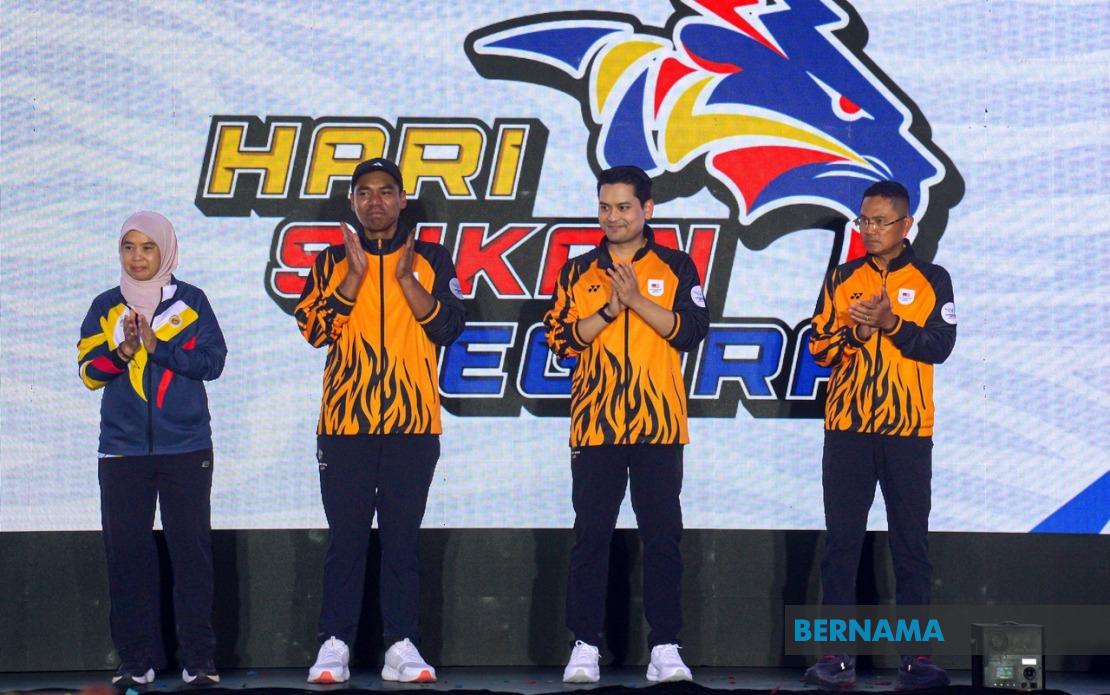
Malaysia's National Sports Day (HSN) 2026 is positioning itself as a landmark celebration bridging traditional athletics with emerging digital technologies, targeting participation from more than 5.3 million Malaysians across district, state and national tiers. Scheduled for October 9 to 11, the event represents a deliberate pivot toward modernising how the country engages its population in recreational and competitive sports activities, with integration of artificial intelligence and digital platforms at its strategic core.
Youth and Sports Minister Dr Mohammed Taufiq Johari unveiled the initiative with a fresh visual identity and forward-looking thematic framework centred on digital technology and artificial intelligence. The messaging signals an acknowledgment that Malaysia must recalibrate its sports engagement approach to remain relevant amid rapid technological transformation. Rather than positioning technology as separate from sports, the ministry is framing AI and digital tools as instrumental enablers that can expand participation, enhance performance tracking, and democratise access to sporting opportunities across socioeconomic divides.
The pre-launch ceremony itself demonstrated this philosophy through extensive virtual reality integration, a tactical choice underscoring the ministry's commitment to embedding digitalisation throughout the sports ecosystem. This approach extends beyond mere spectacle; it represents a conscious effort to normalise digital interaction within traditional sporting contexts. The inclusion of VR elements signals to stakeholders and potential participants that HSN 2026 operates at the intersection of innovation and athletics, positioning Malaysia competitively within global sports trends.
A particularly noteworthy dimension involves the ministry's reconceptualisation of esports within broader wellness frameworks. Rather than treating competitive gaming as divorced from physical health, the HSN 2026 narrative encourages video game participants to maintain simultaneous engagement with physical activity. This represents sophisticated public health messaging, recognising that digital natives constitute a significant demographic requiring tailored engagement strategies. By legitimising esports within the HSN umbrella while insisting on complementary physical involvement, the ministry addresses sedentary lifestyle concerns without dismissing the cultural significance of gaming to younger populations.
Prime Minister Datuk Seri Anwar Ibrahim will officiate the national-level launch at the National Stadium grounds in Bukit Jalil on October 10, lending political gravitas to an initiative the government clearly views as integral to its broader sports and wellness agenda. The prime ministerial involvement signals that HSN 2026 transcends routine ministry programming, reflecting cabinet-level priority toward sports development as a nation-building instrument.
Strategically, HSN 2026 serves dual purposes: immediate mobilisation of public sports participation and foundational enthusiasm-building for the 2027 Southeast Asian Games, which Malaysia will host. This temporal positioning is deliberate, using the National Sports Day as an extended promotional runway toward a major regional competition. By aligning HSN 2026 with SEA Games preparation, the government leverages sporting momentum and public engagement to streamline infrastructure development, volunteer recruitment, and logistical preparations that 2027 will demand.
Coordination with the Malaysia SEA Games Organising Committee (MASOC) extends beyond ceremonial cooperation, encompassing the planned SEA Games Roadshow as part of HSN 2026 activities. This integration ensures that grassroots sports enthusiasm generated through October's celebrations directly channels into SEA Games awareness and public investment in the upcoming regional contest. For Malaysian communities at district and state levels, HSN 2026 becomes a tangible preview of how the country will present itself during the 2027 Games.
The programming architecture reflects sophisticated understanding of diverse participant demographics. The MADANI Fun Run and MADANI Fun Walk accommodate varying fitness levels and age groups, ensuring inclusive participation beyond elite athletes. Concurrent segments addressing Active Malaysia and the sports industry ecosystem indicate recognition that sports development encompasses commercial, recreational, and health dimensions simultaneously. Integration of Rakan Muda Lifestyle elements acknowledges youth engagement as critical to sustainable sports culture development.
For Malaysian readers, HSN 2026 represents institutional commitment toward reframing sports not as elite pursuits but as accessible digital-age activities adaptable to contemporary lifestyles. The emphasis on technology integration acknowledges that participation barriers often relate to accessibility, information dissemination, and relevance perception rather than inherent interest deficiency. By leveraging AI and digital platforms, the ministry potentially democratises access to coaching knowledge, performance analytics, and community connection previously concentrated among affluent or geographically advantaged populations.
The 5.3 million participant target, if achieved, would constitute substantial public mobilisation. For context, this represents approximately 16 percent of Malaysia's population, suggesting the ministry envisions HSN 2026 as a mass participation phenomenon rather than niche sporting celebration. Success measurement will extend beyond participant numbers to engagement quality, sustained activity continuation post-October, and observable shifts in population wellness metrics.
Regionally, HSN 2026's technology-forward positioning reflects broader Southeast Asian trends toward sports digitalisation and esports legitimisation. Malaysia's approach of integrating gaming within traditional sports frameworks rather than maintaining artificial boundaries potentially influences how other ASEAN nations conceptualise contemporary sports development. The 2027 SEA Games host responsibilities amplify this demonstration effect, positioning Malaysia as a regional thought leader in sports modernisation.
Implementation success hinges on execution consistency across 13 states and multiple federal territories, where district-level coordinators must translate ministry vision into locally relevant programming. This distributed delivery model requires robust training, resource allocation, and community engagement mechanisms to prevent urban-centric concentration that could undermine rural participation targets. The digital technology emphasis, ironically, demands robust offline infrastructural support to ensure technological access doesn't become an exclusion mechanism for populations with limited digital connectivity.

