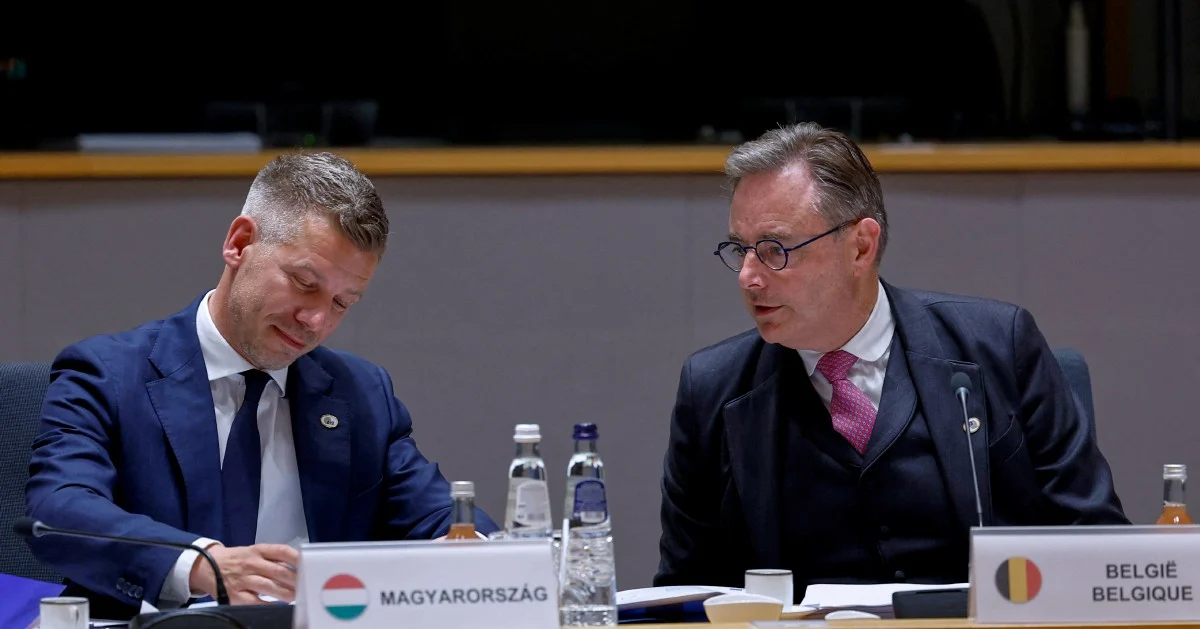
Hungary stands at an inflection point in its relations with Brussels as parliament prepares to endorse a suite of anti-corruption measures designed to satisfy long-standing European Union conditions. The legislative package, championed by Prime Minister Peter Magyar, represents one of his administration's most significant early actions and carries substantial implications for Central Europe's economic trajectory. The approval vote scheduled for Tuesday carries symbolic weight beyond Budapest's borders, signalling whether Hungary intends to align itself more closely with the EU's governance standards after years of fraught relations with European institutions.
The withholding of EU funds has created mounting pressure on Hungary's public finances, with billions of euros remaining inaccessible due to concerns about judicial independence, corruption, and democratic backsliding. These suspended disbursements have represented a persistent drag on infrastructure investment, social spending, and economic development across the country. The European Union has maintained that fundamental governance reforms must precede the restoration of financial flows, creating a standoff that successive Hungarian governments have struggled to navigate. Magyar's explicit willingness to confront these requirements through legislative action suggests a potential shift in Budapest's approach to EU relations, contrasting sharply with his predecessor's more confrontational stance.
The timing of this anti-corruption initiative matters considerably for the broader Central European context. The region has watched Hungary's deteriorating relations with Brussels with concern, aware that any member state's governance crisis ultimately affects the entire bloc's credibility and functionality. Hungary's decision to pursue genuine institutional reform could provide a template or encouragement for addressing similar concerns elsewhere in the region, potentially stabilizing EU relations across Central and Eastern Europe. Conversely, any perception that the measures are cosmetic or incomplete would reinforce suspicions about democratic backsliding in the broader region.
Magyar's ascent to the premiership itself represented a significant turning point in Hungarian politics, bringing fresh leadership with an apparent commitment to institutional renewal. His government's early focus on anti-corruption reflects a recognition that EU engagement requires demonstrable commitment to addressing the transparency and accountability concerns that have defined recent years of tension. The legislative package under consideration extends beyond symbolic gestures, encompassing substantive changes to judicial structures, parliamentary oversight mechanisms, and administrative practices. These reforms address specific EU criticisms and represent the kinds of deep institutional changes that international observers have long sought.
For Malaysia and Southeast Asian observers, Hungary's predicament offers instructive parallels regarding the relationship between good governance and international financial flows. The EU's leverage over member states—its ability to condition funding on institutional reform—demonstrates how supranational bodies can enforce standards across diverse democracies. Similar mechanisms operate through international lending institutions and bilateral relationships throughout Southeast Asia, where governance concerns frequently intersect with economic interests. Hungary's experience underscores both the effectiveness and the limitations of using financial pressure to drive institutional change.
The suspense surrounding parliament's Tuesday vote, while likely to result in approval, reflects genuine political tensions within Hungary. Implementing anti-corruption measures inevitably creates winners and losers, disrupting established power networks and institutional practices. Lawmakers who have benefited from less rigorous oversight mechanisms naturally resist comprehensive reforms, regardless of their party affiliation. Magyar's ability to marshal sufficient parliamentary support will demonstrate the depth of consensus around EU realignment and his political capital within his own coalition. A narrow victory would suggest fragile consensus, while overwhelming approval would indicate genuine political momentum toward institutional reform.
The relationship between anti-corruption measures and EU fund access operates through multiple mechanisms and timelines. Initial disbursements may commence once legislative frameworks appear adequate, providing immediate relief to Hungarian public finances. However, full restoration of frozen funds typically requires extended implementation periods and demonstrated effectiveness of new institutional arrangements. The EU maintains careful monitoring of whether reforms translate into tangible improvements in judicial independence, investigation outcomes, and administrative transparency. Hungary's journey from legislative approval to full fund recovery may extend well beyond this week's parliamentary vote, requiring sustained political commitment and institutional implementation.
The financial stakes surrounding this legislation prove enormous, both for Hungary's government and for ordinary citizens. Withheld EU funds would have financed road construction, hospital modernization, educational infrastructure, and regional development projects across the country. Farmers waiting for agricultural subsidies, municipalities seeking infrastructure grants, and businesses dependent on structural development funds have all faced extended delays. Restoring these financial flows would inject substantial resources into Hungary's economy, supporting employment and growth across multiple sectors. From this perspective, anti-corruption reforms represent not merely abstract institutional improvements but concrete investments in Hungarian prosperity.
The EU's approach to Hungary illuminates broader questions about enforcement mechanisms within supranational systems. The union cannot forcibly reorganize member states' institutions, remaining dependent instead on financial leverage and reputational pressure to incentivize compliance. This indirect approach requires patience and consistency, demonstrating both resolve and flexibility as member states navigate reform processes. Hungary's engagement with this process, regardless of whether Tuesday's vote succeeds, represents a test case for whether such mechanisms can effect meaningful institutional change within established democracies facing governance challenges.
For investors and international observers monitoring Hungary, Magyar's anti-corruption drive signals shifting risk calculations regarding the country's political trajectory. Reduced governance uncertainty could attract foreign direct investment and improve sovereign credit assessments, complementing the direct economic benefits of restored EU funding. However, skepticism remains warranted regarding implementation challenges and political durability of reforms undertaken under external pressure. True institutional change requires not merely legal framework updates but sustained commitment to enforcement and cultural shifts within public administration.
As Budapest prepares for Tuesday's parliamentary session, broader Central European and EU interests converge on this relatively technical legislative agenda. The outcome will provide early evidence regarding whether Hungary's government intends fundamental reorientation or merely tactical adjustments to EU relations. For Malaysia and other nations observing international governance dynamics, Hungary's experience demonstrates the complex interplay between national sovereignty, institutional integrity, and access to international economic resources.