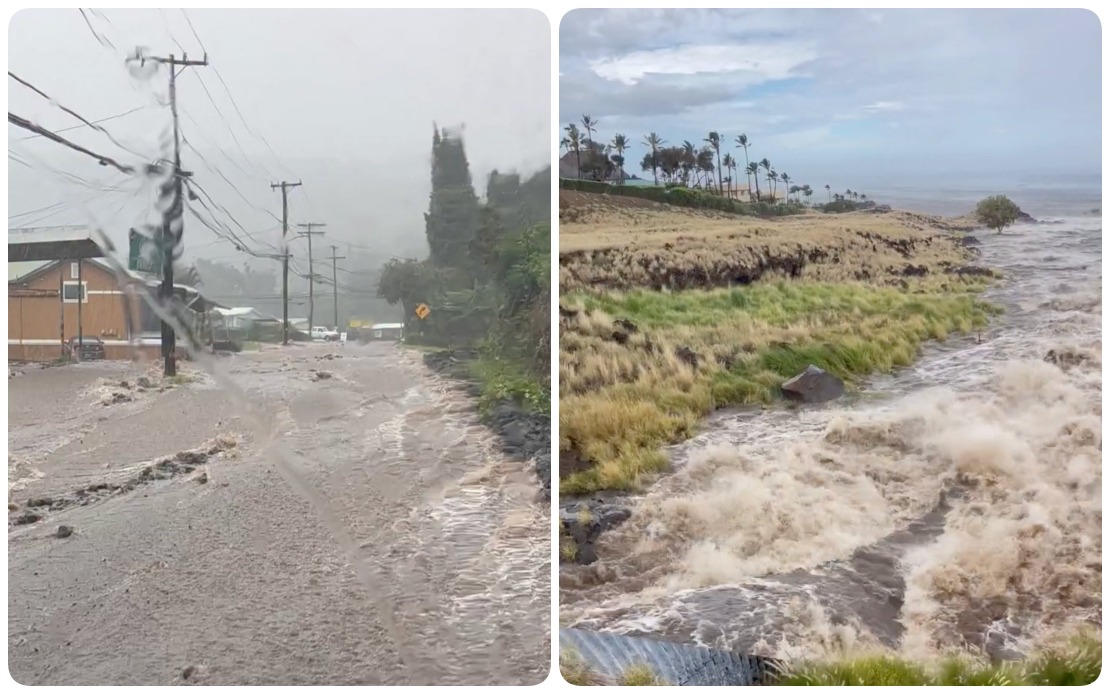
Hurricane Lala struck Hawaii on Saturday, August 15, with ferocious intensity, subjecting the island state to powerful winds and deluge-level rainfall that disrupted essential services and forced residents to shelter in place across multiple islands. The storm's passage just south of Hawaii Island created a cascade of emergency responses, with more than 88,000 customers losing electrical power as transmission infrastructure crumbled under the onslaught. Conditions deteriorated throughout the day, extending hazardous weather impacts across Hawaii Island, Maui County, Oahu, and Kauai, prompting state officials to declare widespread disruption and activate emergency protocols.
Governor Josh Green provided updates as the hurricane's core effects intensified on Hawaii Island, where wind speeds climbed to dangerous peaks and precipitation accumulations shattered typical rainfall expectations. Certain localities experienced more than 13 inches of rain, an extraordinary volume that overwhelmed drainage systems and triggered flooding across vulnerable communities. The governor's updates underscored the storm's severity and the expanding threat zone as deteriorating conditions spread across the neighbouring islands and counties.
The Hawaii Emergency Management Agency documented comprehensive damage across the affected regions, cataloging flooding incidents, uprooted trees, extensive power disruptions, and hazardous wind conditions. This multi-faceted impact revealed the hurricane's broad destructive reach and the challenge authorities faced in coordinating responses across geographically dispersed communities. The convergence of different hazard types—water, wind, and debris—created compound risks that complicated evacuation and rescue operations.
Electrical service collapse was particularly severe on Hawaii Island, where Hawaiian Electric Company reported 63,270 customer outages representing the bulk of the statewide total. Maui County experienced approximately 15,260 outages, while Oahu recorded roughly 9,500 disruptions. By 7 p.m. Hawaii Standard Time, the utility confirmed these figures reflected the situation as the storm continued its trajectory, with restoration efforts hampered by ongoing dangerous conditions that made field work impossible for repair crews.
Visual documentation released by Hawaii's Department of Transportation captured the storm's hydrological impacts, showing swollen streams overflowing their banks and inundated roadways that became impassable barriers. These images reinforced the scale of flooding and provided public agencies with critical evidence for assessing damage and planning recovery operations. The department simultaneously issued urgent advisories directing residents to remain indoors or relocate to designated shelter facilities, recognizing that outdoor exposure posed life-threatening risks from flying debris and electrical hazards.
Road infrastructure sustained substantial damage that fragmented transportation networks across the islands. Hawaii Island experienced closures affecting Kahikopele Street in Mountain View and Pauahi Street in affected neighbourhoods, while Mamalahoa Highway faced restrictions due to fallen trees and oversized debris scattered across the roadway. Plumeria Street closure resulted from downed power lines creating electrical dangers. These closures, replicated across Maui and Oahu, effectively confined residents to their immediate areas and prevented emergency vehicle movement in some sectors.
Wind velocity reached destructive thresholds on Hawaii Island, with recordings indicating gusts approaching 90 miles per hour—sufficient to topple mature trees, damage structures, and snap utility poles. The Hamakua coast sustained particularly concentrated damage, where fallen trees compromised a 42-mile stretch of transmission line infrastructure. This extended corridor of destruction demonstrated the hurricane's sustained power and indicated that restoration could require weeks rather than days of repair work.
Hawaiian Electric provided a sobering outlook for residents, indicating that customers already experiencing outages on Hawaii Island and Maui should anticipate prolonged darkness extending at least through the overnight period. Dangerous conditions—continuing strong winds, flooding hazards, and scattered debris—precluded restoration crews from deploying to damaged sites to conduct repairs. This forced postponement reflected safety protocols that prioritize worker protection during active storm phases, even as extended outages created hardships for affected populations unable to operate refrigeration, heating, cooling, or medical equipment.
The hurricane's impact carried implications extending beyond immediate weather events. Extended power disruptions raise concerns regarding food spoilage, medication storage, water system functionality, and vulnerable populations depending on electrical medical devices. The scale of transmission line damage suggests that full restoration could strain utility resources and require specialized equipment procurement. For Hawaiian residents and visitors, the incident underscores the vulnerability of island communities to tropical cyclones and highlights the importance of emergency preparedness and rapid response capabilities in geographically isolated regions where external assistance faces logistical constraints.

