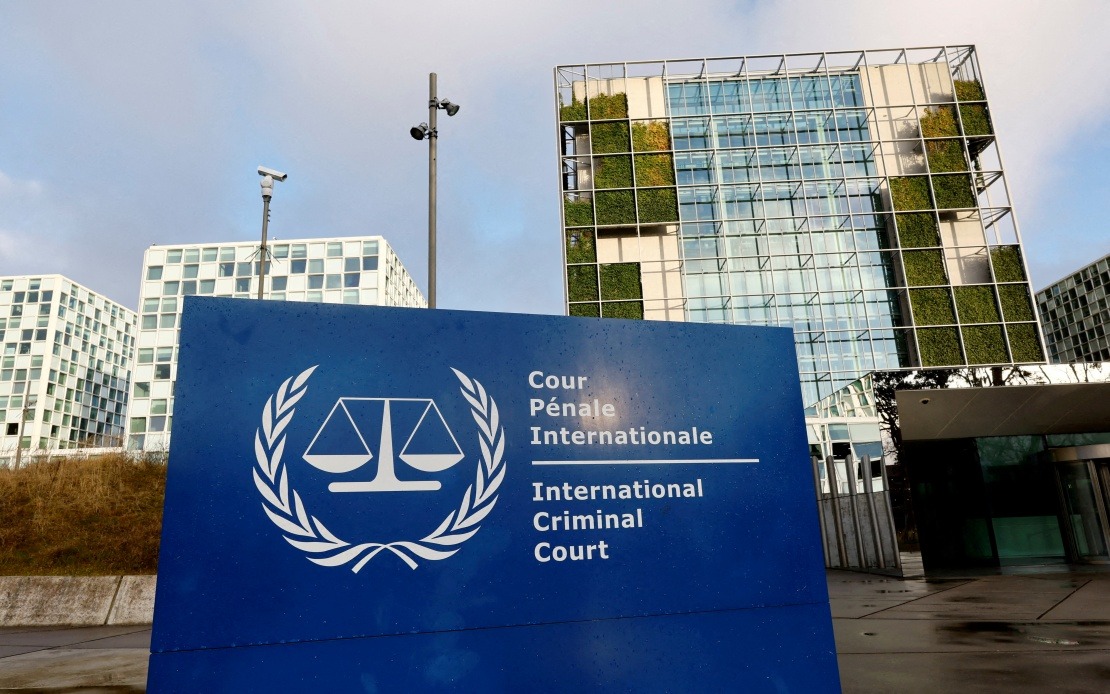
The International Criminal Court issued a forceful rebuke on Wednesday to the United States over newly imposed sanctions, characterizing the restrictions as a direct and unwarranted assault on the institution's fundamental independence. The latest round of designations from Washington targets ICC President Tomoko Akane of Japan and Abdoulaye Seye of Senegal, who serves as a senior trial lawyer within the Office of the Prosecutor. The Hague-based tribunal, which operates as the world's foremost permanent international criminal justice mechanism, stated that the accumulating sanctions regime now encompasses nine of its 18 judges, both deputy prosecutors, a former prosecutor, and additional staff members.
The escalating sanctions campaign represents a significant diplomatic and institutional conflict between the United States and the ICC, an organization established under the Rome Statute to prosecute individuals responsible for genocide, crimes against humanity, war crimes, and aggression. The court's leadership responded with unusual directness, characterizing the measures as fundamentally incompatible with respect for international judicial institutions. Officials emphasized that sanctions designed to penalize judges and prosecutors for executing their official mandate strike at the core principle of judicial independence—the notion that courts must operate free from political interference or coercion.
For Malaysian observers and Southeast Asian stakeholders, this confrontation carries broader implications for the international legal architecture that has underpinned regional stability and the resolution of transnational disputes. The region's smaller and mid-sized nations have historically relied on international institutions and legal frameworks to balance the influence of major powers. When a permanent UN Security Council member directly pressures an international court through sanctions targeting its officials, it signals potential fragmentation of the multilateral order that developing countries depend upon for protection of their interests.
The ICC's statement reflected deep concern about the cumulative effect of these measures. Court officials argued that targeting personnel based on their professional duties represents a dangerous precedent that threatens the rule of law itself. The institution emphasized that sanctions imposed on judges and prosecutors for executing mandates granted by the court's 123 member states—distributed across Africa, Asia, Latin America, Europe, and Oceania—constitute interference with the sovereign authority those nations collectively delegated to the court.
A particularly acute dimension of this conflict involves victims of international crimes and their access to justice. The court warned that sanctions and coercive measures targeting the institution's officers create obstacles for survivors seeking redress, especially those who have exhausted domestic avenues and turned to the ICC as a final recourse. This concern resonates in regions affected by protracted conflicts where accountability mechanisms remain underdeveloped. Southeast Asia, home to unresolved historical atrocities and ongoing disputes, shares an interest in maintaining credible international institutions capable of delivering justice without political manipulation.
The accumulation of sanctions over time demonstrates a sustained policy approach rather than an isolated incident. That nine judges now face restrictions from the world's largest economy represents an unprecedented situation in the court's two-decade history. Such numbers suggest systematic efforts to constrain the institution's operations rather than isolated complaints about specific decisions. The targeting of both prosecutorial and judicial personnel indicates an attempt to influence the court's direction across multiple institutional functions.
The ICC's response included explicit reaffirmation of its commitment to operating with complete independence and impartiality in accordance with the Rome Statute. This statement serves partly as assurance to member states and victims that external pressure will not alter the court's legal methodology or investigative priorities. However, the very necessity of such reassurances underscores the gravity of the situation and the real concerns about institutional vulnerability when major powers employ economic leverage against international organizations.
The court noted receiving support from member states, civil society organizations, and other entities backing international justice and the rule of law. This backing provides some counterweight to US pressure, though it remains unclear whether diplomatic solidarity translates into concrete mechanisms to offset sanctions' practical effects. Southeast Asian countries that participate in the ICC framework—including Cambodia, the Philippines, and others—must weigh their own relationships with Washington against commitment to international judicial independence.
This episode raises fundamental questions about the future of international criminal justice in an era of renewed great power competition. If major powers can effectively incapacitate international courts through targeted sanctions against officials, the institutions' utility diminishes significantly. Smaller nations lose leverage and protection that international law theoretically provides. The precedent established here may influence how other states interact with international institutions, potentially encouraging exit or non-cooperation from those viewing the court as compromised by power politics.
The intersection of this conflict with regional dynamics deserves attention from Malaysian policymakers and other Southeast Asian leaders. The region hosts several unresolved historical grievances and ongoing disputes where international legal mechanisms might eventually prove relevant. Allowing major powers to undermine international courts through sanctions sets a dangerous precedent that could affect regional justice mechanisms and dispute resolution frameworks. The ICC's insistence on maintaining its mandate despite external pressure reflects a broader struggle over whether international law represents a genuine constraint on power or merely another arena where dominant nations impose their preferences.

