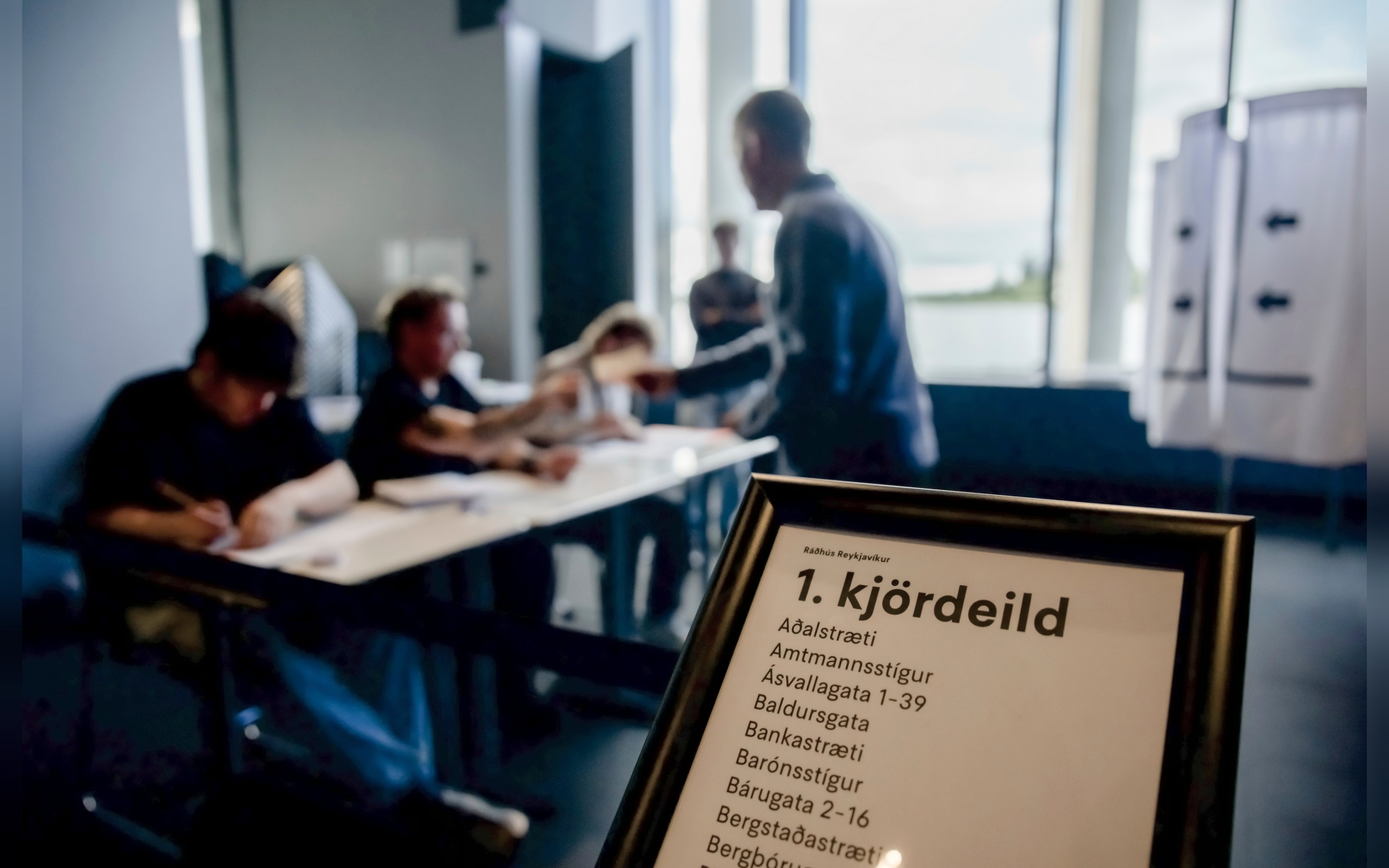
In a closely contested referendum that underscores deep divisions within Icelandic society, voters have decided against rekindling formal negotiations for European Union membership. The result, announced Sunday following polls that closed at 2200 GMT on Saturday, saw 52.8 per cent of the electorate vote against restarting accession talks, while 47.2 per cent supported the proposal. The razor-thin margin—less than six percentage points separating the two sides—reflects the polarised nature of Iceland's relationship with the bloc and hints at the profound identity questions that EU membership continues to raise for the Nordic nation.
The referendum represented a significant political moment for the pro-EU government led by the Social Democrats, which had swept to power in the 2024 election partly on a platform of pursuing closer European integration. Upon taking office, the administration committed to consulting voters on whether to reopen membership accession talks, a pledge it honoured by announcing the referendum in March. That timing was far from coincidental. Escalating geopolitical tensions across Europe, particularly following Russia's invasion of Ukraine, had revived discussions about Iceland's place within European security architecture and whether membership in the EU might provide greater strategic alignment with Western allies.
Iceland's relationship with EU membership has been characterised by ambivalence and starts-and-stops since the country formally applied in 2009. That application came in the immediate aftermath of the devastating global financial crisis, which struck the Icelandic economy with particular ferocity, crippling the banking sector and forcing the nation to seek alternative frameworks for economic stability and cooperation. However, momentum behind accession stalled dramatically when a eurosceptic government took office four years later. By 2013, accession talks were formally suspended, effectively placing membership aspirations on indefinite hold. That suspension reflected Iceland's traditional suspicions about surrendering control over domestic affairs to Brussels, concerns that have only intensified over the intervening decade.
Central to the opposition campaign against EU membership has been the question of fishing rights and the preservation of Iceland's control over its marine resources. The fishing industry remains absolutely fundamental to the Icelandic economy, generating substantial export revenues and employment across rural and coastal communities. Opponents of EU membership have consistently argued that joining the bloc would necessitate ceding sovereignty over territorial waters to the European Commission, subjecting Icelandic fishing practices and quotas to decisions made in Brussels rather than Reykjavik. This concern transcends narrow economic calculation; it touches upon fundamental questions of national autonomy and cultural identity in a nation where maritime traditions run extraordinarily deep.
For Malaysian and broader Southeast Asian observers, the Iceland referendum offers instructive parallels regarding the tension between regional integration and national sovereignty. Much like Iceland's wrestling with EU membership, countries throughout Southeast Asia navigate complex calculations about how deeply to embed themselves within multilateral frameworks. ASEAN itself was built explicitly upon the principle of non-interference and respect for national sovereignty, a stark contrast to the EU's supranational ambitions. The fishing industry concern that animated Iceland's debate also resonates across Southeast Asia, where maritime resources remain economically vital and politically sensitive, particularly given territorial disputes and competing claims in the South China Sea.
The close margin of Iceland's referendum also underscores how unpredictable and contingent public opinion remains on EU integration, even as geopolitical circumstances shift. The social democrats who championed the referendum clearly believed that Russian aggression in Ukraine and broader security concerns would tip the scales decisively in favour of membership. Yet they miscalculated the depth of resistance to EU integration among significant portions of the Icelandic electorate. The result demonstrates that security arguments, while powerful in elite political circles, do not automatically overcome longstanding public scepticism about surrendering institutional sovereignty, particularly when concrete economic interests like fishing appear threatened.
What happens next remains uncertain. The referendum result, while decisive in its rejection of restarting accession talks, does not resolve the underlying questions about Iceland's long-term orientation. The government could theoretically attempt to revive the membership question in future, particularly if geopolitical circumstances deteriorate further or if public opinion shifts. Conversely, the clear vote against reopening negotiations provides political cover for more eurosceptic factions to argue that the membership question has been definitively settled. Iceland will likely continue its current arrangement of participating in European economic and security structures through the European Economic Area and NATO membership, a status that provides substantial benefits without requiring the institutional integration that EU membership would entail.
From a European perspective, Iceland's rejection carries symbolic weight beyond its modest population and economy. The Nordic nation has long been portrayed as a natural and enthusiastic member of the European project, and its continued reluctance to embrace formal EU membership suggests that even among Europe's wealthiest and most integrated societies, significant reservations about surrendering sovereignty persist. This has implications for how Brussels approaches future enlargement, particularly in regions where national identity and economic sovereignty remain politically contentious.
For Iceland itself, the referendum result provides some breathing room but perhaps not resolution. The Social Democratic government can point to having honoured its electoral commitment by holding a transparent popular vote. The electorate has spoken clearly, if not overwhelmingly. Yet the proximity of the result—essentially a coin flip—guarantees that EU membership will remain a contested political question in Iceland for years to come.

