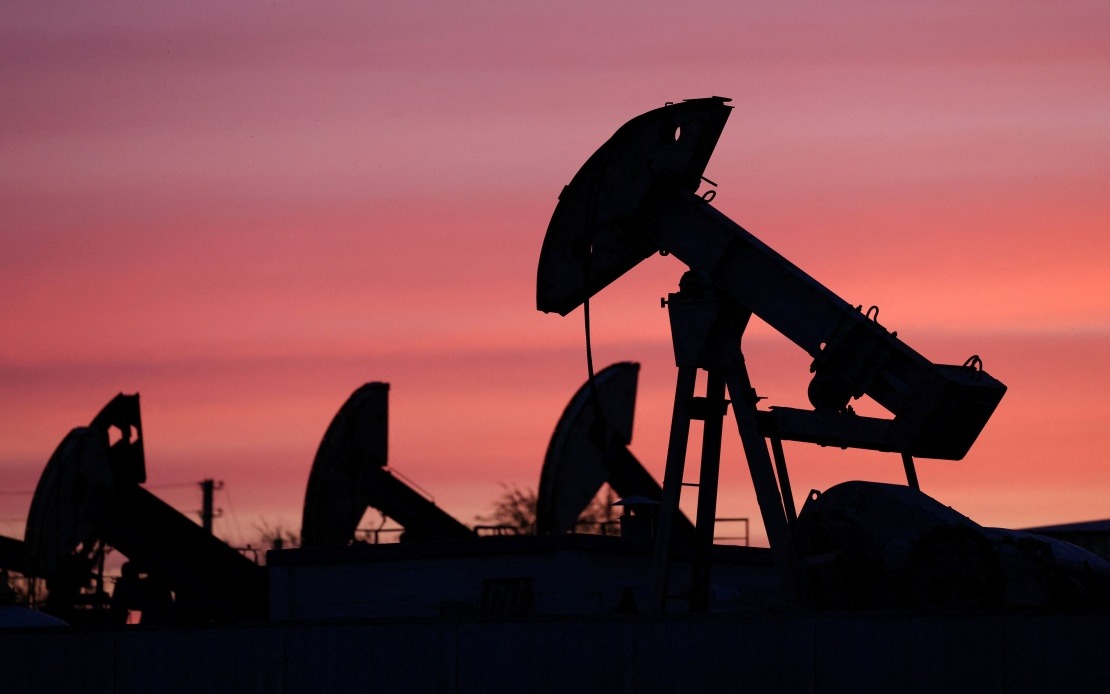
The International Energy Agency released revised forecasts on Friday that paint a marginally more optimistic picture of global oil markets heading into 2026, adjusting upward both its demand and production expectations compared with assessments issued just a month prior. The adjustments, while modest in absolute terms, reflect shifting assessments of how economies and energy consumption patterns will evolve across coming years, with particular implications for producers and consumers throughout Asia-Pacific and the Middle East.
In its updated report, the IEA now projects that global oil demand in 2026 will decline by 1.05 million barrels per day, reaching a total of 103.463 million barrels per day. This represents an increase of 171,000 barrels per day compared with the agency's previous forecast issued in early June, which had anticipated demand reaching only 103.292 million barrels per day. While the revision might seem marginal on the surface, such adjustments can carry substantial consequences for investment decisions and market positioning across the energy sector.
The upgraded demand outlook also incorporates a reassessment of 2025 consumption patterns. The IEA now expects demand to decline by 1.047 million barrels per day this year, a reduction of 71,000 barrels per day from its prior month estimate of 1.118 million barrels per day. This sequential improvement suggests that the agency sees somewhat greater demand resilience in near-term periods, perhaps reflecting assumptions about economic growth trajectories in major consuming nations that differ from earlier calculations.
On the supply side, the IEA has similarly adjusted its production forecasts upward, though with larger absolute revisions. The agency upgraded its 2026 global oil production forecast by 0.22 million barrels per day, now anticipating total output will reach 102.6 million barrels per day. This compared with the previous report's projection of 102.37 million barrels per day, indicating growing confidence in the production capacity and willingness of suppliers to maintain or increase output.
These production figures merit scrutiny when considered alongside demand projections. The IEA's forecasts suggest a narrowing of the gap between supply and demand in 2026, compared with earlier assessments. Where the previous report had anticipated production would need to decline by 3.87 million barrels per day to reach 102.37 million barrels per day, the updated projection now envisions production reaching 102.6 million barrels per day—a substantially different trajectory that implies greater confidence in supply-side sustainability.
For Malaysia and other Southeast Asian economies, these revised forecasts carry material significance. The region's position as both a modest oil producer and significant energy consumer means that shifts in global price formation, driven by supply-demand balancing, directly influence fiscal revenues for producing nations and energy costs for manufacturing-dependent economies. Smaller upward revisions in demand can prevent price spikes that might otherwise constrain industrial competitiveness across the region.
The IEA's upgraded outlook also reflects evolving perspectives on how major producer nations, particularly in the Organization of the Petroleum Exporting Countries (OPEC) and allied suppliers, will calibrate production decisions. The agency's confidence in reaching higher production levels suggests expectations that current geopolitical constraints on supply from various nations will either ease or be managed in ways that permit continued or expanded output. This contrasts with scenarios where production constraints tighten further.
Demand-side dynamics also warrant attention. The IEA's slight upward revision to demand projections may incorporate assumptions about electric vehicle adoption rates that proceed more slowly than previously modelled, or about economic growth in developing nations that proves somewhat more resilient than anticipated. Such underlying assumptions shape not only price expectations but also investment patterns in refining and distribution infrastructure across Asia-Pacific.
The iterative nature of the IEA's forecasting process—with monthly adjustments reflecting new data and recalibrated assumptions—underscores the inherent uncertainty in projecting energy demand and supply years in advance. The shifts documented in this latest report remain within ranges that many market participants would characterise as marginal, yet they signal directional changes worth monitoring as additional data accumulates through the remainder of 2024 and into 2025.
For policymakers across Southeast Asia, these upgraded forecasts suggest somewhat greater stability in global energy markets than might have appeared plausible under earlier, more pessimistic demand assumptions. This stability, if sustained, could facilitate more predictable energy security planning and reduce risks of sudden price volatility that might otherwise strain vulnerable economies. Conversely, the projections still encompass considerable uncertainty regarding potential disruptions, technological breakthroughs in renewables, or geopolitical developments that could substantially alter actual outcomes relative to the agency's current expectations.

