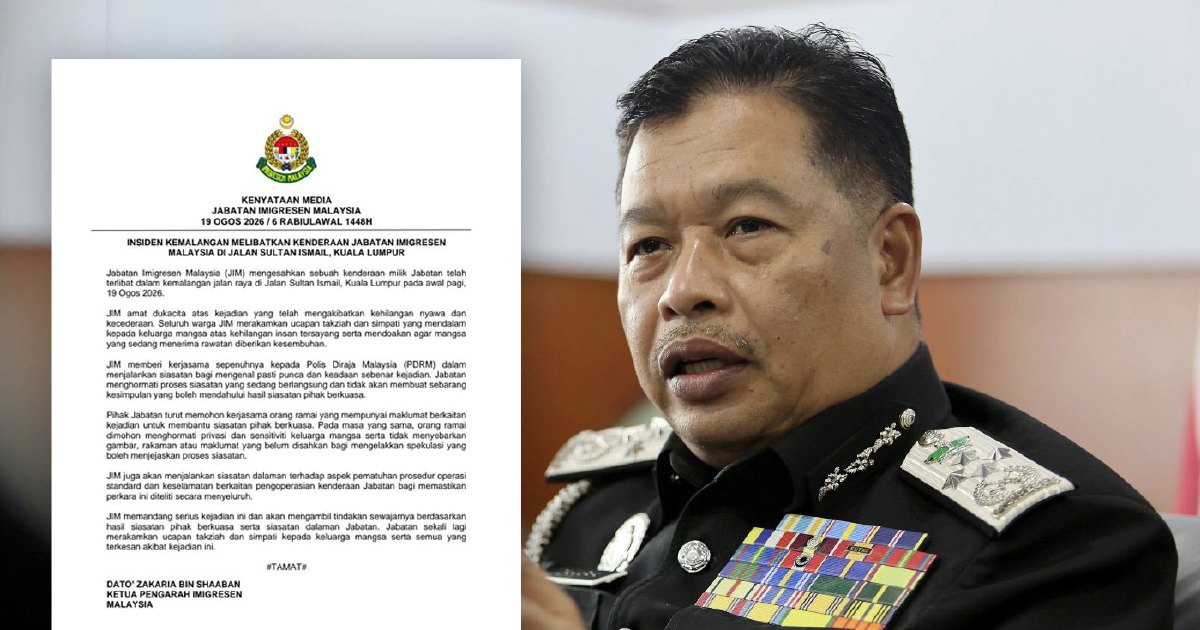
The Immigration Department announced it will undertake a comprehensive internal review into the circumstances surrounding a deadly traffic accident that claimed lives early today in the heart of Kuala Lumpur's business district. The inquiry will examine whether officers and staff adhered to established standard operating procedures and safety protocols at the time of the incident, which occurred along Jalan Sultan Ismail, one of the capital's major thoroughfares.
This development marks a significant response from Malaysia's immigration authorities to a serious operational incident, signalling heightened scrutiny of internal safety culture and accountability measures within the department. The decision to launch a formal investigation reflects growing concerns about vehicle safety standards among government departments and comes amid broader discussions about road safety in high-traffic urban areas.
Jalan Sultan Ismail, situated in the commercial heart of Kuala Lumpur near the Petronas Twin Towers and major business establishments, experiences substantial vehicular movement throughout the day and night. The accident's location underscores the potentially wide-ranging implications of such incidents in densely populated commercial zones where both government vehicles and private traffic converge regularly.
The internal investigation will likely examine multiple operational aspects, including driver training records, vehicle maintenance schedules, and whether appropriate safety briefings were conducted. Such reviews typically assess whether departmental protocols align with national road safety standards and whether any procedural lapses contributed to the tragic outcome.
For the Immigration Department, an agency responsible for managing border security and personnel movement across Malaysia's entry points, maintaining operational excellence and safety standards is crucial to institutional credibility. A fatal incident involving a departmental vehicle inevitably raises questions about resource allocation, staff welfare, and the adequacy of safety measures across government operations.
The inquiry also signals responsiveness to public accountability, particularly given that incidents involving government vehicles draw considerable public attention and media scrutiny. Malaysian authorities have increasingly recognised the importance of transparent investigations into workplace-related accidents to maintain public confidence in institutional governance.
This investigation occurs within a broader Southeast Asian context where government agencies are strengthening internal audit mechanisms and safety protocols. The region has witnessed heightened focus on occupational safety standards, with various countries implementing stricter requirements for vehicle maintenance, driver certification, and emergency response procedures within public sector operations.
The timing of such investigations is typically important for institutional learning. By conducting thorough reviews shortly after serious incidents, government departments can implement corrective measures swiftly, update training programmes, and prevent recurrence of similar accidents. The findings may also influence how other Malaysian government agencies review their own vehicle safety standards.
Staff morale and institutional support for affected employees and their families will likely form part of the broader departmental response beyond the formal investigation. Government agencies in Malaysia have demonstrated increasing recognition that workplace safety extends beyond procedural compliance to encompass comprehensive support systems for personnel.
The investigation's outcome may carry implications for departmental operations, potentially leading to revised training protocols, enhanced vehicle inspection procedures, or adjustments to shift scheduling and driver rest requirements. Such institutional changes, when implemented systematically across government agencies, contribute to broader improvements in occupational safety culture throughout Malaysia's public sector.
For Malaysian citizens and those interacting with the Immigration Department at various checkpoints and offices nationwide, news of systematic safety reviews may provide reassurance that authorities take operational standards seriously. The department's responsiveness demonstrates commitment to institutional accountability and continuous improvement.
As the investigation progresses, stakeholders including other government agencies, road safety advocates, and the broader public will likely monitor findings and recommendations closely. The conclusions drawn may establish precedents for how similar incidents are investigated and addressed within Malaysia's public service framework, potentially influencing departmental policies across the government sector for years to come.

