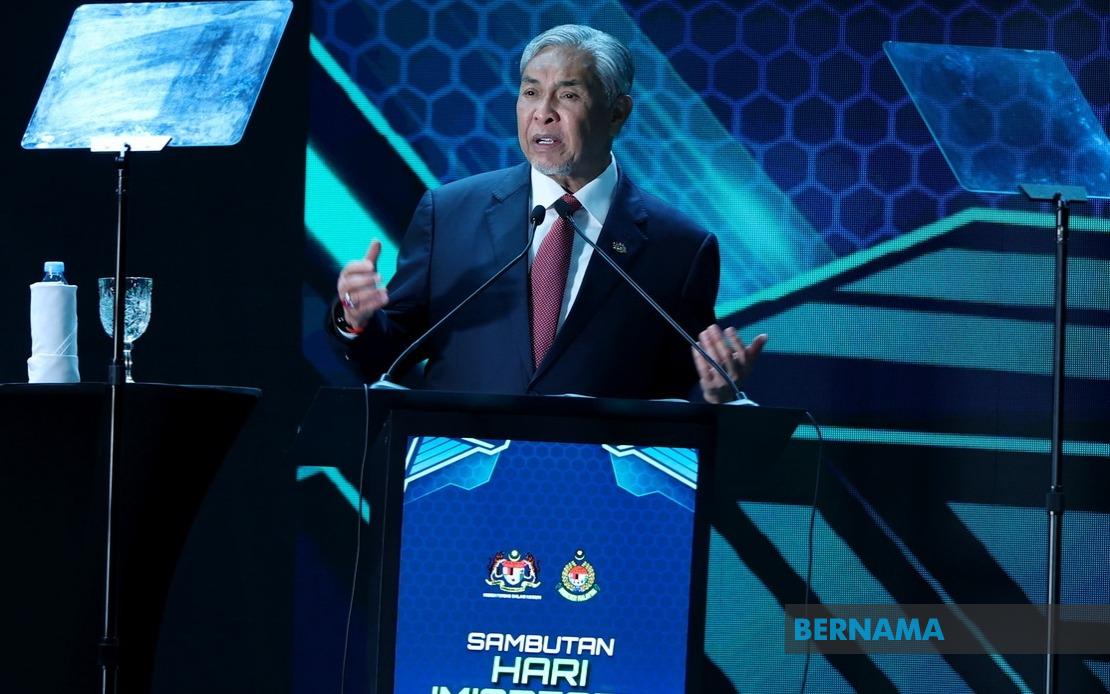
Deputy Prime Minister Datuk Seri Dr Ahmad Zahid Hamidi has thrown his weight behind efforts to substantially improve conditions and career prospects for immigration officers, acknowledging their pivotal contribution to Malaysia's security infrastructure and economic performance. Speaking at the 2026 Immigration Day celebration in Cyberjaya on July 21, Zahid endorsed the proposal previously raised by Home Minister Datuk Seri Saifuddin Nasution Ismail to overhaul the Immigration Officer Service Scheme through targeted restructuring and expanded advancement opportunities.
The call for reform reflects growing recognition that Malaysia's immigration personnel operate under significant strain managing one of the nation's most strategically sensitive borders. As frontline guardians responsible for controlling movement across the country's international entry and exit points, immigration officers face mounting pressure from rising traveller volumes, evolving security threats, and the logistical complexities of modern border management. The proposal to enhance their service conditions represents an acknowledgement that current arrangements may not adequately reflect the importance and difficulty of their work.
Zahid framed his support for the initiative within a broader economic context, emphasising that the Immigration Department ranks as the country's third-largest revenue-generating agency. This positioning underscores that immigration administration extends beyond security considerations to encompass substantial financial contributions to national coffers through visa processing, permit fees, and related services. The department's revenue-generating capacity demonstrates that investing in improved conditions and career pathways for officers yields tangible returns beyond institutional morale and retention.
The proposal involves two substantive elements: restructuring strategic posts within the department to create more meaningful leadership roles and expanding career pathways to provide officers with clearer progression opportunities and broader options for professional development. Such reforms typically address longstanding concerns within the service regarding limited advancement opportunities, salary stagnation relative to comparable public service positions, and insufficient recognition for specialised expertise developed through years of border management experience.
Zahid explicitly requested that government's administrative architecture carefully consider the proposal, directing his comments toward Chief Secretary to the Government Tan Sri Shamsul Azri Abu Bakar and Public Service director-general Tan Sri Wan Ahmad Dahlan Abdul Aziz. This appeals to the highest levels of Malaysia's civil service bureaucracy, suggesting the initiative has sufficient political momentum and perceived importance to warrant examination at the apex of governmental decision-making structures.
Beyond the structural and financial dimensions of the reform proposal, Zahid used the immigration day platform to reinforce expectations regarding conduct and professionalism among immigration personnel. He emphasised that officers must execute their responsibilities with integrity, recognising their position as guardians of national sovereignty. This framing casts immigration work not merely as procedural administration but as a trust-based function where individual decisions accumulate to shape the nation's security posture and international standing.
The deputy prime minister articulated a philosophical dimension to his message, suggesting that institutional strength ultimately derives not from external circumstances or institutional structures but from the character and dedication of personnel. He urged officers to approach their duties with what he termed "courage and wisdom," implying that effective border management requires both principled decision-making and tactical awareness rather than simple rule application.
Zahid's emphasis on avoiding controversy reflects broader governmental concerns about maintaining public confidence in immigration administration. Any perception that officers act improperly or that the system lacks integrity could undermine national security and public trust in institutional functioning. His warning against actions that might compromise national sovereignty signals sensitivity to how immigration operations connect to Malaysia's positioning in regional geopolitical contexts and its ability to exercise effective territorial control.
The timing of these remarks during an official Immigration Day celebration indicates deliberate governmental effort to publicly signal commitment to the service and its personnel. Such high-level political endorsement can influence administrative decision-making and signal to immigration officers that their concerns receive serious governmental consideration. For Malaysia's immigration personnel, who frequently report feeling undervalued relative to counterparts in other security services or comparable civil service positions, such recognition from the nation's second-highest political office carries symbolic significance.
The initiative also reflects practical workforce challenges. Immigration departments across Southeast Asia face persistent difficulties attracting and retaining qualified personnel when competing with private sector opportunities and alternative public service roles offering better remuneration and advancement prospects. Malaysia's proposal to enhance its scheme aligns with broader regional recognition that effective border management requires stable, experienced professional workforces rather than constant personnel churn.
Implementing these reforms would require navigating Malaysia's civil service rules and budgetary frameworks, processes typically involving multiple government agencies and requiring coordination between the Home Ministry, Treasury, and central administrative bodies. The engagement of the Chief Secretary and Public Service director-general suggests these institutional hurdles have been recognised and that momentum exists to progress the initiative through appropriate governmental channels.
For Malaysia's immigration sector, this public endorsement at the highest political levels provides momentum for institutional reform that many within the service have long advocated. Whether the proposal advances to concrete restructuring and funding improvements will depend on subsequent administrative deliberation and budgetary allocation decisions. Nonetheless, the Deputy Prime Minister's backing demonstrates that enhancement of immigration officer service conditions has achieved sufficient political priority to warrant serious consideration within government's planning apparatus.

