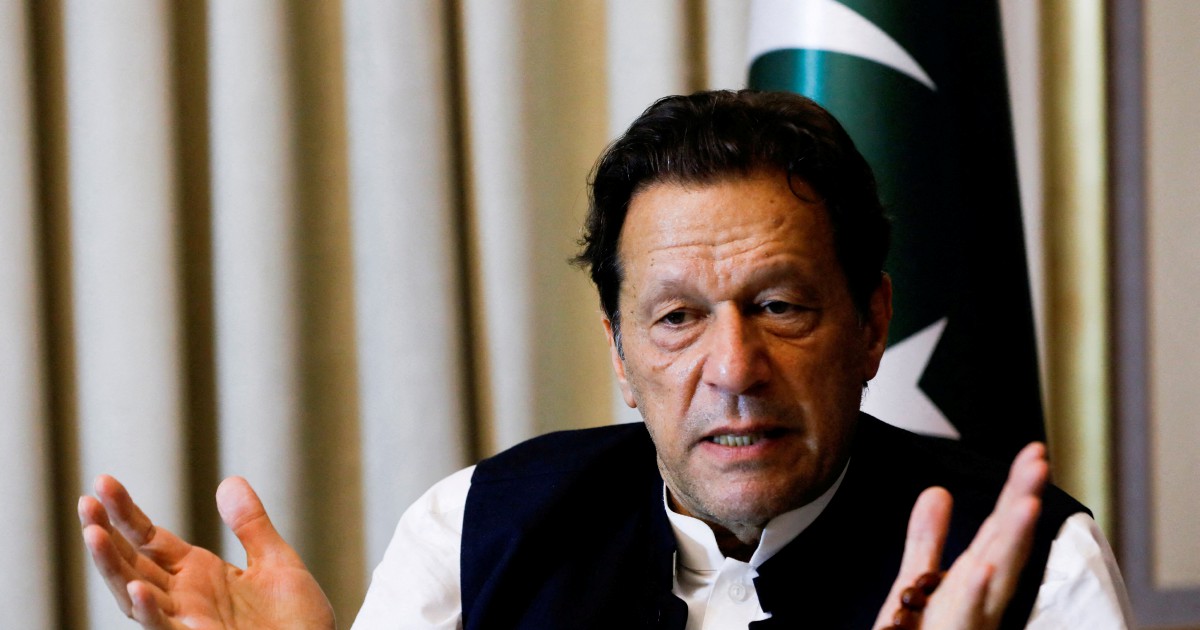
Imran Khan, who once steered Pakistan as Prime Minister, has been remanded to custody in Islamabad after completing a court-mandated medical assessment. A senior official confirmed Friday that the cricketer-turned-politician was escorted back to detention following the health examination at a capital facility, acting on orders issued by the judiciary.
The development marks another chapter in Khan's tumultuous legal saga since his departure from high office. Over recent years, the Pakistan Tehreek-e-Insaaf leader has faced mounting legal challenges that have kept him entangled with authorities, ranging from financial misconduct allegations to political charges. His detention cycles and periodic court appearances have become a defining feature of Pakistan's contemporary political landscape, drawing international attention and sparking debate about judicial fairness and political persecution.
Khan's return to incarceration follows a prescribed medical evaluation, suggesting authorities may be monitoring his health condition during detention. Such court-ordered health checks are not uncommon in the Pakistani judicial system, particularly when detainees spend extended periods behind bars. The completion of the assessment and subsequent return to jail indicates the courts have proceeded with standard protocols while Khan remains under custody pending further legal proceedings.
For Malaysian observers, Khan's predicament offers insight into the complexities facing opposition figures across South Asia when navigating contested political environments. Pakistan's judicial system, like those in several neighbouring democracies, sometimes becomes a battleground where competing political forces deploy legal mechanisms to neutralise rivals. The Pakistani media and civil society have expressed concerns about whether Khan's case reflects genuine criminal wrongdoing or represents a weaponisation of the law for political ends—a distinction often difficult to establish with certainty.
The timing of Khan's medical examination and reimprisonment occurs against the backdrop of Pakistan's broader political turbulence. The nation has experienced recurrent cycles of political instability, military interventions, and constitutional crises. Khan's imprisonment thus represents not merely a personal misfortune but a symptom of deeper institutional tensions within Pakistan's governance structures. His supporters view his detention as a demonstration of elite immunity—the ruling establishment protecting itself from accountability—while authorities maintain he faces legitimate criminal charges.
Khan's political trajectory remains relevant to Southeast Asian analysts because it illustrates how populist leaders who challenge established power structures can become vulnerable to legal countermeasures once they lose formal office. His ascent from sporting celebrity to political outsider who promised to clean up corruption resonated with voters fatigued by traditional politics. Yet his removal from power has translated into isolation, as institutional forces and rival political factions have mobilised against him through courts and security agencies.
The medical examination protocol itself merits scrutiny. While periodic health assessments for detainees align with humanitarian principles, they can also serve procedural purposes that complicate legal timelines or provide authorities with leverage in negotiations. Pakistan's prison system, like detention facilities across South Asia, operates within constraints of overcrowding and inadequate healthcare resources. High-profile detainees often receive different treatment standards compared to ordinary prisoners, though this disparity varies depending on political calculations and judicial oversight.
International observers, including human rights organisations, have intermittently monitored Khan's case with particular focus on whether his detention complies with procedural fairness standards and due process principles. These assessments have yielded mixed conclusions, reflecting genuine uncertainty about whether the charges against him represent legitimate prosecutions or politically motivated persecutions. The ambiguity itself has become significant, as Pakistan's international credibility and investment environment have suffered from perceptions of judicial weaponisation.
Looking forward, Khan's legal battles will likely continue shaping Pakistan's political dynamics. His PTI party remains a potent electoral force despite his incarceration, indicating he retains considerable grassroots support. The question of whether he will ultimately face trial convictions, secure bail pending proceedings, or achieve release through political settlement remains unresolved. Each scenario carries different implications for Pakistan's democratic consolidation and the precedent it establishes for future political contestation.
For regional policymakers and observers, Khan's situation underscores the fragility of democratic institutions when executive power combines with judicial leverage against political opponents. Malaysia and other ASEAN nations, each managing their own tensions between democratic governance and state authority, can draw cautionary lessons from the Pakistani precedent. The sequence of arrest, detention, medical examinations, and reimprisonment illustrates how legal systems can become instrumentalised when political stakes escalate and institutional safeguards weaken.

