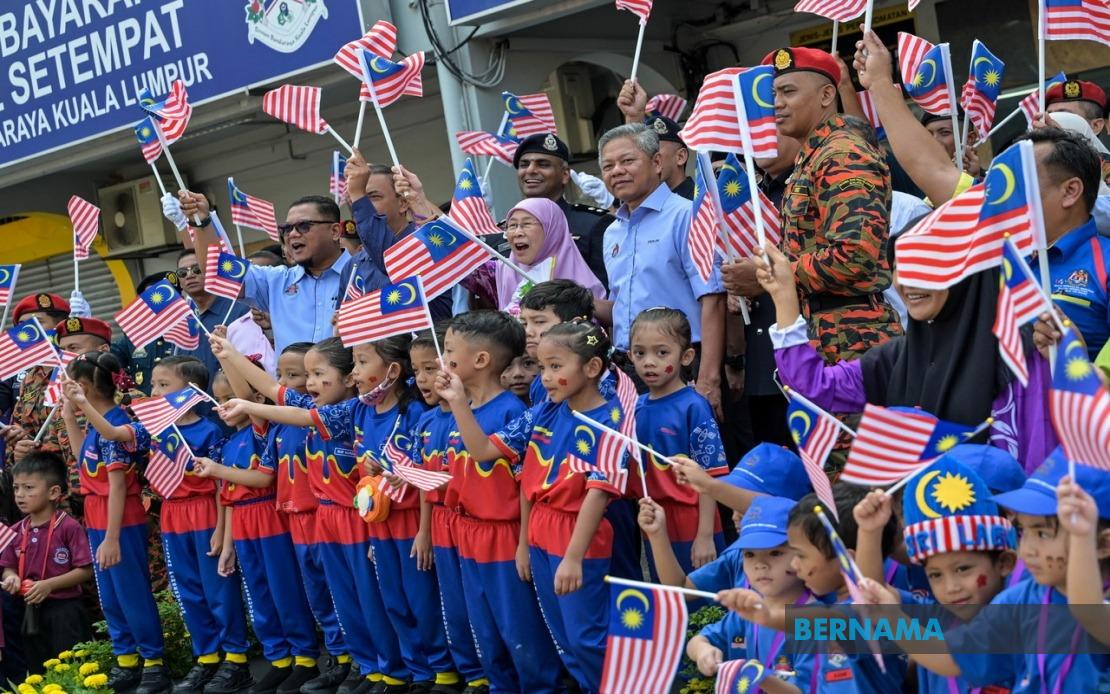
The meaning of national independence extends far beyond ceremonial displays of patriotic fervour, according to Prime Minister's wife Datuk Seri Dr Wan Azizah Wan Ismail. Speaking at a Merdeka celebration programme in Bandar Tun Razak, she stressed that true independence must be understood as a collective undertaking requiring sustained commitment from all citizens to safeguard the country's peace, harmony and social fabric. Her remarks, delivered as Malaysia prepared for its National Day observances, reframed the independence narrative from one of historical commemoration to one of ongoing civic responsibility.
Dr Wan Azizah, who represents Bandar Tun Razak in Parliament, articulated that independence transcends the familiar symbols of national pride such as the spirited cry of "Merdeka" or the display of the Jalur Gemilang flag. Instead, she positioned independence as encompassing the profound sacrifices made by previous generations who fought for and built the nation's sovereignty. Her framing acknowledged the historical struggles and personal costs borne by those who established Malaysia as a free nation, suggesting that contemporary Malaysians bear a moral obligation to honour those sacrifices through their actions and choices.
The emphasis on deeper meaning carries particular resonance in the context of Malaysia's persistent challenges around national cohesion. By characterizing independence as a "shared responsibility", Dr Wan Azizah implicitly acknowledged that the preservation of national peace and unity cannot be taken for granted but requires active, ongoing participation from diverse segments of society. This approach moves beyond abstract appeals to patriotism, instead grounding the concept of independence in practical commitments to social stability and intercommunal harmony.
Dr Wan Azizah's intervention occurred during the Semarak Merdeka Programme, an event that underscored the government's focus on bringing independence celebrations to grassroots communities rather than limiting them to official ceremonies. The Prime Minister's political secretary Datuk Azman Abidin attended the programme, signalling institutional backing for this community-focused approach. By hosting such events in residential constituencies, the government demonstrated its intent to connect national themes with the everyday experiences and concerns of ordinary citizens.
The 2024 National Day theme, "Malaysia Madani: Jiwa Merdeka", provided the conceptual framework for this year's independence messaging. This theme explicitly linked the idea of a truly free Malaysia to the broader government agenda of improving citizens' quality of life, ensuring equitable opportunities and reinforcing national unity. The framing suggests that independence is not merely a historical fact but an ongoing project requiring sustained investment in social development and inclusive governance. For Malaysian readers, this articulation signals that patriotic observance should translate into tangible improvements in living standards and social equity.
Dr Wan Azizah highlighted Bandar Tun Razak's demographic composition as a living example of the pluralistic society that independence created. The constituency's approximately 191,000 residents comprise 60 percent Malays, 24 percent Chinese and eight percent Indians, according to data from the Malaysian Population and Housing Census. This demographic snapshot reflects Malaysia's multicultural character and serves as microcosm of the nation's diversity. By referencing these specific figures and portraying the community as both dynamic and harmonious, she presented a concrete model of the kind of united nation that independence should foster.
Beyond the rhetorical dimensions of her address, Dr Wan Azizah's visit to residents of the Seri Pulau Pinang and Desa Tun Razak People's Housing Projects grounded the independence theme in material assistance and social support. The delivery of welfare benefits from the Social Security Organisation (PERKESO) and the Federal Territories Islamic Religious Council (MAIWP) demonstrated how the state's commitment to citizens' wellbeing translates into concrete interventions. This direct engagement with vulnerable families underscored that independence carries practical implications for how the state supports its citizens during hardship.
Among those receiving assistance was K. Moganavalli, a 39-year-old widow whose husband Edwin Anthony Dass died unexpectedly on August 2. Forced to assume sole responsibility for three young children after her husband's death—he had worked as both a lorry driver and Grab driver—Moganavalli exemplifies the precarious circumstances facing many Malaysian households. She received a one-off Funeral Management Benefit of RM3,000 from PERKESO and a monthly Survivor's Pension of RM1,118.33, alongside additional Kotak Prihatin assistance. Her gratitude for this support highlights how social safety nets provide crucial anchors for families experiencing sudden economic shocks.
Another beneficiary, 64-year-old Khalijah Binti Nazir, illustrates the diverse vulnerabilities present in urban constituencies. As a single mother who abandoned her employment to provide full-time care for two children, one of whom has a hearing impairment, Khalijah represents the substantial segment of Malaysian society excluded from formal workforce participation due to caregiving responsibilities. She receives RM800 monthly through Baitulmal assistance, RM300 via the Boost eWallet, and RM150 under the Sumbangan Asas Rahmah (SARA) scheme, while her son benefits from an additional RM100 in monthly SARA assistance. These layered support mechanisms, though modest in individual terms, reflect the government's attempt to construct comprehensive welfare infrastructure.
The juxtaposition of Dr Wan Azizah's philosophical remarks about independence with her direct engagement in welfare delivery reveals an implicit understanding that the independence project remains incomplete without addressing contemporary material deprivation. For constituencies like Bandar Tun Razak, where public housing residents confront economic vulnerability, independence becomes meaningful only when coupled with reliable systems of social protection. The targeted distribution of welfare benefits during National Day celebrations symbolically connects national sovereignty to state responsibility for citizen welfare.
Dr Wan Azizah's messaging also carries subtle implications for how Malaysia should approach its post-colonial development trajectory. By urging citizens to "appreciate" independence as a foundation for building "a united, prosperous and progressive Bandar Tun Razak community", she framed the constituency as a testing ground for the kind of inclusive development that national independence should enable. This framing moves independence beyond commemorative function toward becoming a lens through which to evaluate whether contemporary Malaysia fulfils the promises embedded in national sovereignty.
The emphasis on peace and unity preservation warrants particular attention given regional complexities and Malaysia's own experiences of social friction. By situating independence celebration within a framework of shared responsibility for these goods, Dr Wan Azizah articulated a vision where patriotism requires not merely emotional attachment to national symbols but active participation in building and maintaining the institutional arrangements and social relationships that sustain a peaceful, cohesive society. This interpretation resonates across Southeast Asia, where multiple post-colonial societies grapple with similar questions about how to balance national identity with social harmony amid diversity.
Ultimately, Dr Wan Azizah's intervention repositioned independence from a historical achievement to be commemorated into an ongoing civic challenge requiring contemporary commitment. For Malaysian readers navigating a complex political landscape and facing persistent socioeconomic challenges, her message suggests that true patriotism consists less in nostalgic remembrance of the independence struggle than in concrete efforts to ensure that independence translates into tangible improvements in security, prosperity and harmony for all citizens, particularly those most vulnerable to economic shocks.

