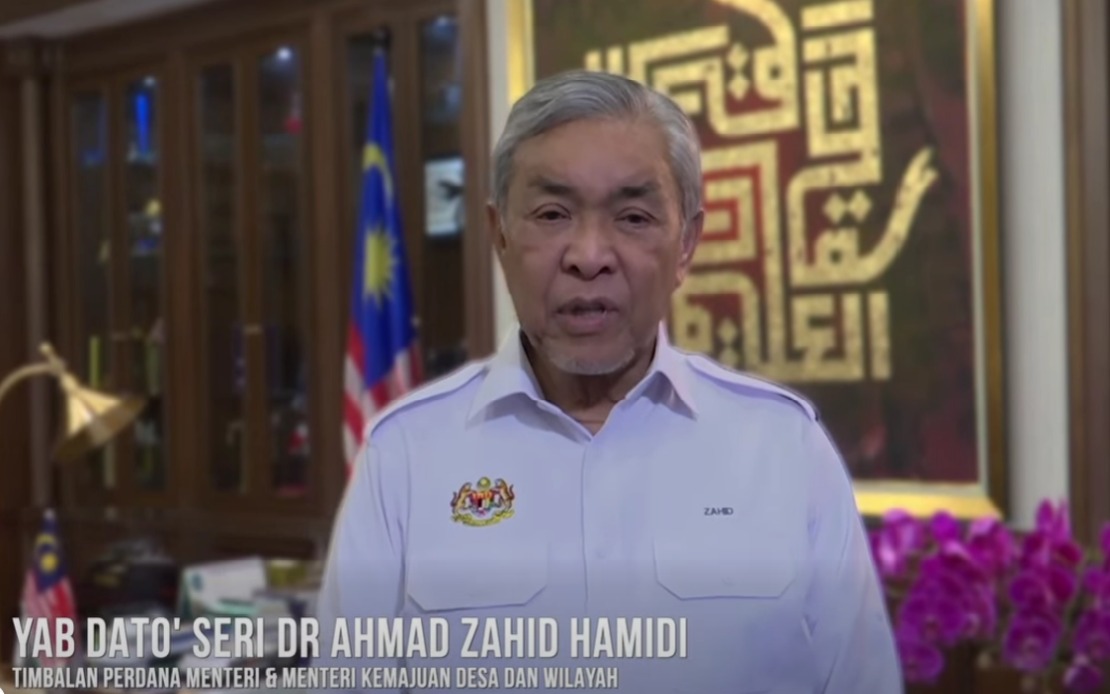
As Malaysia marked its 69th National Day on August 31, Deputy Prime Minister Datuk Seri Dr Ahmad Zahid Hamidi shifted the conversation around independence from historical achievement to present-day relevance. In a Facebook video message, he argued that the contemporary meaning of independence extends far beyond the nation's 1957 break from colonial rule, instead requiring that prosperity and opportunity be woven into the lived experience of ordinary Malaysians across all regions and economic backgrounds.
Ahmad Zahid framed the challenge facing modern Malaysia as fundamentally different from the struggle that preceded formal independence. Where previous generations fought for political sovereignty, today's task involves ensuring that independence translates into concrete improvements that citizens can tangibly experience. This reorientation reflects a broader governmental concern that historical narratives alone cannot sustain national cohesion or public confidence, particularly among younger Malaysians who have known only independent Malaysia and judge their government by its delivery of services and opportunities rather than by historical memory.
Central to Ahmad Zahid's vision is the role of technical and vocational education and training, commonly abbreviated as TVET. The Deputy Prime Minister emphasised that equipping young people with such skills represents a cornerstone of meaningful independence, as it directly enables them to secure well-paying employment in future decades. This focus reflects Malaysia's economic evolution and the recognition that the nation's competitiveness increasingly depends on a workforce capable of filling advanced technical roles that command premium wages. The emphasis on TVET skills also addresses a practical concern: despite decades of independence, significant portions of Malaysia's youth population still lack marketable qualifications that position them competitively in domestic or global labour markets.
Beyond employment, Ahmad Zahid broadened the definition of independence to encompass entrepreneurial opportunity and household economic advancement. He argued that independence must create pathways for small entrepreneurs to expand their businesses and enable families across all income levels to progressively improve their material circumstances. This articulation resonates with concerns among lower and middle-income Malaysians that economic growth has concentrated wealth and opportunity in urban centres and among those with existing capital or networks, leaving others behind.
As Rural and Regional Development Minister, Ahmad Zahid underscored the geographical dimension of inclusive development. He contended that true national greatness cannot be constructed solely through urban development and showcase infrastructure projects; instead, the nation's character is fundamentally shaped by how comprehensively it brings all regions, including villages and remote areas, into the development process. His ministry's mandate, he explained, involves ensuring that infrastructure, services, and opportunity do not terminate at city boundaries but reach into every corner of the nation. This positioning suggests an acknowledgment that rural Malaysia has historically received disproportionately less investment and attention, creating geographic inequalities that undermine national cohesion.
Ahmad Zahid illustrated this principle through concrete examples: how a single road can transform a village's economic prospects, how electricity access can uplift households and aspirations, and how educational infrastructure in modest settings can nurture talent that benefits the entire nation. These vignettes ground abstract notions of development in everyday realities that Malaysian villagers and small-town residents would immediately recognise, suggesting that independence's meaning is ultimately measured in such practical improvements rather than in nationalist rhetoric.
A particularly notable element of Ahmad Zahid's message involved Malaysia's halal industry. He highlighted the sector as both a source of national pride and a generator of global market access and livelihood opportunities for Malaysian entrepreneurs and workers. The emphasis on halal production reflects Malaysia's positioning within global Islamic commerce networks and recognises that religious and cultural distinctiveness can translate into economic competitive advantage when strategically developed. This framing also subtly reinforces that inclusive development respects Malaysia's particular identity and values rather than imposing uniform, culturally-neutral models.
Meanwhile, co-Deputy Prime Minister Datuk Seri Fadillah Yusof offered a complementary perspective centred on national unity and social cohesion. Fadillah urged Malaysians to liberate themselves from division, animosity, prejudice, and extremism that threaten the nation's foundational harmony. His message reflected concern that independence's fragility lies not in external threats but in internal fractures along religious, cultural, and political lines. He posited that true freedom requires citizens to actively cultivate peaceful coexistence rather than passively inherit it from colonial-era multicultural traditions.
Fadillah articulated Malaysia's diversity as both challenge and asset, acknowledging that Malaysians differ across religion, culture, language, customs, and background while emphasising that these differences occur within a shared homeland and common future. This framing addresses a persistent tension in Malaysia's national narrative: how to maintain unity while respecting genuine pluralism. His insistence that shared geography and collective destiny must supersede differences implicitly warns against identity-based or ideological fragmentation that could splinter the nation despite superficial stability.
The 2024 National Day theme, Malaysia MADANI, encapsulates both leaders' messaging. MADANI, derived from an Arabic concept referring to civilisation and developed society, signals that Malaysia's aspirations transcend mere material prosperity to encompass holistic well-being distributed across all population segments. Both Ahmad Zahid and Fadillah emphasised that true development proves its worth when ordinary citizens from all backgrounds experience improved living standards, dignity, and opportunity. This reframing moves beyond metrics of GDP growth or infrastructure megaprojects to focus on household-level outcomes and subjective quality of life.
Fadillah's emphasis on maintaining Malaysian identity, values, and togetherness amid rapid economic and technological change addresses anxieties that globalisation, digital transformation, and competitive pressures could erode the distinctive character and social fabric that independence was meant to protect. His call for Malaysians to uphold the Federal Constitution and Rukun Negara principles appeals to foundational national documents as anchors during periods of instability or transformation.
Both leaders framed independence as ongoing rather than completed, transforming it from a historical event into a perpetual project requiring active citizenship and governmental commitment. They implicitly warned that independence remains vulnerable if citizens become alienated from the development process, if opportunities concentrate among elites, or if social divisions deepen. Their messages suggest that Malaysia's greatest vulnerabilities in 2024 are not external but internal: the possibility that citizens might lose faith in the nation's inclusivity, or that communities might retreat into separate identities rather than embrace shared destiny.

