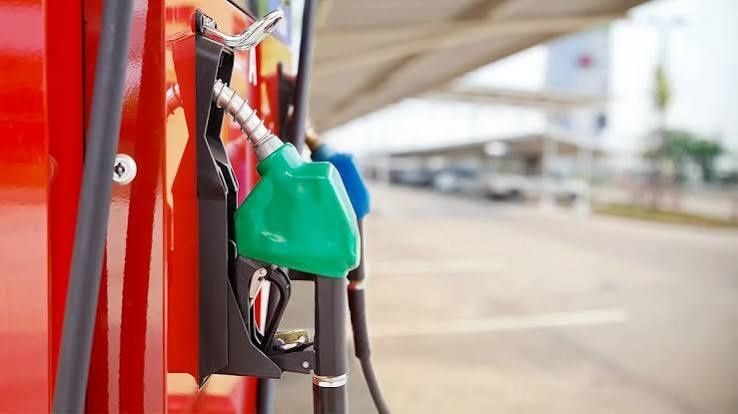
New Delhi's push to enforce mandatory blending of 20 per cent ethanol with petrol has become a political liability for Prime Minister Narendra Modi's administration, with the policy now drawing fire from both ordinary motorists and opposition politicians. Introduced last year, the E20 fuel mandate was intended to advance environmental goals and bolster India's agricultural sector, but it has instead evolved into a contentious flashpoint threatening the government's credibility on consumer protection and transparency. The controversy intensified dramatically this week when Attorney General R. Venkataramani referred to the policy as an "experiment" during a court hearing, inadvertently providing fuel to critics who argue the government implemented a sweeping initiative without adequate testing or public consultation.
The video evidence of Venkataramani's remarks circulating widely on social media has proved far more damaging than any official denial. Despite the attorney general's subsequent attempt to reframe his language, suggesting he was referring only to ethanol supply volumes rather than the policy itself, the damage to public confidence appears substantial. The incident has emboldened motorists in the world's third-largest automobile market to voice grievances they had previously aired quietly, transforming individual complaints into a nascent movement against what many perceive as government overreach.
Motor enthusiasts and daily commuters alike are joining forces around a shared frustration: they no longer possess agency at fuel pumps across India. The elimination of choice, combined with early evidence of reduced fuel efficiency and potential mechanical complications, has galvanised consumer sentiment against the mandate. What began as scattered complaints on social media has crystallised into organised resistance, with planned demonstrations drawing thousands of interested participants willing to take to the streets.
Opposition figures have seized on the government's apparent vulnerability on this issue. State minister Priyank Kharge of the Congress party has articulated a compelling critique, pointing out that the administration cannot reasonably challenge citizens to furnish evidence of damage when the government itself has not yet completed its own data collection. This argument cuts to the heart of the legitimacy question: implementing a nationwide fuel standard without comprehensive, publicly available testing represents a departure from evidence-based policymaking.
Individual motorist testimonies, amplified through digital platforms, reveal a pattern of mechanical failures attributed to E20 usage. One viral video featuring a frustrated car owner named Manish Kashyap, viewed more than half a million times, depicts a vehicle undergoing repairs after merely two months of E20 use. Kashyap's comments about the financial burden of unexpected repairs resonate with India's urban middle class, who view their vehicle purchases as significant personal investments deserving protective consideration from their government.
Petroleum Minister Hardeep Singh Puri attempted to address concerns by drawing parallels to racing fuel technology, suggesting that performance vehicles routinely use ethanol blends without issue. His acknowledgement that mileage may decline marginally, while acceleration might improve in certain contexts, inadvertently highlighted the mismatch between the government's expected outcomes and what ordinary drivers actually experience. Racing applications operate under entirely different parameters than daily commuting on Indian roads, a distinction the minister's comments failed to adequately address.
The government's communications strategy has grown increasingly dismissive of public concerns, with official statements characterising criticism as "wild claims" and "rage bait," language that risks further alienating concerned citizens rather than reassuring them. This rhetorical approach suggests internal frustration with the policy's reception but offers no substantive engagement with legitimate questions about fuel efficiency, engine compatibility, and long-term vehicle durability.
From an environmental and agricultural perspective, the government's rationale for E20 remains sound on paper. Increased ethanol blending reduces reliance on imported crude oil, conserving precious foreign exchange reserves, while simultaneously generating demand for sugarcane and grain-based feedstocks, thereby supporting rural incomes. Carbon emission reductions align with India's climate commitments and international obligations. However, these macroeconomic and environmental benefits carry limited weight with motorists experiencing immediate, tangible costs at the individual level.
The E20 controversy reflects a broader governance challenge that extends beyond fuel policy: the tension between top-down implementation of policies perceived as beneficial for national interests and the democratic principle of public participation in decisions affecting daily life. For Southeast Asian observers, India's experience offers cautionary lessons about the political costs of introducing contentious regulations without adequate stakeholder consultation, transparent data sharing, and genuine dialogue with affected communities.
The scale of planned protests and the viral spread of critical content suggest that public anger may intensify before it subsides. Government officials face mounting pressure to either provide compelling evidence that E20 poses no significant problems or to grant motorists a choice in fuel selection at pumps. The coming weeks will reveal whether New Delhi can restore confidence through substantive action or whether this issue will continue eroding public trust in the administration's commitment to the interests of ordinary Indian consumers.

