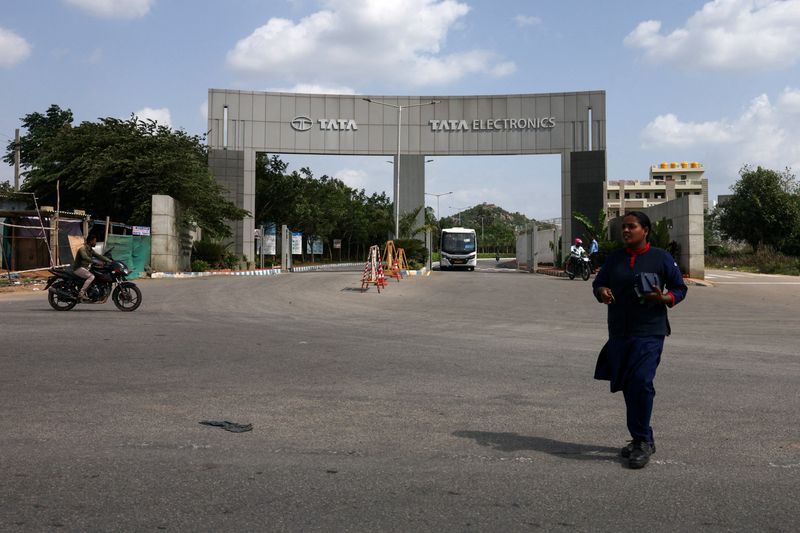
India's Ministry of Electronics and Information Technology has confirmed it is investigating a significant data breach at Tata Electronics involving sensitive information about Apple's forthcoming iPhone 18 Pro model. The disclosure came on Thursday when S. Krishnan, the ministry's secretary, publicly acknowledged the incident for the first time, marking an escalation in the government's response to what security experts describe as one of the most consequential industrial espionage cases in recent years. The breach exposes the vulnerabilities in India's technology supply chain, particularly as the country positions itself as an alternative manufacturing hub to China for global tech giants.
The compromised files obtained by hackers include detailed component lists, supplier directories, and photographic evidence of unreleased iPhone 18 Pro units. This material was subsequently uploaded to the dark web by an organised ransomware collective, making it accessible to competitors, analysts, and potentially hostile state actors. The specificity of the leaked information—particularly the identification of which suppliers manufacture particular components—represents intelligence that Apple normally guards with exceptional rigor. Such details allow rivals to reverse-engineer production strategies, anticipate cost structures, and potentially manufacture counterfeit components that could undermine Apple's quality control and supply chain security.
The investigation has been formally referred to India's Computer Emergency Response Team, the nation's primary cybersecurity authority tasked with addressing threats to critical information infrastructure. This institutional response reflects the gravity with which the government views the incident, beyond its immediate impact on Apple. The involvement of multiple government agencies suggests that Indian officials recognise the breach as both a corporate security failure and a potential national vulnerability, given the strategic importance of attracting foreign technology manufacturing to Indian soil as part of the government's Make in India initiative.
Tata Electronics, one of Asia's largest electronics manufacturers and a cornerstone of India's aspirations in advanced technology production, engaged global forensic consultants to investigate the full scope of the breach. The decision to hire external specialists indicates that internal security review proved insufficient to contain or understand the incident. This outsourcing of security analysis also reflects international best practices in incident response, acknowledging that sophisticated ransomware attacks often require cross-border expertise to trace origins and assess data exfiltration comprehensively.
The timing of the leak proves particularly damaging to Apple's product cycle. The iPhone 18 Pro and Pro Max are scheduled for public announcement and release in September, leaving approximately two months before the company's flagship models reach consumers. During this critical window, competitors gain advance knowledge of technical specifications, pricing implications, and manufacturing strategies. For companies like Samsung, Xiaomi, and other Android manufacturers operating in Southeast Asia and the broader Indian subcontinent market, such intelligence could inform last-minute adjustments to their own product roadmaps.
What makes this breach distinctly troubling for Apple's supply chain governance is that the leaked material includes information the company deliberately withholds from its public supplier list. Apple maintains a carefully curated transparency strategy, publishing approved supplier names while concealing the specific assignments given to each vendor. This deliberate opacity serves multiple strategic purposes: it prevents supply chain mapping by competitors, protects proprietary manufacturing processes, and shields individual suppliers from targeted recruitment or industrial espionage. The ransomware group's ability to access and extract these hidden relationships suggests either sophisticated insider knowledge or alarming gaps in compartmentalisation of sensitive data across Tata's infrastructure.
The incident also implicates other major technology firms whose data appeared in the same cache, including Tesla, Qualcomm, and TSMC. This pattern suggests the attackers either maintained access to Tata's systems for an extended period, enabling them to harvest data from multiple clients simultaneously, or that Tata's networks contained archived information from previous consulting or manufacturing engagements. Either scenario points toward systemic vulnerabilities in how Tata manages sensitive client information across its facilities and digital infrastructure.
For Malaysia and other Southeast Asian nations competing with India for foreign technology investment, the breach carries cautionary implications. As countries throughout the region market themselves as manufacturing alternatives to China, questions about cybersecurity maturity become decisive factors for multinational corporations evaluating relocation decisions. If India's technology sector—backed by government policy and investment—cannot adequately protect client intellectual property, potential investors may recalibrate their risk assessments regarding the entire regional ecosystem. Malaysian manufacturers, by contrast, face an opportunity to emphasise superior cybersecurity protocols and physical security measures as competitive advantages.
The breach occurs amid broader discussions about supply chain resilience following years of pandemic-related disruptions and geopolitical tensions. Apple and other technology companies have deliberately diversified manufacturing away from concentrated exposure to any single jurisdiction, with India receiving substantial new capacity allocations precisely because the company sought geographic redundancy. However, security incidents that compromise the confidentiality of manufacturing partnerships or product designs can undermine the strategic logic of geographic diversification, since the advantage of spreading risk dissipates if sensitive information leaks create competitive disadvantages across all locations simultaneously.
The Indian government's investigation will likely focus on determining how ransomware actors gained initial system access, whether insider cooperation facilitated the breach, and whether Tata's incident response protocols met accepted industry standards. These findings may influence future government policy regarding security requirements for companies handling foreign client data or manufacturing sensitive technologies. Additionally, the investigation outcomes could affect Tata's ability to retain existing high-value clients and attract new international manufacturers seeking Indian production capacity.
From Apple's perspective, the breach necessitates acceleration of security audits across all Indian manufacturing partners and may prompt the company to adjust component sourcing strategies to reduce information clustering at any single supplier facility. The incident also provides competitors with intelligence about Apple's supply chain dependencies, potentially enabling targeted recruitment of key suppliers or negotiation of more favorable terms by threatening to publicise relationships Apple prefers to keep confidential.
As India aims to position itself as a credible alternative to established manufacturing hubs for cutting-edge technology products, incidents like the Tata breach underscore that investment in physical infrastructure and tax incentives must be accompanied by proportionate investment in cybersecurity capabilities. The coming weeks will reveal whether India's government and private sector can respond with sufficient urgency and transparency to maintain investor confidence in the country's technology manufacturing ecosystem.

