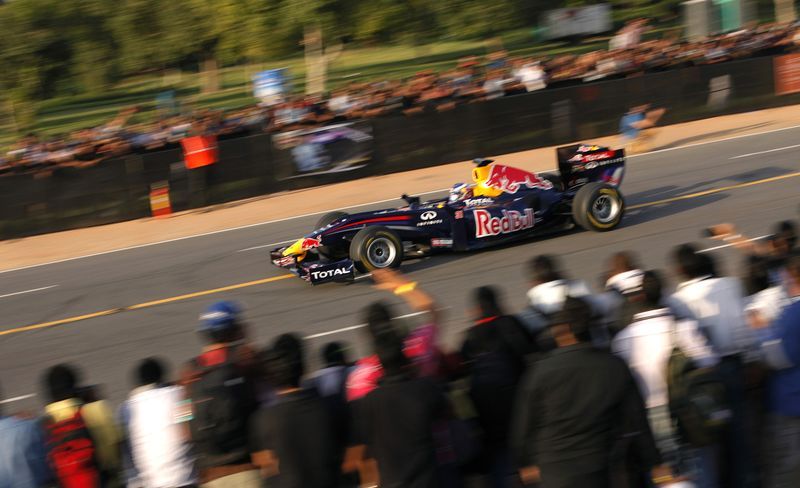
India's government has launched a concerted effort to resurrect Formula One racing at the Buddh International Circuit on the outskirts of New Delhi, targeting 2028 for the sport's comeback to the country more than a decade after the event was abandoned. The initiative represents a significant commitment to resolving years of entrenched disputes that have kept motorsport's pinnacle series away from the subcontinent since 2013, when taxation and regulatory complications forced the race's discontinuation.
The Indian Grand Prix made its debut in 2011, establishing itself as a relatively successful addition to the Formula One calendar. The inaugural event drew considerable attention and infrastructure investment, but the subsequent editions were plagued by governmental complications. After just three runnings, the championship abandoned the venue, leaving behind questions about India's readiness to host global sporting events and casting doubt on whether the country could navigate the complex agreements required by international motorsport governing bodies.
Sports Minister Mansukh Mandaviya has positioned himself at the forefront of the revival push, recently convening meetings with key stakeholders including the Adani Group, which is acquiring ownership of the Buddh International Circuit facility. The Adani Group's involvement signals heavyweight corporate backing, and Karan Adani, managing director of Adani Ports & Special Economic Zone Ltd, has publicly committed to spearheading the Formula One restoration project. This high-profile corporate engagement carries particular significance given India's broader ambitions to position itself as a major destination for premium global sporting events.
The centrepiece of India's strategy is a newly established task force tasked with methodically dismantling the bureaucratic apparatus that previously hamstrung Formula One operations. Rather than pursuing piecemeal solutions, the Indian government has adopted a comprehensive framework addressing taxation matters, regulatory alignment, infrastructure requirements, and broader policy mechanisms. Ministry sources have indicated that taxation-related obstacles will feature prominently in the task force's deliberations, acknowledging that complex and sometimes contradictory tax treatments had created significant friction between race organisers and authorities.
The task force composition underscores the multi-agency coordination required to successfully host Formula One. Representation from India's tax authorities signals a willingness to recalibrate how motorsport events are treated within the Indian fiscal system. Simultaneously, the government's policy think tank has been assigned responsibility for inter-ministerial coordination, a move designed to cut through typical bureaucratic delays and ensure unified governmental positioning. This structural approach differs markedly from the fragmented decision-making that characterised earlier disputes.
The timing of India's push aligns with broader shifting dynamics within global motorsport. Formula One itself has demonstrated expanding appetite for emerging markets, evidenced by recent additions to the calendar in the Middle East and other regions. However, Formula One chief executive Stefano Domenicali has cautioned that simply clearing regulatory hurdles will not automatically secure the sport's return. In recent comments to Indian broadcaster FanCode, Domenicali acknowledged Formula One's "big interest" in returning to India whilst emphasising that substantial preparatory work remains necessary, suggesting that negotiations over promotional structures and financial arrangements will extend well beyond 2028 targeted revival.
The challenges facing India's motorsport ambitions extend beyond mere administrative reform. The sport requires sophisticated hospitality infrastructure, advanced facility specifications, and organisational expertise. The Buddh International Circuit will require substantial investment to meet contemporary Formula One standards, a financial commitment that Adani Group's involvement may facilitate. Beyond physical infrastructure, reestablishing India as a credible host requires demonstrating stable governance and clear fiscal frameworks that provide Formula One with certainty regarding costs and operational parameters.
For Malaysian and broader Southeast Asian perspectives, India's motorsport revival carries instructive implications. The region contains several venues with Grand Prix heritage or aspirations, and India's experience illustrates how taxation disputes and regulatory uncertainty can prove fatal to international sporting arrangements. The methodical approach India is now adopting—embedding tax authorities within revival discussions rather than treating fiscal matters as afterthoughts—offers a model for other regional governments considering similar ambitions. Malaysia's own Sepang International Circuit, which hosted Formula One races until 2017, encountered comparable challenges that contributed to the event's discontinuation.
The broader context involves understanding how emerging economies can successfully negotiate with Formula One, an organisation that demands extensive guarantees and standardised operational conditions. India's task force approach suggests a maturation in how governments approach such negotiations, moving beyond treating them as purely sporting matters toward embedding them within coherent economic policy frameworks. This institutional innovation may prove as significant as the eventual decision regarding 2028's feasibility.
For Indian motorsport enthusiasts and the domestic racing community, a Formula One return would represent validation of the sport's importance within Indian sporting culture. The 2011-2013 period demonstrated substantial local interest, with Indian driver Narain Karthikeyan's participation adding patriotic appeal. Reviving the race could invigorate domestic motorsport development, attracting investment toward racing talent identification and technical infrastructure. The task force's mandate explicitly includes examining broader motorsport development beyond Formula One, suggesting recognition that Formula One's return could catalyse wider sector growth.

