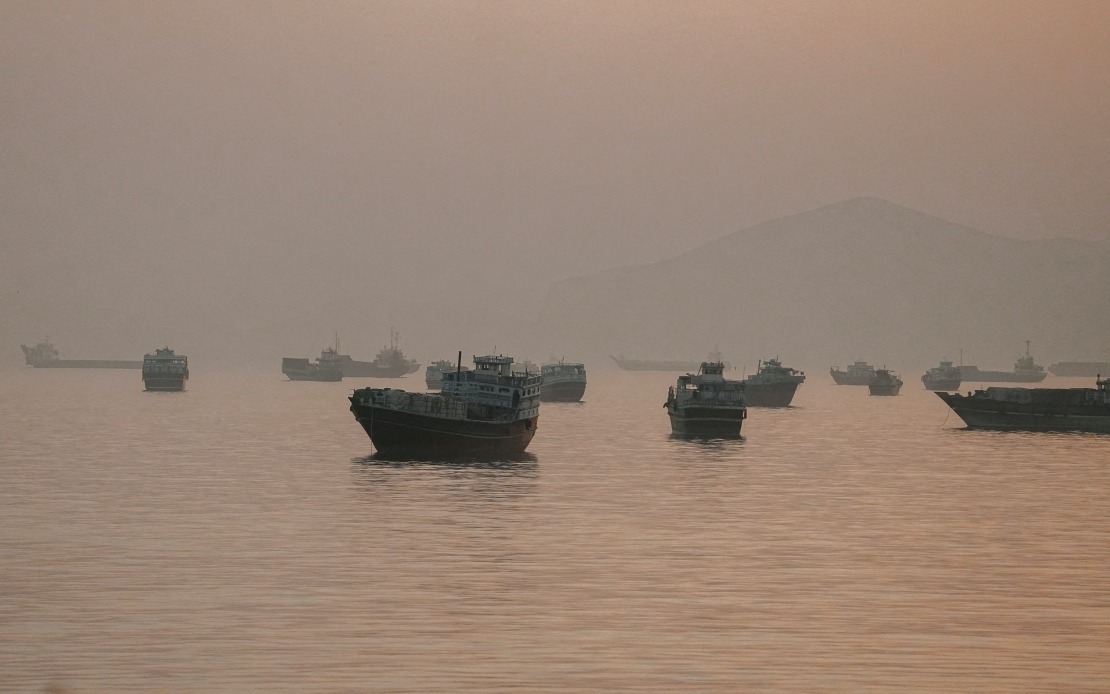
India's maritime regulator has taken decisive action to protect its seafarers by ordering shipowners, vessel managers, and recruitment agencies to cease deploying Indian mariners aboard ships transiting the Strait of Hormuz. The directive, issued by the Directorate General of Shipping on Wednesday, represents a significant policy shift aimed at shielding the country's maritime workforce from escalating maritime violence in one of the world's most critical shipping corridors.
The move reflects mounting concerns about the deteriorating security situation in the Persian Gulf, where merchant shipping has become increasingly vulnerable to attacks. Two Indian seafarers have been killed and several others injured over the preceding three days alone, underscoring the acute dangers facing mariners navigating these waters. These fatalities have prompted New Delhi to prioritize the safety of its maritime workers, a sector that plays a crucial role in global commerce and India's own economic interests.
Tensions in the Strait of Hormuz have intensified sharply following renewed military confrontation between the United States and Iran. The strategic waterway, through which approximately 20 percent of global oil trade passes, has become a flashpoint where geopolitical rivalries directly threaten commercial shipping. The prospect of further escalation has prompted maritime nations worldwide to reassess the risks their vessels and crews face in the region, with India's decision joining similar precautionary measures adopted by other shipping powers.
The Directorate General of Shipping's order carries significant implications for India's maritime sector, which employs hundreds of thousands of seafarers. Many Indian mariners work aboard foreign-flagged vessels, and the restriction effectively removes a substantial portion of the global fleet from their employment opportunities in the near term. Ship management companies and recruitment agencies will need to redirect Indian seafarers to alternative routes and employment arrangements, disrupting established commercial relationships and potentially affecting earnings for workers already navigating a competitive labour market.
For Malaysian and broader Southeast Asian interests, India's action signals how rapidly security concerns can reshape maritime employment patterns and shipping logistics across Asia. The Strait of Hormuz represents a critical passage for energy shipments destined for East and Southeast Asia, and any disruption to normal operations reverberates through regional supply chains. If other maritime nations follow India's lead, shipping companies may face acute labour shortages and be forced to reroute vessels through longer, costlier passages—expenses ultimately reflected in freight rates and energy prices affecting consumers across the region.
The Indian government's intervention represents a pragmatic response to an immediate crisis, yet it also reflects the vulnerability of maritime workers caught between commercial pressures and geopolitical instability. Unlike passengers or cargo that can be redirected, seafarers face heightened personal risk with limited agency in decisions about their deployment. By restricting Indian participation in Hormuz transits, New Delhi acknowledges that no commercial consideration justifies exposing its citizens to indiscriminate attack.
The broader context involves the deteriorating relationship between Washington and Tehran, which has repeatedly threatened regional stability and commercial operations. Attacks on merchant vessels, whether attributed to Iranian forces, proxies, or other actors, have created an environment of uncertainty that undermines confidence in maritime trade. Insurance premiums have climbed, and vessels increasingly require enhanced security measures, adding costs that ultimately filter through to consumers and businesses dependent on timely, affordable shipping.
India's decision will likely prompt similar protective measures from other labour-exporting nations whose seafarers work aboard international vessels. The Philippines, a major source of maritime labour globally, may face pressure from its own workers and regulatory authorities to implement comparable restrictions. This collective tightening of maritime labour supply could further strain shipping capacity precisely when global commerce requires reliability and efficiency.
For the Indian maritime industry itself, the directive creates short-term uncertainty but also underscores the government's commitment to worker protection over purely commercial interests. Ship management companies operating out of Indian ports will need to adapt their hiring practices and crew scheduling to comply with the restriction while maintaining operational viability. Some may relocate hiring practices to other jurisdictions temporarily, though such measures entail their own logistical and financial costs.
The episode also highlights how quickly security assessments can trigger policy reversals in sectors dependent on freedom of navigation and movement. The Strait of Hormuz, despite its strategic importance, cannot be treated as a routine shipping lane when genuine threats to life persist. India's decision reflects a calculation that the reputational and human costs of maintaining operations in an active conflict zone outweigh commercial advantages.
Regional observers note that such restrictions, if sustained over extended periods, could incentivize alternative shipping routes through Southeast Asia, potentially benefiting ports and logistics hubs in the region. However, the longer-term solution requires de-escalation in U.S.-Iran relations and restoration of security conditions that permit normal maritime commerce. Until that occurs, India's measure stands as a practical boundary protecting its citizens while exposing the human dimensions of geopolitical tension in global commerce.

