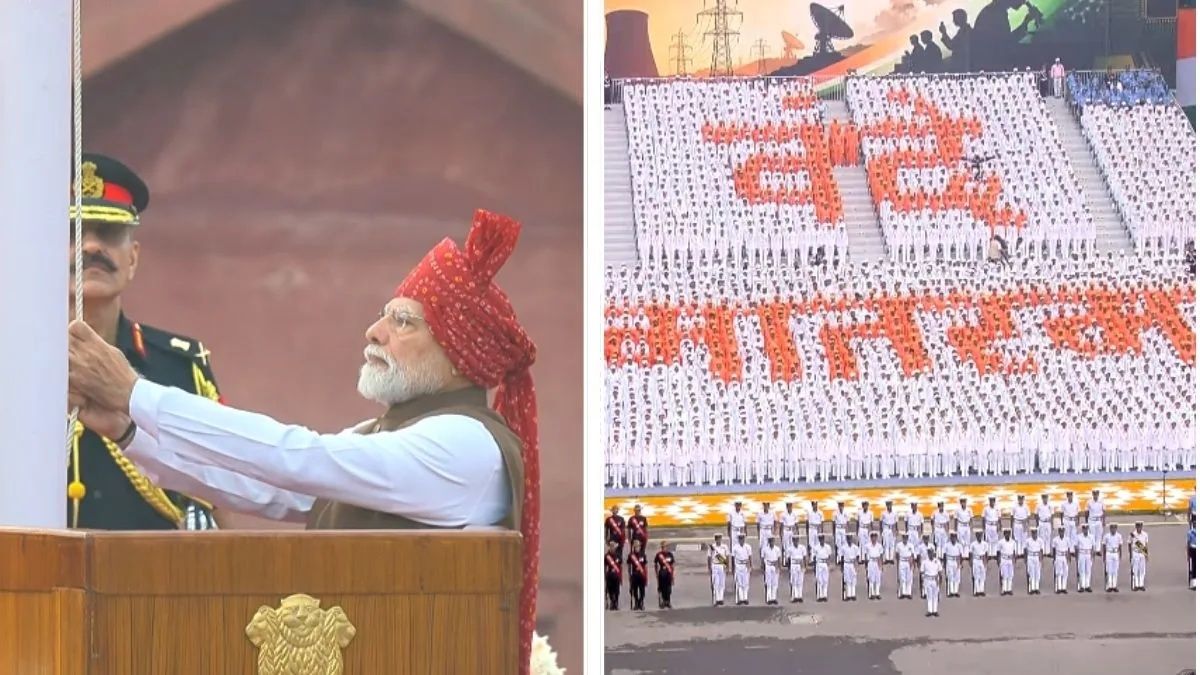
Prime Minister Narendra Modi used India's 80th Independence Day address at the Red Fort to unveil an ambitious long-term development agenda, declaring that the nation has set 2047 as the target year to achieve developed country status. The announcement, delivered on August 15, represents a pivotal moment in India's post-independence trajectory, signalling a shift from incremental growth targets to transformative national aspirations. Modi called upon citizens to embrace expansive thinking, maintain unwavering resolve, and collaborate in realising the vision of 'Viksit Bharat'—a developed India—within the next two decades.
The Prime Minister framed this commitment within a broader context of India's changing international standing and self-perception. He emphasised that when the world's most populous nation pledges to join the ranks of developed economies, it sends a powerful signal about the confidence and resilience embedded in Indian society. This declaration carries particular significance for Southeast Asian nations like Malaysia, as India's economic trajectory directly influences regional dynamics, investment flows, trade patterns, and geopolitical positioning. An India that achieves developed status would reshape the balance of economic power within Asia and redefine partnerships across the region.
Modi's rhetoric stressed the necessity of abandoning incremental ambitions in favour of transformative goals. He cautioned against settling for modest dreams, arguing instead that expansive aspirations expand people's vision and intellectual horizons. This messaging appears designed to mobilise public consciousness around nation-building, encouraging citizens to see themselves as architects of India's future rather than passive observers. The psychological dimension of this appeal—shifting mindset from scarcity to possibility—may prove as important as the economic policies that undergird the development vision.
The Prime Minister used statistical evidence to demonstrate India's recent economic performance and structural transformation. He pointed to India's graduation from the so-called 'Fragile Five' classification to become a major, fast-growing economy. This reference acknowledges India's vulnerability during earlier periods while celebrating its emergence as a significant economic force. The growth metrics Modi cited across multiple sectors paint a picture of rapid industrialisation and modernisation: defence production has quadrupled, Khadi and Gramodyog output has increased fivefold, and electronic manufacturing has expanded sevenfold over the preceding twelve years.
Particularly striking are the statistics surrounding digital transformation. Mobile phone production has grown by one-third while digital transactions have doubled, reflecting India's accelerating integration into the digital economy. These figures underscore a nation experiencing fundamental structural change—moving from traditional manufacturing and agriculture-based activities toward high-technology sectors and digital services. For Malaysian policymakers and investors, such data demonstrates India's potential as both a competitor and a complementary economy within regional supply chains and digital infrastructure networks.
The Independence Day ceremony incorporated a significant symbolic moment with the full rendition of 'Vande Mataram' at the Red Fort for the first time since independence in 1947. Modi characterised this as a historic occasion, investing the national song with special meaning within the context of contemporary development aspirations. The presence of the Tricolour in homes and public spaces, combined with patriotic songs and new national resolutions, created an emotional framework designed to unite diverse Indian populations around shared developmental objectives. This symbolic machinery reflects how nation-states employ cultural and patriotic narratives to mobilise populations toward ambitious collective goals.
The flag hoisting ceremony itself demonstrated India's emphasis on indigenous military capabilities and technological self-reliance. The 21-gun salute was fired by the 1721 Field Battery (Ceremonial) using indigenously produced 105mm Light Field Guns, symbolising India's push toward defence manufacturing independence. The naming of officers—Major Pawan Singh Shekhawat, Naib Subedar Anuthosh Sarkar—personalises the institutional machinery of the state and connects individual achievement to national aspirations. This focus on indigenous capability development aligns with India's broader 'Make in India' initiative and reflects strategic thinking about reducing import dependence.
Beyond the forward-looking development agenda, Modi acknowledged immediate humanitarian challenges facing the nation. He referenced recent flooding that had devastated multiple regions and expressed concern for affected families, assuring them of comprehensive national support. This balance between long-term visionary goals and present-tense compassion attempts to position the government as both forward-thinking and responsive to citizen welfare. For a nation of India's scale and diversity, maintaining this dual focus—addressing immediate crises while pursuing transformative change—represents a significant governance challenge.
The 2047 vision carries implicit assumptions about India's capacity to sustain high growth rates, successfully manage demographic transitions, upgrade infrastructure, and build institutional quality. Achieving developed nation status typically requires sustained GDP growth, substantial improvements in healthcare and education, reduction of poverty, environmental sustainability, and effective governance. The timeframe of two decades is ambitious given the scale of transformation required and the complexities of implementing policies across a continental-scale democracy with 1.4 billion inhabitants across diverse states with varying capacities.
For Malaysia and the broader Southeast Asian region, this Indian development agenda carries several implications. An economically stronger India could increase competitive pressures in manufacturing and services sectors, while simultaneously creating opportunities for technology partnerships, trade expansion, and regional infrastructure integration. India's development trajectory influences migration patterns, foreign direct investment flows, and the distribution of economic opportunities across Asia. Malaysian investors and policymakers should monitor how India translates this vision into concrete policy action, particularly in sectors like semiconductor manufacturing, renewable energy, artificial intelligence, and digital services where regional competition is intensifying.
The Independence Day address ultimately represents more than ceremonial patriotic expression. It articulates a development philosophy that emphasises ambition, indigenous capability, and collective mobilisation around transformative goals. Whether India can realise this vision depends on sustained political commitment, effective institutional implementation, adequate resource allocation, and the capacity to navigate inevitable economic and social disruptions accompanying rapid development. The next two decades will test whether rhetorical vision translates into tangible structural transformation, with profound consequences not only for India but for the entire Asian region.

