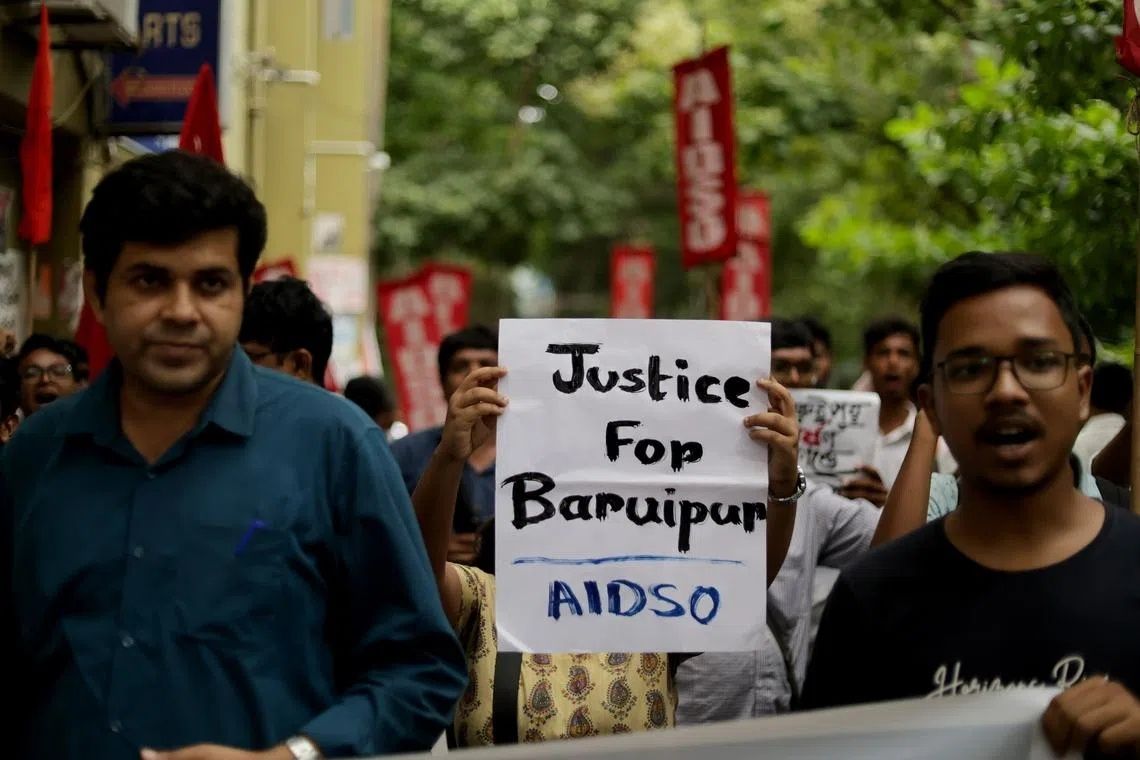
Indian police have arrested dozens of people in connection with violent unrest that erupted following the discovery of an 11-year-old girl's body in West Bengal's Baruipur city, roughly 30 kilometres south of Kolkata. The string of arrests represents authorities' attempt to restore order after days of volatile street protests marked by road blockades and burning vehicles, while simultaneously managing investigations into the child's death. State police officials confirmed on Friday, July 10, that 35 individuals faced charges for property destruction and public violence, with investigations ongoing to identify additional participants through digital evidence.
The girl went missing on July 4, and her body was recovered from a pond the following day, triggering immediate communal outrage. The discovery catalysed widespread demonstrations throughout Baruipur and surrounding areas, as residents channelled their grief and anger into visible protest. However, the anger that mobilised thousands also created conditions for lawlessness. Among the chaos, one innocent bystander became a victim of mob violence, killed by enraged crowds in an act that illustrated how quickly public anger can spiral beyond accountability.
Senior state police officer Arvind Kumar Anand disclosed to international media that authorities were actively reviewing video footage circulating online to apprehend additional suspects. The arrest tally of 35 represented those already in custody, with investigators methodically working through digital records to expand prosecutions. This investigative approach reflects the challenge Indian law enforcement faces when mass protests generate numerous incidents of violence distributed across locations and time.
Paralleling the protest arrests, police disclosed that they had fatally shot one of four men accused of the girl's rape and murder. Prabhas Mondal died on July 8 during early morning hours while allegedly attempting to flee custody at the crime scene, where he had been brought as part of investigative procedures. The shooting represents a contentious police action that has become increasingly scrutinised internationally, though exact circumstances of the escape attempt remain unclear. Police accounts of such deaths have frequently drawn criticism from human rights organisations concerned about extrajudicial practices.
Mondal's mother publicly refused to accept her son's body, offering a stark statement about familial rupture and moral judgment. In a television interview, she declared her son had "not do anything good" and that he deserved the punishment he received. Her refusal to claim the remains underscored the depths of family shame and societal condemnation surrounding such crimes. Her statement suggested that even maternal bonds fractured under the weight of such accusations, reflecting broader cultural trauma surrounding violence against children.
The other three detained suspects present a more complex picture. Family members of one arrested individual have publicly contested charges against him, asserting he was apprehended through mistaken identity rather than legitimate evidence. This claim introduces questions about investigative accuracy and the possibility of wrongful detention amid public pressure for rapid arrests. The families of the remaining two suspects have remained silent, offering neither statements of support nor acknowledgment to media inquiries.
New West Bengal Chief Minister Suvendu Adhikari, whose Bharatiya Janata Party won state elections in May under Prime Minister Narendra Modi's leadership, used the tragedy to signal his administration's hardline approach to criminal justice. His public statements promised zero tolerance for sexual violence and assault crimes, while simultaneously condemning the vigilante killings of innocent people during the protests. Adhikari's positioning suggested his government would pursue both the primary crime and mob violence with equal vigour, though implementation of such commitments often faces practical obstacles.
This incident carries renewed significance given India's history with major crimes against women and children. The tragic 2012 Delhi gang rape and murder of a 22-year-old woman became a watershed moment, generating nationwide demonstrations that pressured the government into enacting tougher criminal legislation. Four men convicted in that case were executed, yet two decades later, similar crimes continue to traumatise communities and spark cycles of grief, protest, and retribution. The persistence of such crimes despite legal reforms suggests that systemic changes beyond legislation remain necessary.
West Bengal specifically experienced intense international attention during 2024 following the rape and murder of a trainee doctor at Kolkata's prestigious RG Kar Medical College and Hospital. That case triggered sustained national protests focusing on women's safety within educational and professional institutions, questioning the adequacy of institutional protections. The state's repeated appearance in high-profile cases of violence against women and children has positioned it at the centre of a broader Indian conversation about gender-based violence and systemic failures.
The Baruipur case exemplifies the cycle of trauma that repeats across Indian communities. Initial crimes against vulnerable victims generate public anger sufficiently intense to overwhelm social norms against vigilantism. Mob violence then requires police intervention to prevent further deaths, resulting in additional arrests and legal proceedings that extend community disruption. Meanwhile, investigations into original crimes proceed amid public pressure that can compromise due process, potentially ensnaring innocents alongside perpetrators. For Malaysian and regional observers, these patterns illustrate challenges faced by developing democracies attempting to balance justice, rule of law, and public order during moments of collective trauma.

