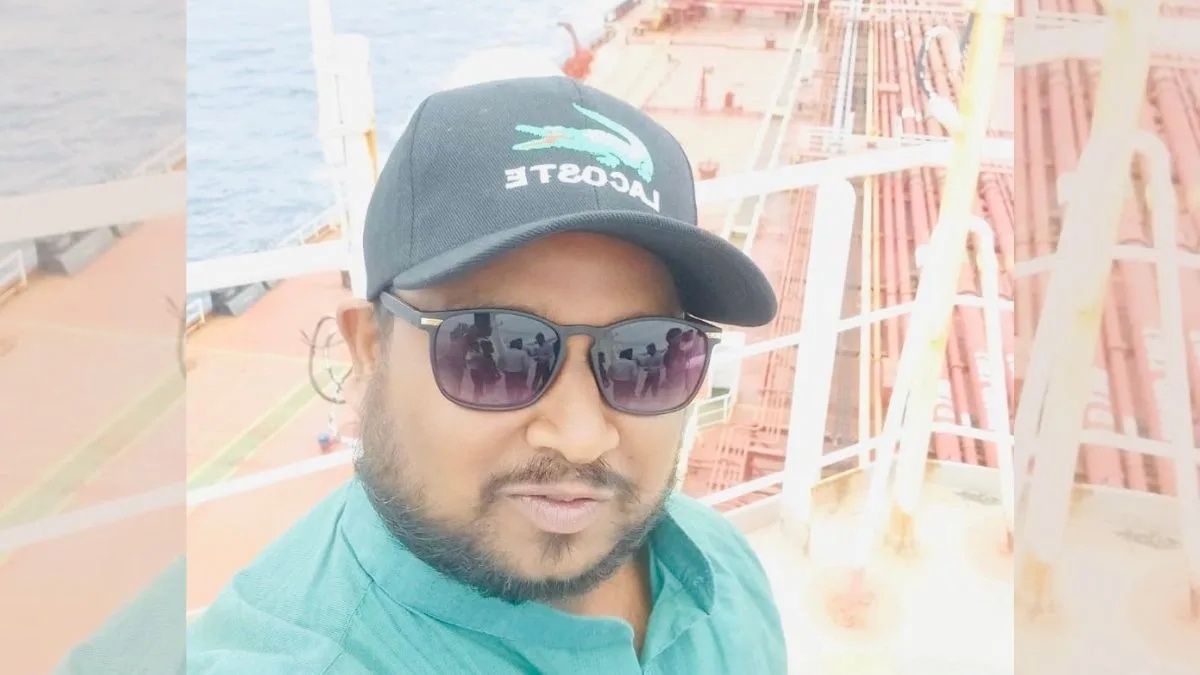
The unexplained death of Rakesh Chauhan, a 33-year-old merchant vessel crew member from Uttar Pradesh, has triggered urgent calls for a formal investigation following the discovery that his repatriated body contained virtually no internal organs. The alarming findings have prompted both his family and India's seafaring unions to seek immediate intervention from New Delhi, citing what they describe as grave irregularities in how Venezuelan authorities handled the case and the subsequent repatriation of his remains.
Chauhan travelled to Venezuela in November 2025 to work aboard a merchant vessel. According to accounts provided by his family, the shipping company initially reported that he had sustained injuries from a fall onboard and was receiving treatment. Within hours, company officials dramatically shifted their narrative, first stating that Chauhan's survival chances had dropped to just five per cent, then declaring him dead by the end of the same day, citing complications from the fall. Despite assurances that his body would arrive in India within a week, his mortal remains did not reach his family until June 4—nearly a month after his death, raising immediate questions about the handling of his remains during that period.
What emerged from a re-autopsy conducted in Deoria, Uttar Pradesh, was deeply troubling. Doctors found that Chauhan's body bore distinctive surgical markings: stitched incisions running vertically from the neck to the pubic symphysis and horizontal stitches extending from one ear to the other across the back of the skull. However, when these incisions were examined, the internal cavity was found to be almost entirely empty. The brain, heart, lungs, liver, kidneys, spleen, pancreas, stomach, intestines, thyroid gland, larynx, trachea, and major blood vessels were all absent from the body. Medical examiners recorded that the cause of death could not be determined because the very organs necessary for such a determination had been removed.
The original autopsy appears to have been conducted in Venezuela, evidenced by the surgical stitches and the fact that the body had been kept in deep freeze from May 7 through June 5. Yet crucially, no official Venezuelan autopsy report was provided to the family before the body's repatriation. This absence of documentation, combined with the removal of virtually every vital organ, has led investigators and advocacy groups to suspect that the circumstances surrounding Chauhan's death may have been deliberately obscured or misrepresented.
The Federation of Seafarers' Unions of India has responded with alarm, issuing statements on social media highlighting what it characterises as systematic failures and potential criminal conduct. The union noted that no organs whatsoever were discovered during the Indian re-autopsy and questioned why vital organs would be removed without the family's knowledge or consent. The organisation raised particular concern about several documentary irregularities: the receipt accompanying the body bore the name "Anjana Chauraisya" rather than the correct name of someone authorised to sign on behalf of Chauhan's wife, and there appeared to be a mismatch between the vessel listed in Chauhan's employment contract and the vessel on which he was actually deployed.
For families of seafarers, the vulnerabilities facing workers on merchant vessels operating in international waters are stark. Employees like Chauhan labour far from home, aboard vessels flagged in countries with limited oversight, often working under contracts with companies based in jurisdictions with minimal accountability mechanisms. When accidents or deaths occur at sea, determining responsibility and establishing facts becomes extraordinarily difficult. The worker's family is typically dependent on information provided by the shipping company and the port authority, with little capacity for independent verification. In Chauhan's case, the family received contradictory information, delayed repatriation of remains, and ultimately a body stripped of the organs that would have revealed the truth.
The Federation of Seafarers' Unions has identified potential organ trafficking as a possibility that warrants investigation. While this represents one of several troubling hypotheses, it underscores how inadequate the current safeguards are for protecting deceased seafarers. The union has called for the Indian Embassy in Venezuela to intervene, for the complete Venezuelan autopsy report to be released, for a full investigation into the circumstances of Chauhan's death, and for the family to receive compensation and justice. These demands reflect not only this single case but broader anxiety within India's maritime workforce about their safety and treatment.
For Malaysian readers, Chauhan's case carries particular resonance. Southeast Asia is a major hub for maritime employment, with thousands of workers from the region and beyond crewing vessels that ply international waters. Malaysia itself has significant seafaring populations and shipping industries. The absence of robust international standards for investigating deaths at sea, combined with the vulnerability of migrant workers dependent on distant employers, creates conditions in which accountability can easily break down. A worker's death at sea, inadequately investigated and inadequately documented, can be obscured by bureaucratic delays, jurisdictional confusion, and the simple fact that the body is far from home.
The Indian government has yet to issue a formal public response to the case, though the scale of public concern expressed by unions suggests that pressure for intervention will mount. The case illustrates why bilateral and multilateral agreements governing maritime labour standards and investigation procedures must be strengthened. Currently, maritime deaths often occur in a regulatory grey zone where the flag state, the port state, the state of employment, and the worker's home state may all have partial jurisdiction but none possesses comprehensive authority. Information asymmetries favour shipping companies and employers, who control the narrative, the documentation, and often the investigation itself.
Chauhanís family faces the grim prospect of seeking truth and justice across international borders without adequate institutional support. The stitched incisions in his body and the systematic absence of organs point to a deliberate process, yet without an official Venezuelan autopsy report, establishing what that process entailed, why it occurred, and who authorised it remains extraordinarily difficult. The family's demands for a comprehensive investigation represent not merely a personal plea for justice but an assertion that migrant seafarers deserve protection, transparency, and accountability even—perhaps especially—when they die far from home in circumstances that remain unclear.

