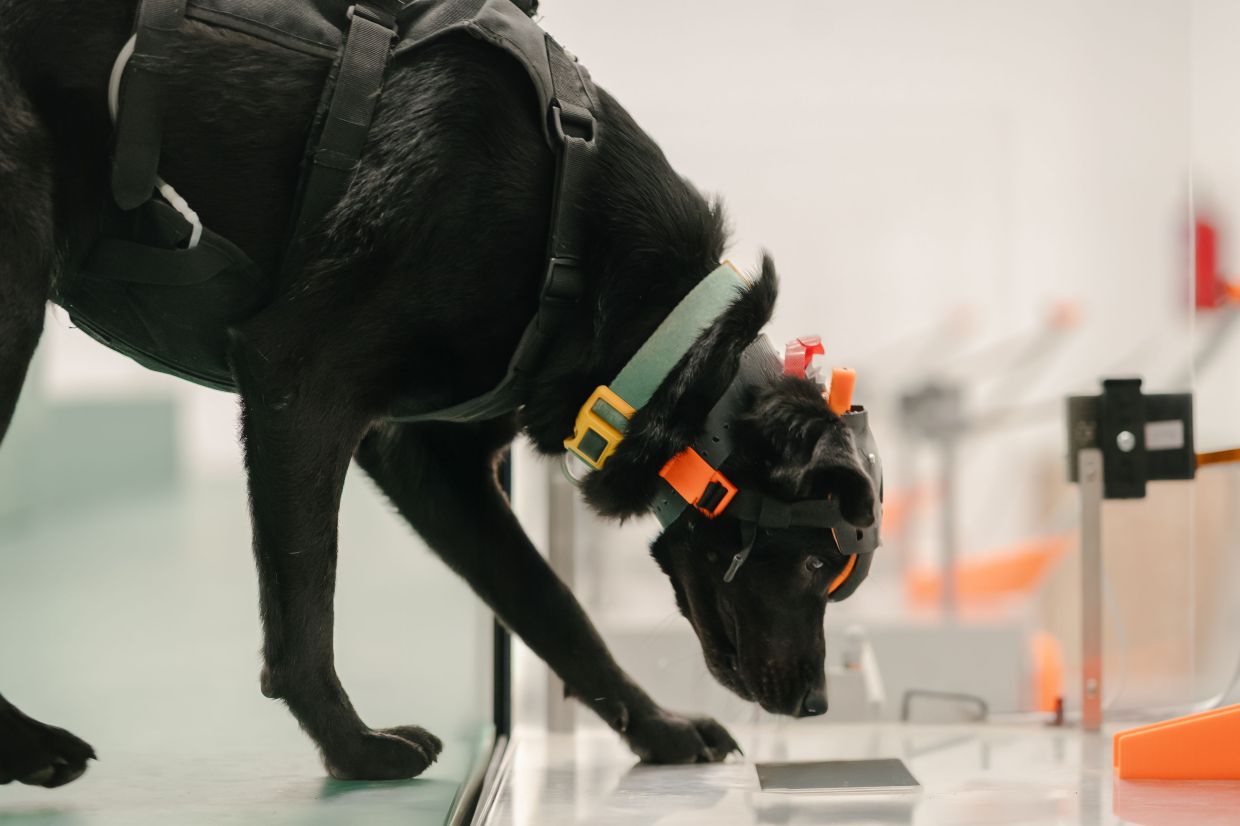
In the outskirts of Bengaluru, a team of beagles, labradors and Dutch shepherds are reshaping how early cancer detection might work across India and potentially the wider region. Dognosis, a two-year-old startup, has engineered an unconventional but scientifically grounded approach to identifying malignancies before symptoms emerge: leveraging canine sense of smell combined with sophisticated sensor technology and machine learning algorithms. The company's farm-based laboratory represents a fundamental departure from conventional diagnostic pathways that typically depend on expensive imaging equipment, invasive biopsies or complex blood chemistry analysis. This innovation arrives at a critical moment for India's healthcare landscape, where millions of cancers remain undiagnosed until advanced stages, when treatment options narrow and survival outcomes diminish significantly.
The operational model is elegantly simple in concept yet technologically complex in execution. Patients exhale into specialised masks that are subsequently transported to Dognosis's facility, where the trained canine team encounters the breath samples during carefully structured work sessions. The dogs are not simply sniffing in random fashion; rather, they move through a platform engineered to capture multiple biometric signals simultaneously. Sensors and artificial intelligence systems continuously monitor the animals' physical movements, breathing patterns, neural indicators via electroencephalography, and behavioural cues. When a dog pauses, circles, or exhibits specific physiological responses near a particular sample, the AI interprets these biological signals through algorithms trained on thousands of previous samples to determine whether markers of malignancy are present. The entire experience is gamified for the animals, transforming what might otherwise feel like labour into play, with treats serving as the primary incentive structure. This approach converts what was traditionally military and law enforcement applications of canine olfaction—detecting explosives or narcotics—into a humanitarian health screening tool accessible to populations that might never encounter advanced medical imaging facilities.
Dognosis has already demonstrated impressive preliminary results through controlled research environments. A Phase 2 study published in the Journal of Clinical Oncology revealed approximately 90 percent sensitivity for early-stage cancers across seven broad categories encompassing more than 20 distinct cancer types, including breast malignancies. Perhaps more remarkably, the company reports that dogs trained on ten specific cancer types successfully identified an eleventh cancer type they had never previously encountered, suggesting their olfactory pattern recognition transcends simple memorisation and approaches a more generalised detection capability. Co-founder Akash Kulgod emphasises that this capacity mirrors the dogs' natural abilities while dramatically scaling what previously remained an anecdotal phenomenon into reproducible, measurable diagnostic performance.
The financial backing reflects investor confidence in this unconventional approach. Dognosis secured US$1.5 million during a pre-seed funding round in 2024, with participation from established early-stage investors including Accel India and San Francisco-based Caffeinated Capital, supplemented by an undisclosed additional funding round announced recently. According to Kulgod, this capital provides sufficient runway for approximately two years of operations aligned with the company's planned expansion trajectory. While the figures appear modest compared to conventional biotech ventures, they reflect realistic funding requirements for a business model that repurposes existing biological capabilities rather than developing entirely novel synthetic compounds or engineered medical devices.
India presents both the most urgent need and the most promising market for this technology. The country currently experiences the third-highest burden of new cancer cases globally, according to data from the International Agency for Research on Cancer. During 2024 alone, India recorded approximately 1.5 million newly diagnosed cancer cases alongside more than 900,000 deaths attributable to the disease. Actuarial projections suggest that roughly one in every ten Indians faces the prospect of developing cancer before reaching age 75. Breast cancer constitutes the most frequently diagnosed malignancy, followed by cancers of the lip and oral cavity, lung and cervical tissues. These epidemiological realities become even more sobering when examined against the backdrop of screening coverage rates: only 1.9 percent of Indian women surveyed during 2019-2021 reported ever undergoing cervical cancer screening, whilst just 0.9 percent had completed breast or oral cancer examinations. Among the male population, screening participation remains even lower, with merely 1.2 percent reporting oral cancer screening history.
This massive gap between disease prevalence and screening capacity creates both a humanitarian crisis and an economic imperative for innovation. Conventional screening methodologies—whether mammography, endoscopy, or laboratory-based testing—require substantial capital investment in equipment, trained personnel, and established clinical infrastructure. Rural and semi-urban populations across India frequently lack access to these resources entirely. Dognosis's breath-based screening model promises to circumvent these infrastructure barriers by dramatically reducing the technological complexity and cost components associated with early detection. The company plans to launch an at-home, multi-cancer prescreening test in India during 2025 at a price point measured in a few thousand rupees, positioning it within financial reach for middle and lower-middle-income households where conventional screening remains prohibitively expensive.
The company's expansion ambitions extend well beyond India's borders. Dognosis aims to process one million tests annually within several years, while simultaneously doubling its canine workforce from the current operational level to approximately thirty dogs and reducing turnaround times from current durations to approximately one week. International expansion features prominently in strategic planning, with management targeting establishment of a facility in the United States by late 2027 or early 2028. This phased geographic expansion reflects recognition that while India offers substantial volume potential, mature healthcare markets possess greater purchasing power and regulatory clarity. The technology could potentially serve other Southeast Asian nations facing similar screening infrastructure constraints, though explicit expansion into Malaysia, Thailand, Indonesia or other regional economies has not yet been publicly announced.
The transition from controlled research environments to real-world deployment presents formidable challenges that extend beyond purely technical considerations. Dognosis initiated its Phase 3 clinical trial in April, enrolling participants across ten hospital sites throughout India with plans to recruit approximately 10,000 individuals over twelve months. This expanded trial deliberately tests both asymptomatic people identified as higher cancer risk and survivors at risk of recurrence, before proceeding to conventional diagnostic confirmation through imaging and biopsy for those flagged by the canine-AI system. The trial design represents a critical inflection point, as it must demonstrate that sensitivity and specificity demonstrated in controlled laboratory conditions translate into reproducible performance across diverse genetic backgrounds, dietary patterns, environmental exposures and comorbidity profiles present in actual patient populations.
The regulatory pathway remains deliberately positioned as a strategic advantage rather than an obstacle. Kulgod states that Dognosis does not require formal approval from Indian regulatory authorities because the breath test functions as a prescreening tool rather than a diagnostic device—a critical distinction in Indian medical device regulation. Prescreening applications face considerably lighter regulatory scrutiny than diagnostic devices, which undergo more rigorous review processes. This regulatory positioning, however, carries implicit responsibilities: the company must clearly communicate to both healthcare providers and consumers that positive results constitute a signal for further conventional investigation rather than a definitive cancer diagnosis. This educational requirement will prove essential for avoiding both false reassurance in negative cases and unnecessary panic or inappropriate treatment decisions in positive findings.
Clinical scepticism persists regarding whether this novel methodology can gain traction among the physicians and patients who will ultimately determine its real-world success. Pankaj Chaturvedi, deputy director of the Centre for Cancer Epidemiology at Tata Memorial Centre in Mumbai, cautioned that emerging diagnostic technologies, whilst offering genuine opportunities, should strengthen rather than supplant existing screening infrastructure. This perspective reflects legitimate concerns that introducing an unproven methodology might paradoxically decrease overall screening rates if patients perceive breath-based testing as a complete substitute for established approaches, or if implementation challenges cause delays in conventional screening uptake. The psychological and cultural dimensions of trusting medical judgement derived from trained animals rather than human physicians or machinery represents an underappreciated barrier requiring substantial patient education and physician confidence-building.
Dognosis's operational strategy attempts to address these challenges through partnership with established diagnostic chains and healthcare providers rather than attempting direct-to-consumer deployment initially. The company targets launch in Bengaluru during 2025, leveraging the city's concentration of medical facilities, higher health consciousness among the population, and English proficiency that facilitates communication about this unconventional technology. Geographic expansion across India would proceed through validated partnership models rather than parallel infrastructure development. This staged approach mirrors successful telemedicine and diagnostic platform rollouts across India, where partnership with existing clinical networks proved more effective than attempting to build parallel distribution systems.
The fundamental innovation underlying Dognosis extends beyond simply commodifying canine olfaction. The company has systematised and scaled what previously remained anecdotal by developing standardised measurement protocols, machine learning models capable of interpreting complex behavioural data, and operational frameworks enabling consistent quality across multiple locations. Kulgod correctly identifies that the central technical challenge has always involved converting the dog's nose—a biological system of extraordinary sensitivity but inherent variability—into a scalable, reproducible diagnostic platform. The company's success will ultimately depend not on the dogs themselves, who have demonstrated genuine detection capability, but rather on whether engineers and data scientists can maintain consistency as the system expands to process millions of samples annually across diverse geographic contexts.
For Malaysia and the broader Southeast Asian region, Dognosis's approach carries important implications even before potential direct expansion into these markets. The company demonstrates that healthcare innovation addressing resource-constrained settings need not invariably depend on expensive Western biotech models or complex engineering solutions. Instead, repurposing existing biological capabilities through relatively accessible technology—sensors and machine learning—can create diagnostic pathways aligned with both economic constraints and cultural contexts prevalent across Asia. Should Dognosis successfully validate its approach through Phase 3 trials and subsequently achieve meaningful screening uptake in India, the model becomes directly transferable to Malaysia, Thailand, Vietnam and other nations facing similar cancer burden and screening infrastructure limitations. This potential pathway from Indian innovation to regional application represents a meaningful departure from traditional patterns where diagnostic advances flow unidirectionally from developed to developing markets.

