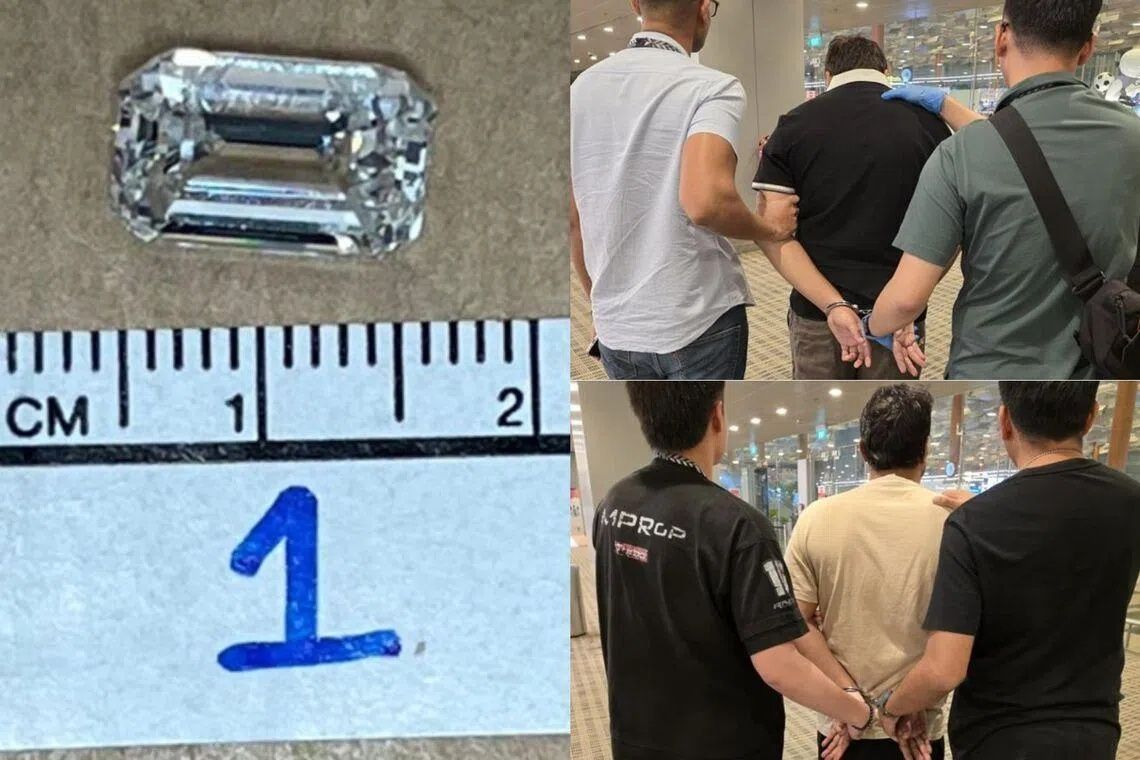
A premeditated jewellery heist at a Chinatown store in Singapore has resulted in a lengthy prison sentence for one of two Indian nationals involved in the sophisticated theft. Mangroliya Manojkumar Kurjibhai, 41, received a two-year, two-month and two-week jail term on Friday after admitting to stealing a 4.95-carat diamond valued at over S$199,000 from Dianoche jewellery store on Kreta Ayer Road on June 19. His 30-year-old accomplice, Serasiya Milan Ramnikbhai, remains under court proceedings as the case unfolds.
The theft exemplifies the risks faced by jewellery retailers dealing with international visitors. The pair executed their plan with calculated precision, arriving at the store around 3pm on the same day they landed in Singapore. Rather than act on impulse, the two men had orchestrated the crime beforehand, even commissioning a counterfeit diamond in India that matched both the specifications and serial number of the genuine stone they intended to pilfer. This level of preparation suggests a scheme born from prior knowledge of the specific asset within the store, though court documents have not disclosed how they became aware of the valuable stone's existence and location.
The mechanics of the theft itself reveal audacious execution within a public retail environment. Serasiya concealed the forged diamond in his mouth before entering the store, while Mangroliya engaged the sales manager by requesting to view the genuine 4.95-carat diamond, valued at approximately US$154,000. Mangroliya then deliberately requested additional items to inspect, prompting the manager to leave his position multiple times. During these intervals, Mangroliya signalled Serasiya to execute the swap. Serasiya spat out the fake diamond and placed the authentic stone into his mouth, successfully completing the exchange before both men casually informed the manager they would deliberate on the purchase and departed the premises.
Detection came swiftly through basic authentication procedures. Store surveillance footage captured the entire operation, providing critical evidence of the deception. When the manager examined the diamond left behind using an optical gemstone identification machine, he immediately identified it as counterfeit. This discovery triggered the store's response protocol and alert to authorities. The pair's escape plan unravelled despite their apparent attempt to flee the country hastily, checking out of their hotel and booking a return flight to India that same evening.
Singapore's immigration authorities intercepted the men at Changi Airport Terminal 3 around 9pm that night as they attempted to clear departure procedures. Officers recovered the genuine diamond from Serasiya's haversack during the arrest. The swift apprehension prevented what might have been an international complication, catching the perpetrators before they could depart Singapore's borders. This outcome underscores the effectiveness of coordinated communication between retail security and airport authorities in preventing cross-border crime.
Mangroliya's guilty plea expedited his conviction and sentencing, a decision that likely reflected the overwhelming evidence against him. The theft charge carries a potential maximum penalty of seven years imprisonment and a fine under Singapore law. His sentence of just over two years falls considerably below this maximum, suggesting the court considered factors such as his cooperation, guilty plea, and possibly the circumstances surrounding the offence. However, the substantial custodial term sends a clear message about the seriousness with which Singapore treats jewellery theft and transnational property crimes.
Serasiya's ongoing case presents an interesting procedural question, as he was similarly apprehended and the genuine diamond recovered from his possession. As the individual who physically concealed the stolen stone, he faces similarly serious charges. The court's handling of his case will likely hinge on questions of mens rea and degree of involvement, though the evidence appears equally incriminating as that against Mangroliya.
The incident carries implications for regional tourism and retail security throughout Southeast Asia. Jewellery stores across the region must now consider enhanced vetting procedures for international customers viewing high-value items, particularly when transactions involve multiple viewings or requests to examine various pieces. The sophistication of this particular scheme—commissioning a counterfeit diamond matching exact specifications—suggests that opportunistic, amateur theft differs substantially from organised efforts by international criminal networks.
For Malaysian readers, this case highlights the transnational nature of retail crime and the vulnerability of high-end jewellery retailers to organised international gangs. The scheme's execution demonstrates that such operations require advance planning, local knowledge or intelligence gathering, and coordination between individuals across borders. Malaysian jewellery retailers and security professionals should recognise this as a viable threat vector, particularly given the region's established trade routes and visa-free or easily accessible travel arrangements between countries.
The arrest at the airport represents a critical enforcement success, underscoring the importance of intelligence sharing and coordination between retail security and border control agencies. The rapid identification of the fake diamond through optical equipment proved instrumental, suggesting that retailers should invest in comparable authentication technology and training for staff. Additionally, the case demonstrates how seemingly casual customer behaviour—requesting multiple viewings, leaving and returning—can mask coordinated criminal activity requiring heightened staff awareness.
This conviction sends a deterrent signal to would-be thieves considering Singapore as a target for jewellery theft. The city-state's efficient law enforcement, comprehensive CCTV infrastructure, and strict border controls create an inhospitable environment for such crimes. However, the very sophistication of this attempted heist suggests that determined criminal networks will continue adapting their methods, potentially shifting focus toward smaller retailers or less-monitored venues across Southeast Asia where security infrastructure remains less developed.

