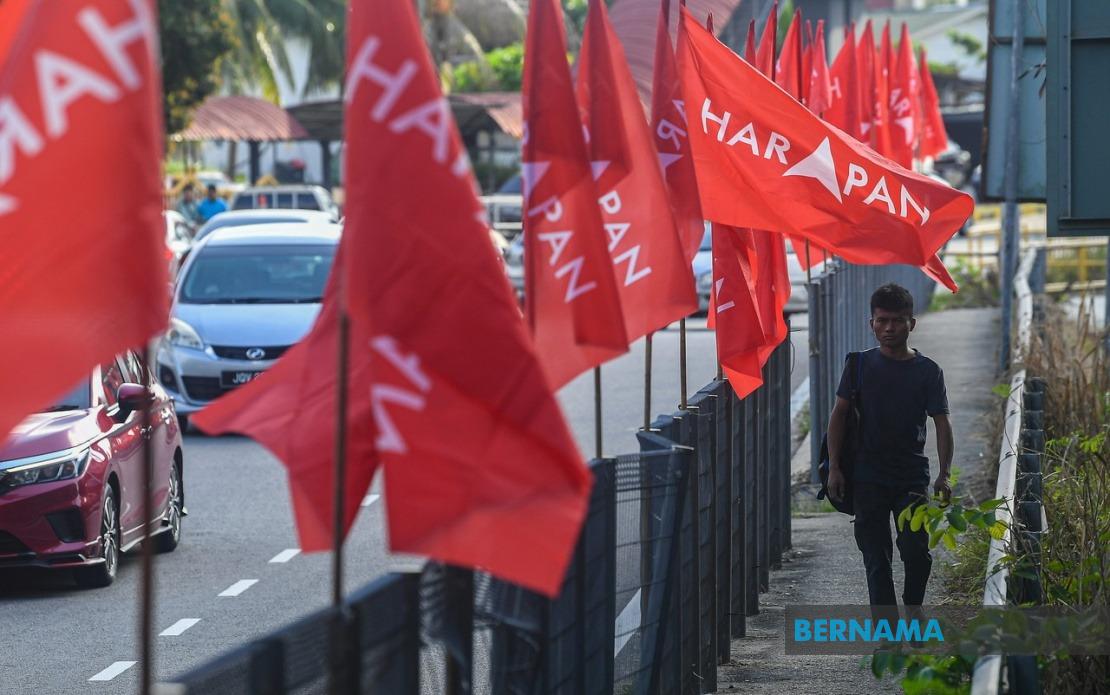
Political analysts have long recognised that in Malaysia's tightly contested elections, minority communities can tip the balance in seats where major communal blocs split their votes evenly. With the Johor state election set for July 11, PKR Central Leadership Council member Dr Gunaraj George has drawn attention to the strategic importance of Indian voters, arguing that their participation could determine the fate of nearly 25 mixed and marginal State Legislative Assembly seats across the state.
Dr Gunaraj, himself the Sentosa Assemblyman, frames the coming election not as a routine choice between candidates but as a referendum on Malaysia's economic direction and political trajectory. He contends that the nation faces a critical juncture, where voters must decide between continuity of the current Pakatan Harapan government's reform agenda or a return to the instability that characterised earlier periods. This framing is intended to elevate the stakes beyond local Johor concerns to broader questions of national governance and investor confidence.
The timing of his appeal is significant, given the global economic backdrop against which Malaysians make political choices. With international financial markets volatile, supply chain disruptions ongoing, and living costs rising across the region, Dr Gunaraj argues that political certainty has become essential for business investment and job creation. A government focused on stability and proven performance, he suggests, offers better prospects for ordinary Malaysians facing economic headwinds than one beset by internal rivalries and power struggles.
Central to the PKR leader's pitch to Indian voters is the government's record on community-specific initiatives. The Malaysian Indian Transformation Unit, or MITRA, received a significant boost from RM100 million to RM150 million—the first increase in nearly a decade—with Prime Minister Datuk Seri Anwar Ibrahim pledging further incremental rises to keep pace with inflation and community needs. Beyond the headline figure, Dr Gunaraj emphasises that MITRA's operations have become more transparent and systematically monitored, with Parliament now receiving regular accountability reports rather than opaque bureaucratic management as existed previously.
Educational support for Tamil-language schools represents another tangible gain under the MADANI Government framework. Increased allocations for Tamil National-Type Schools acknowledge the community's aspirations to preserve cultural and linguistic heritage while accessing quality education. Simultaneously, expanded Technical and Vocational Education and Training programmes signal commitment to practical skills development that equips Indian students for employment in growing sectors of the economy.
Beyond education, the MADANI Government has directed resources toward religious and cultural infrastructure. Maintenance grants for places of worship, including temples, address long-standing community grievances about inadequate government support for minority religious institutions. Combined with cash transfer programmes such as Sumbangan Tunai Rahmah and Sumbangan Asas Rakmah targeted at low-income households, these initiatives create a safety net that appeals across generational and socioeconomic divides within the Indian community.
Dr Gunaraj's emphasis on transparency and anti-corruption resonates with middle-class Indian voters who came of age during the 1MDB scandal and subsequent political upheaval. The MADANI Government's institutional reform agenda—tightening governance standards, pursuing high-profile corruption cases, and implementing more inclusive economic policies—stands in contrast to narratives of cronyism and patronage that dominated earlier administrations. For a community that has historically felt economically sidelined, the promise of merit-based advancement and equal access to development opportunities carries considerable appeal.
The broader economic argument also merits examination. Dr Gunaraj contends that political instability directly undermines the conditions necessary for sustained job creation and rising incomes. For Indian workers and entrepreneurs concentrated in sectors such as manufacturing, retail, construction, and small-scale commerce, a government capable of executing long-term economic plans and attracting foreign investment offers better prospects than one consumed by internal factional disputes. Johor, as Malaysia's second-largest economy with significant manufacturing and port operations, exemplifies how state-level political stability translates into employment opportunities.
However, the assertion that the Indian community holds decisive influence in 25 marginal seats warrants scrutiny. The precise demographic composition of such seats, voter turnout patterns among Indian citizens, and the appeal of opposition messaging all affect whether the community's voting preferences prove as pivotal as Dr Gunaraj suggests. Opposition parties have their own outreach efforts and promises directed at Indian voters, and community voting behaviour does not follow monolithic patterns.
Nevertheless, the PKR leader's campaign narrative attempts to move Indian voters beyond narrow communal grievances toward identification with the broader MADANI reform project. By positioning the community as stakeholders in national development rather than merely a beneficiary of targeted schemes, Dr Gunaraj invites Indian voters to see themselves as integral to Malaysia's democratic and economic future. Whether this appeal proves sufficient to consolidate Indian votes behind Pakatan Harapan in marginal Johor seats will become clear when voters cast ballots on July 11.
For regional observers, the Johor election carries implications beyond state boundaries. As Malaysia's political landscape continues to shift following the 2022 general election, contests at state level test the durability of Pakatan Harapan's coalition and the appeal of its MADANI agenda to different voter communities. How Indian Malaysians respond in Johor will offer clues about the movement's broader capacity to maintain multi-ethnic support heading toward the next federal election.

