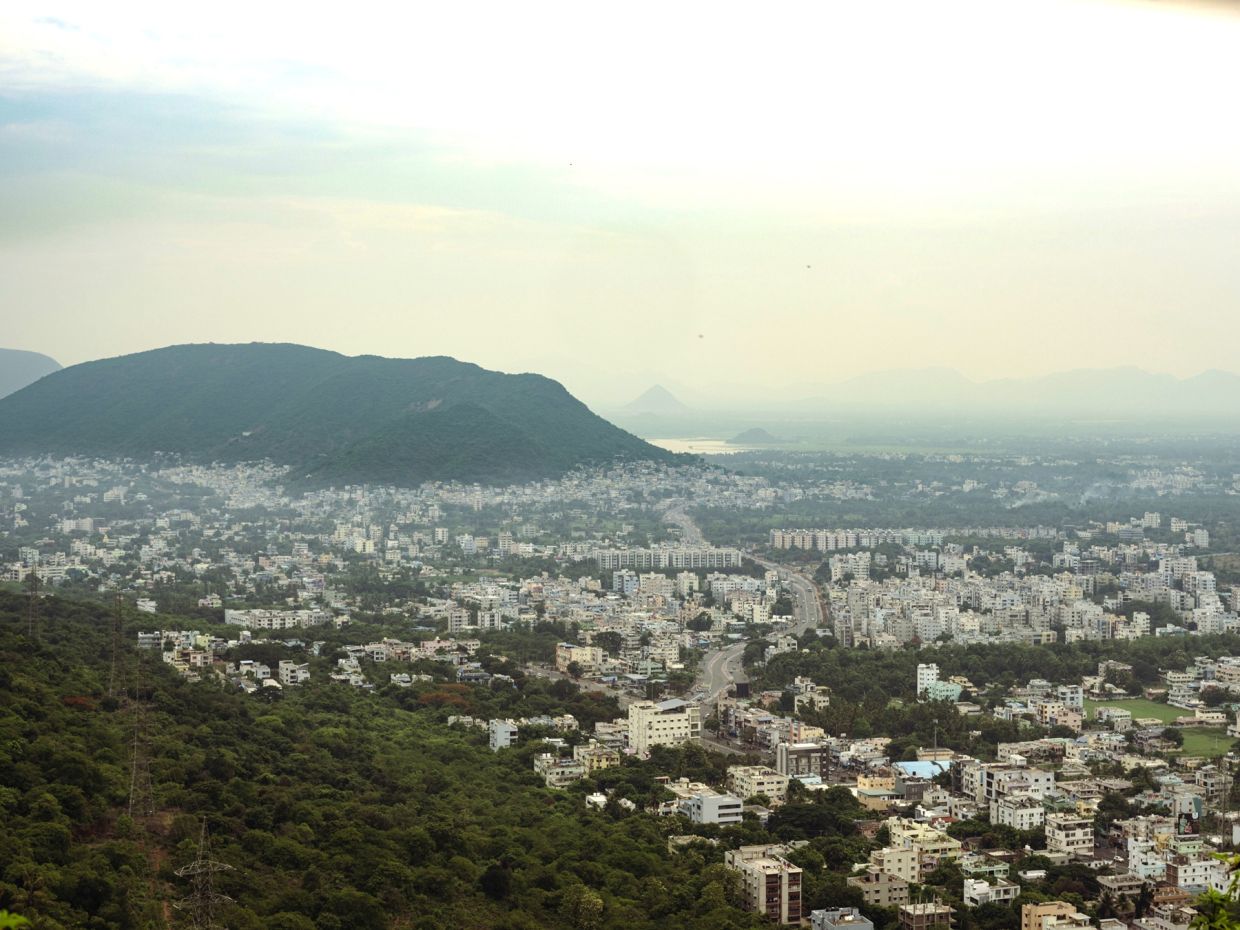
India's push to become a global player in artificial intelligence is reshaping its coastal landscapes at breathtaking speed, yet this ambitious technological leap is generating sharp divisions between government ambitions and community concerns. In Visakhapatnam on India's southern coast, the village of Tarluvada has become the epicentre of this tension, where billboards proclaiming "Welcome, Google, Welcome!" now frame a landscape being reshaped by excavators preparing the ground for transformative infrastructure. The American tech giant's US$15 billion project here represents far more than a single corporate investment—it signals India's determination to claim a meaningful role in the global artificial intelligence race, one that government officials believe hinges on controlling the digital infrastructure that powers AI development.
Google's entry into Visakhapatnam, partnering with India's Adani Group under a framework championed by Prime Minister Narendra Modi's administration, reflects a broader strategic calculus within Indian policymaking circles. Government leaders view data centres as fundamental to securing India's position as AI capabilities spread globally, and they have structured incentives packages to draw these massive facilities to Indian soil. Nara Lokesh, Andhra Pradesh's information technology minister, has articulated a vision extending beyond the data centre itself, envisioning a complete ecosystem where power electronics manufacturers, air conditioning suppliers, building materials producers and other related industries establish operations within the state. This multiplier effect, Lokesh argues, will generate genuine economic transformation rather than merely hosting a foreign corporate asset.
The scale of investment underscores how seriously India's leadership is approaching this opportunity. Beyond Google's project, a rival venture backed by Brookfield Asset Management and India's Reliance is simultaneously constructing an equivalently large data centre in the same city. Once operational, these two facilities will more than double India's entire data centre capacity relative to where it stood at the end of the previous year. Such rapid expansion reflects the intensity of India's catch-up efforts, yet it also compresses the timeframes for public deliberation and environmental assessment that typically accompany infrastructure of this magnitude.
However, beneath the welcome banners and official rhetoric, significant anxieties are mounting among Visakhapatnam's residents and regional observers. Data centres of hyperscale dimensions consume prodigious quantities of electricity and water while simultaneously generating relatively few employment opportunities—a paradox that has already triggered sustained resistance in the United States, where projects valued in the tens of billions of dollars have been blocked or significantly delayed by community opposition. India's experience with similar projects remains limited, and activists worry that local populations are being asked to bear environmental and financial burdens without meaningful participation in the decision-making process.
The environmental concerns carry particular weight given Visakhapatnam's geographical circumstances. The region faces recurrent water stress, with summer months bringing significant supply disruptions. Critics charge that environmental clearance procedures have been expedited or compromised to permit construction in ecologically sensitive zones. A deeper worry centres on fundamental opacity: detailed information about where water supplies and electricity will originate remains scarce, as does clarity about which parties will ultimately absorb the true costs of the extensive subsidies being offered. VS Krishna, a campaigner with the Human Rights Forum, articulates this frustration bluntly, questioning why a developmental project of this scale should proceed shrouded in secrecy typically reserved for defence matters, depriving citizens of the public debate that such consequential decisions warrant.
India's economic and strategic imperatives help explain why government officials are moving with such dispatch. Morgan Stanley research has characterised India as a "laggard" in developing artificial intelligence capability despite possessing enormous advantages: the world's most populous nation, a thriving technology sector producing world-class talent, and a massive domestic market. Yet these structural strengths have been undercut by a critical weakness. Billions of dollars in investment capital have redirected toward competing nations like Taiwan and South Korea that command cutting-edge manufacturing capabilities, particularly in semiconductor production. India finds itself positioned not as an innovation engine for AI technologies but rather as a deployment platform—a nation that will implement and adapt AI systems developed elsewhere.
The data centre capacity gap exemplifies India's disadvantaged position. The country generates approximately one-fifth of the world's data, yet its share of global data centre infrastructure trails far behind this generation ratio. This imbalance creates a strategic vulnerability: India cannot fully leverage its data abundance or control the computational infrastructure necessary for advanced AI development. By rapidly expanding data centre capacity, government planners believe they can begin closing this gap and establish India as an indispensable hub within emerging global AI architectures.
Lokesh has defended the project's pace by emphasizing adherence to regulatory processes and commitment to cutting bureaucratic red tape rather than cutting corners. The government estimates the construction phase will generate approximately 120,000 jobs, declining to roughly 60,000 once operations commence. Yet critics challenge these projections, noting that documentation submitted for environmental clearance contains granular details—parking space requirements, toilet-flushing water volumes—suggesting final employment figures will prove substantially lower. The contrast between official job creation estimates and the sparse workforce indicated in technical specifications raises questions about whose interests are prioritized in project planning.
A parallel concern looms over India's broader employment crisis. With 1.4 billion people, the nation continuously requires massive job creation simply to absorb new labour force entrants. The International Monetary Fund has warned that artificial intelligence adoption could trigger a "tsunami hitting the labour market," fundamentally disrupting the technology support industry that has become economically crucial for India. If data centre development follows the globally typical pattern of minimizing human employment through automation, India risks accelerating labour displacement without corresponding job creation in alternative sectors.
Google representatives and Adani subsidiary officials claim that project planners have carefully incorporated environmental safeguards into design specifications. They emphasize that cooling systems employ water-minimizing technology independent of potable supply systems, and that Google is investing in clean energy generation to eliminate any cost burden transferred to local households, businesses, or state government. These assurances carry weight given Google's technical sophistication, yet they do not address underlying questions about regulatory capture and unequal distribution of project benefits.
Sceptics point to the outsized political influence wielded by Gautam Adani, whose business empire has expanded dramatically during Modi's twelve-year tenure and whose close relationship with the Prime Minister appears evident in the facility with which his projects navigate the Indian bureaucratic landscape. EAS Sarma, a former senior official in India's finance and energy ministries holding a doctorate in energy planning, expresses particular concern about hidden transmission costs. The infrastructure necessary to deliver electricity to these massive facilities will require substantial new transmission lines whose construction expenses will ultimately appear on ordinary citizens' electricity bills, even though they derive no direct benefit from the data centres. From this perspective, subsidies presented as state incentives represent costs ultimately borne by India's general population.
The Visakhapatnam situation encapsulates the tension between India's legitimate aspirations to participate meaningfully in the artificial intelligence revolution and the very real risks that rapid development pursued with inadequate transparency will impose disproportionate costs on communities least capable of absorbing them. Southeast Asian nations watching India's approach will draw lessons about the political economy of hosting hyperscale digital infrastructure and the importance of establishing robust public processes before committing to transformative projects. The outcome in Visakhapatnam will likely influence how other Indian states—and indeed other developing nations—approach similar opportunities from technology giants seeking to establish data infrastructure in Asia.

