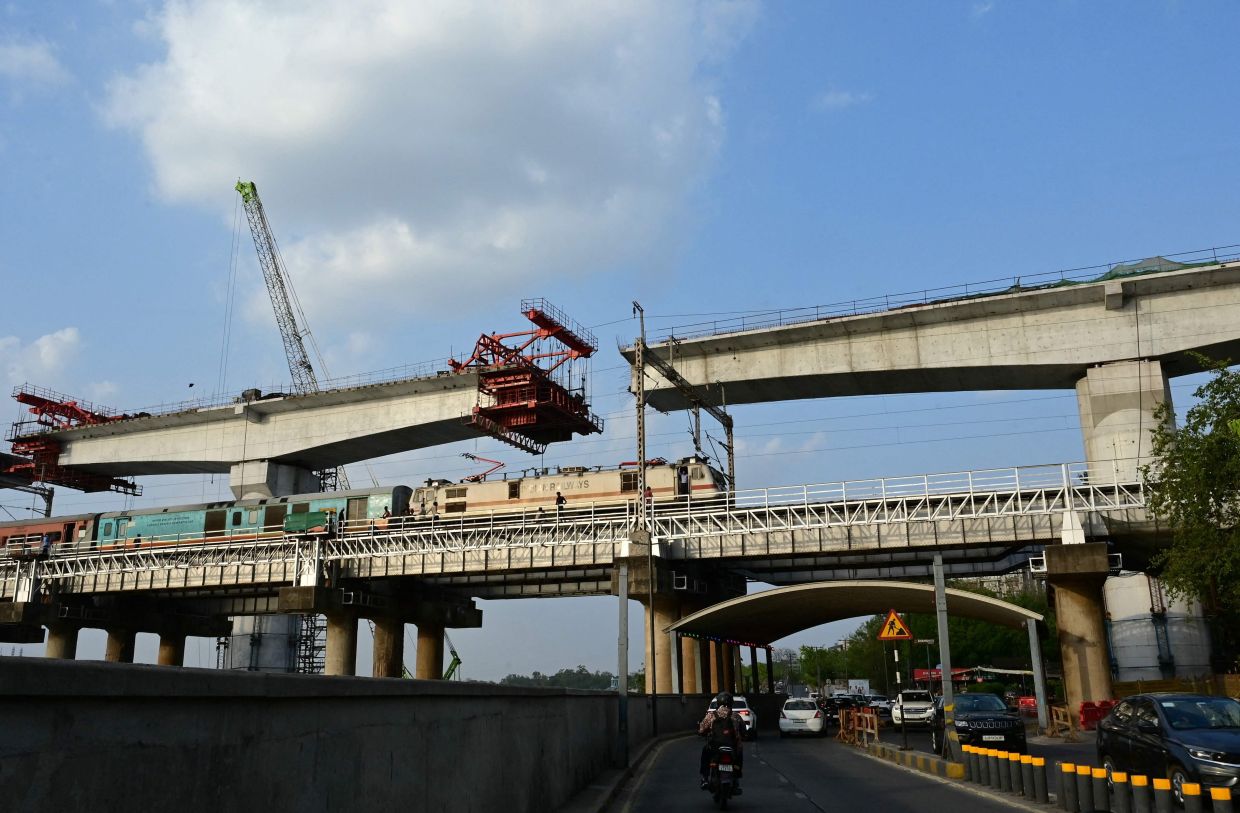
India's long-troubled bullet train project is finally moving forward, with railway authorities confirming that the first operational segment will begin running in 2027—nearly a decade into construction and years behind the original 2023 target date. The Surat-Vapi section, spanning approximately 100 kilometres between Gujarat's diamond-cutting hub and its chemical manufacturing centre, will mark India's entry into the high-speed rail age and serve as a proving ground for an ambitious national expansion strategy. The broader Mumbai-Ahmedabad High Speed Rail Corridor, stretching 508 kilometres along India's west coast, represents a transformative vision for how the country's railways might evolve, drawing on technology supplied through a partnership with Japan that began in 2017.
The genesis of this initiative traces back to an agreement between then-Prime Minister Narendra Modi and Japanese counterpart Shinzo Abe, who jointly inaugurated the project six years ago with an optimistic completion date of 2023. That timeline has since proven hopelessly optimistic, succumbing to the familiar pressures of ambitious infrastructure in India: complex land acquisition negotiations, unforeseen engineering challenges, and mounting costs. Officials now cite a total project cost of US$17 billion, with Japan's International Cooperation Agency funding approximately 81 per cent through loans, underscoring Tokyo's significant stake in India's transportation future. However, multiple Indian media outlets have reported that the combination of construction delays and unexpectedly high land acquisition expenses may drive the final bill significantly higher, creating tensions around the financing model.
What makes this extended timeline particularly noteworthy is the broader context of India's railway transformation over recent years. The Indian Railways network—one of the world's longest at 85,000 kilometres—has undergone substantial modernisation funded by billions in government investment. The system now carries 7.41 billion passengers annually alongside 1.67 billion tonnes of freight, demonstrating the enormous scale of the nation's rail infrastructure. Approximately 80 per cent of the network operates at speeds of 110 kilometres per hour or above, reflecting steady investment in upgrading colonial-era assets. The domestically developed Vande Bharat train service, which debuted earlier this decade and can reach 180 kilometres per hour, has already carried nearly 40 million passengers—proof that Indian railways can successfully adopt contemporary technology and win public support.
Yet the bullet train occupies special significance in Modi's vision for national infrastructure, promising a qualitatively different travelling experience through its design speed of 350 kilometres per hour and operational speed of 320 kilometres per hour. When the full corridor eventually opens, likely by the end of 2028, the journey between Mumbai and Ahmedabad—currently consuming six hours by conventional rail or four to five hours by air including airport procedures—will contract to just under two hours. This dramatic reduction would fundamentally reshape regional travel patterns and economic connectivity between India's financial capital and the business-focused cities of Gujarat, the prime minister's home state.
The engineering requirements have proven formidable, pushing Indian and Japanese contractors to construct solutions previously absent from the subcontinent. The corridor includes a 21-kilometre tunnel carved through mountainous terrain, representing one of the project's most technically demanding segments. More symbolically significant is India's first undersea rail tunnel, which remains under construction and exemplifies how the project has necessitated expanding the boundaries of domestic engineering expertise. These accomplishments, once completed, are intended to demonstrate capabilities that will support subsequent high-speed rail corridors across the country, establishing technological competency and operational knowledge that future projects can build upon.
Indian government planners have already outlined an ambitious vision extending far beyond the Mumbai-Ahmedabad initial corridor. Seven proposed high-speed rail corridors totalling approximately 4,000 kilometres represent what officials characterise as "growth connectors"—networks designed to integrate major economic hubs, facilitate efficient people movement, and strengthen interstate commerce. The proposed routes reveal clear strategic thinking about which regions merit prioritisation. An east-west line would link New Delhi to Varanasi—Modi's own parliamentary constituency and one of Hinduism's holiest cities—before extending to Siliguri, the crucial bottleneck that connects India's northeastern states to the rest of the nation. A second arc would run north-south from Ahmedabad through Mumbai, then curve southeastward to incorporate Pune, Hyderabad, and Chennai, effectively creating a spine linking the nation's primary tech and commercial centres.
For Southeast Asian observers, India's high-speed rail ambitions carry both immediate and longer-term significance. The project demonstrates how regional powers are investing in transportation infrastructure capable of reshaping economic geography, potentially enabling faster movement of goods, services, and people across vast distances. Japan's substantial financial commitment—81 per cent of the total project cost—reveals Tokyo's strategic interest in deepening infrastructure ties with New Delhi as part of its broader Indo-Pacific engagement strategy. The Surat-Vapi opening in 2027 will provide empirical evidence about whether Indian construction and operational capabilities can handle high-speed rail, information that investors and regional planners throughout South and Southeast Asia will monitor closely.
The timing of the Surat-Vapi opening assumes particular importance for Ahmedabad's planned hosting of the 2030 Commonwealth Games, an event that Indian officials openly frame as a preparatory step toward bidding for the 2036 Olympics. Successfully completing a modern, high-speed rail corridor linking major cities would provide tangible infrastructure credentials for the later Olympic bid, demonstrating that India possesses the technical capacity and project management discipline to execute large-scale sporting infrastructure projects. The bullet train has thus become intertwined with India's broader aspirations to position itself among elite global hosts capable of managing world-class sporting events.
The project's extended timeline, while frustrating for enthusiasts of rapid development, reflects realistic challenges inherent to building cutting-edge transportation infrastructure in a country of India's size and complexity. The delays have not dampened official commitment; rather, they have prompted recalibration of expectations and reinforcement of financial mechanisms designed to prevent project collapse. Officials point to "considerable" completion of work across the entire corridor, suggesting that much of the groundwork is in place for accelerated progress toward full opening. Railway ministry officials maintain that the knowledge, skills, and operational capabilities developed through this initial project will provide the foundation for rolling out high-speed networks systematically across the nation.
Japanese premier Sanae Takaichi, described by some observers as inheriting Shinzo Abe's mantle in the ruling coalition, is scheduled to visit India beginning Wednesday—a visit that will likely feature detailed discussions about the bullet train project, its progress, and the prospects for deepening bilateral infrastructure cooperation. Such high-level engagement underscores the political importance both nations attach to the venture and suggests momentum toward seeing the project through to meaningful completion. For India's government, the 2027 opening of the Surat-Vapi segment represents not merely a transport milestone but validation of a development model that combines domestic ambition with strategic international partnership in reshaping how a continental nation moves people and goods.

