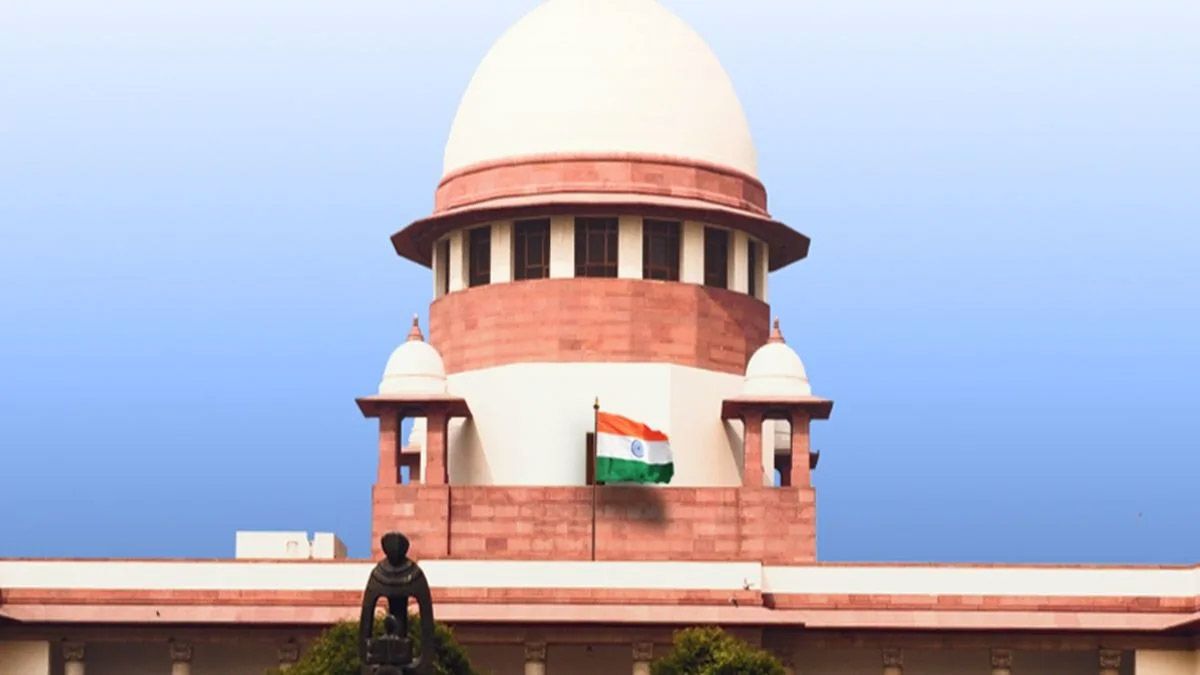
India's Supreme Court has intervened to pause implementation of a sweeping Tamil Nadu cow-slaughter ban that went significantly further than the original legal complaint before the courts. On Monday, a bench comprising Justices Vikram Nath and Sandeep Mehta granted a temporary stay on a May 27 judgment from the Madras High Court that had ordered the complete prohibition of bovine slaughter throughout the state, regardless of circumstance or location. The decision underscores deepening tensions between judicial activism and statutory regulation in India's ongoing cattle-slaughter disputes, with implications for how courts balance religious and cultural concerns against established legislative frameworks across the country.
The Tamil Nadu government had appealed the High Court's sweeping order, arguing that the judicial directive had fundamentally altered the legal landscape by imposing restrictions far beyond what the original public interest litigation had requested. The appeal emphasised that the initial petition from Hindu Makkal Katchi's General Secretary K Surya Prasanth had specifically sought to prevent cow slaughter in public spaces and to confine such activities to authorised slaughterhouses—a far more modest regulatory goal than an absolute statewide ban. Justice Nath's observation during proceedings that the impugned order required "correction" signalled judicial scepticism about the proportionality and legality of the High Court's approach.
At the heart of this dispute lies a fundamental disagreement about the proper scope of judicial authority. The state government contended that by imposing a blanket prohibition, the Madras High Court had essentially rewritten legislation and created new legal obligations that had no statutory basis. The Tamil Nadu Animal Preservation Act of 1958, the government argued, provides a regulatory framework permitting cattle slaughter under specified conditions rather than forbidding it entirely. The High Court's order, by contrast, suggested that such slaughter should cease altogether—even in designated slaughterhouses that operate under government supervision and safety protocols.
The religious and cultural dimensions of this case reflect broader sensitivities across India regarding cattle protection, which holds profound significance in Hindu tradition and belief. The original petition had cited concerns about temporary slaughter sheds erected in Coimbatore during Bakrid, the Islamic festival that traditionally involves animal sacrifice. By grounding its decision in Article 48 of the Indian Constitution, which encourages states to take steps toward prohibiting bovine slaughter, the Madras High Court attempted to anchor its ruling in constitutional principles. It also relied upon a 1976 government order banning cow and heifer slaughter in Tamil Nadu's slaughterhouses, arguing that this directive carried the force of law and remained enforceable.
However, the Supreme Court's willingness to stay this order suggests a more cautious judicial stance toward categorical prohibitions unsupported by clear statutory language. The state government presented the Supreme Court with multiple layers of applicable legislation, including the Prevention of Cruelty to Animals Act of 1960, the associated Slaughter House Rules from 2001, the Tamil Nadu Urban Local Bodies Acts and Rules, and contemporary food safety regulations. Together, these instruments establish a comprehensive regulatory regime governing when, where, and under what conditions animal slaughter may occur. The question before the apex court ultimately becomes whether judges may leap beyond these regulatory frameworks to impose absolute prohibitions when legislation itself contemplates only regulation.
This case carries significance for Malaysia and the broader Southeast Asian region, where similar tensions periodically emerge between religious and cultural communities regarding animal slaughter practices. Malaysia's halal certification and slaughter protocols exist within a detailed regulatory framework, and disputes occasionally arise when courts or officials attempt to extend restrictions beyond statutory language. The Indian Supreme Court's apparent discomfort with the Madras High Court's approach—treating it as an instance of judicial overreach—offers instructive precedent for how appellate courts might evaluate when lower courts have transgressed the boundaries between interpreting law and creating new legal obligations.
The interim stay means that the Madras High Court's directions to the Tamil Nadu government and police officials will not take effect during the Supreme Court's further deliberation. This suspension restores operational space for the regulatory framework that previously governed cattle slaughter in the state, permitting activities that conform to existing statutory and administrative requirements. The Supreme Court has issued notice on the state government's Special Leave Petition, indicating that it will conduct fuller proceedings before reaching a final determination.
The substantive legal questions remain contentious and complex. The Madras High Court had maintained that the law permits animal slaughter only within designated slaughterhouses, and it sought to tighten enforcement against illicit operations. The state government's argument focuses on the distinction between regulation and prohibition: existing law, it contends, does not ban cattle slaughter but rather conditions it upon compliance with safety, sanitary, and administrative requirements. The High Court's blanket ban, from this perspective, amounts to judicial legislation rather than faithful interpretation of existing statutes.
For religious minorities in Tamil Nadu and across India, the Supreme Court's intervention may provoke anxiety that sacred practices face increasing legal constraint. For those who view cattle protection as a constitutional and moral imperative, the stay represents an unwelcome retreat from judicial enforcement of animal welfare and cultural values. The coming phases of Supreme Court deliberation will necessarily grapple with these competing claims, seeking to reconcile constitutional directives, statutory language, the scope of judicial authority, and the legitimate interests of religious and cultural communities.
This dispute also reflects broader patterns in Indian jurisprudence where courts have become arenas for contesting deeply held social values and religious commitments. Public interest litigation, which the Madras High Court's original case exemplified, has emerged as a powerful tool for advancing environmental, animal welfare, and moral concerns beyond traditional commercial or individual disputes. Yet as the Supreme Court's apparent scepticism suggests, there remain judicial limits to how far courts may travel from the specific relief sought in petitions before them.
The immediate practical consequence of the Supreme Court's interim stay is that cattle slaughter in Tamil Nadu may resume according to pre-May 27 legal standards. Slaughterhouses operating under government authorisation and adhering to statutory requirements will continue functioning, pending the Supreme Court's final ruling. This temporary restoration of the regulatory status quo provides stakeholders clarity while the apex court deliberates the larger constitutional and statutory questions at stake. The eventual Supreme Court judgment will likely influence how similar disputes are resolved elsewhere in India and signal to lower courts the acceptable boundaries between creative judicial reasoning and impermissible judicial lawmaking.

