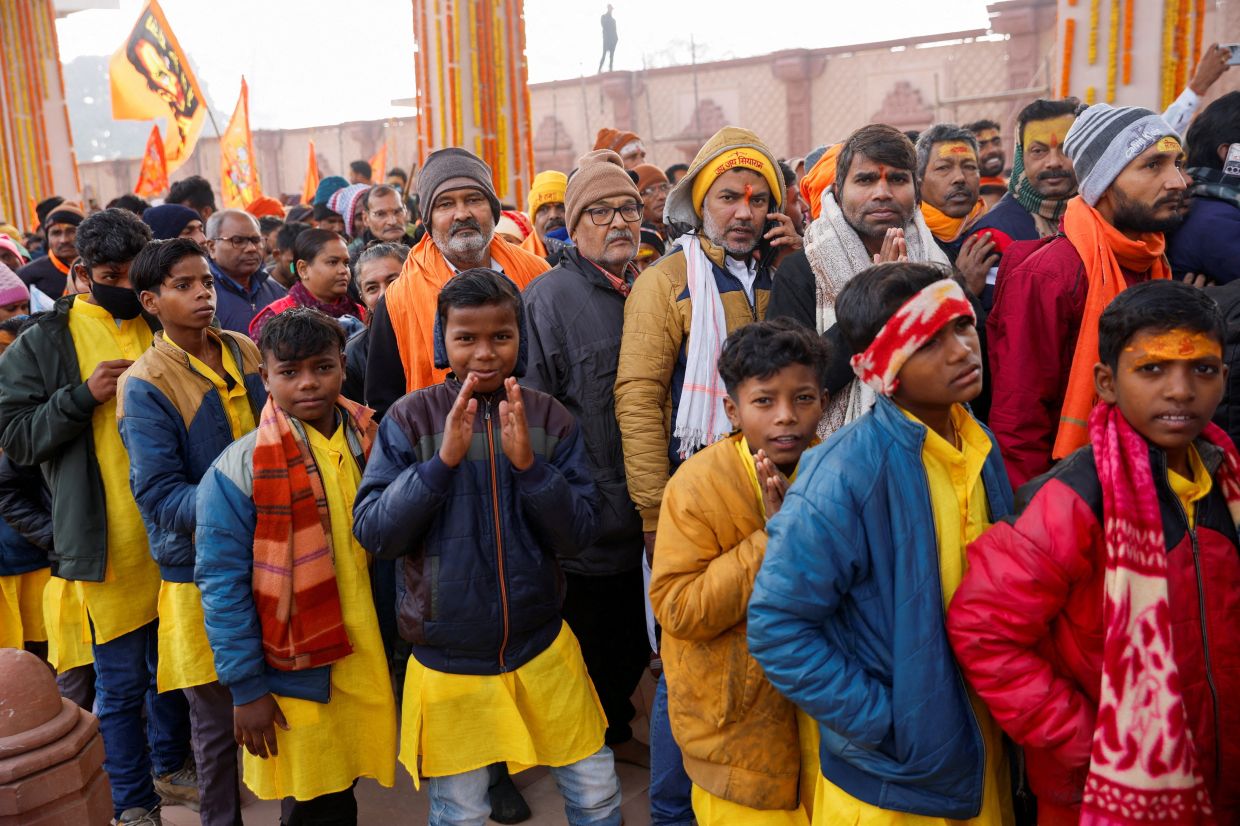
An ongoing investigation into missing donations at the Ram temple in Ayodhya has intensified debate about financial governance at India's most prominent pilgrimage sites, casting doubt on the security systems protecting the offerings of millions of devotees. Police launched the probe in June and arrested eight individuals implicated in the alleged diversion of funds, a development that has shaken public confidence in how religious institutions safeguard the hard-earned contributions of ordinary believers across the country.
While authorities have remained tight-lipped about the total value involved, media estimates suggest the missing amount could reach 30 million rupees, equivalent to approximately US$314,000. For many visitors, this disclosure represents more than a simple accounting discrepancy. Ashok Prasad Kushwaha, an auto-rickshaw driver from Delhi who has made three pilgrimages to the temple in two years, articulated the emotional weight of such betrayal, noting that devotees view their donations as acts of profound faith regardless of their financial standing. The prospect that these carefully saved contributions might be diverted from religious purposes strikes at the heart of what pilgrimage means to believers across Hindu communities.
This incident forms part of a troubling pattern affecting India's major temple complexes. The Badrinath shrine and Tirumala Tirupati Devasthanams, which manages assets estimated at US$31 billion and ranks among the world's wealthiest temple trusts, have both faced similar controversies in recent years. The scale of operations at these institutions now rivals that of major multinational corporations, yet the financial controls and transparency mechanisms typically expected in the corporate world remain conspicuously absent. This structural mismatch between operational complexity and governance infrastructure has created vulnerabilities that dishonest individuals are all too willing to exploit.
Experts attribute the core problem to a pervasive lack of institutional accountability within India's religious sector. Rahul Easwar, a Hindu activist and grandson of a former chief priest at Kerala's renowned Sabarimala temple, has articulated the need for systematic overhaul of how temples manage money. He advocates for mandatory receipt systems, modern digital accounting platforms, closed-circuit television monitoring at all donation collection points, and independent external oversight comparable to what public corporations experience. At the Ram temple specifically, investigators found that perpetrators took advantage of inadequate counting procedures and surveillance blind spots, suggesting that basic preventive measures could have deterred the alleged theft entirely.
The Ram temple itself occupies an exceptionally sensitive position within India's religious and political landscape. Inaugurated in 2024 by Prime Minister Narendra Modi, it has rapidly become one of the nation's premier spiritual destinations, attracting an average of 90,000 visitors daily. The continuous stream of pilgrims brings donations in multiple forms—currency notes, gold jewellery, silver ornaments—creating complex logistical and security challenges. The temple's phenomenal visitor numbers mean donation volumes far exceed those at most other Indian religious sites, proportionally amplifying any gaps in financial management systems.
The sensitivity surrounding the temple extends beyond mere custodial responsibility. The Ram temple stands on a site that lay at the epicentre of one of India's most divisive religious disputes for decades. Hindu communities traditionally believe that the deity Ram was born at this location over seven millennia ago, though the Babri Mosque had occupied the site since the 16th century. This religious and historical conflict erupted into widespread violence in 1992 when the mosque was demolished by crowds, an event that triggered communal unrest claiming more than 2,000 lives across the country. The Supreme Court's 2019 decision to award the site for temple construction finally enabled the completion of this culturally momentous project, which benefited from a nationwide fundraising campaign that collected approximately US$341 million.
The financial significance of the temple extends far beyond its immediate operations. India's broader religious and spiritual sector represents a substantial and rapidly expanding economic force, valued at US$70.14 billion in 2025 with projections suggesting growth to US$135.41 billion by 2034, according to analysis by consultancy firm IMARC. Within this enormous market, temples function not merely as places of worship but as sophisticated financial institutions managing investment portfolios, real estate holdings, and diverse revenue streams. Yet the regulatory framework governing these institutions remains fragmented and inadequate for the scale of operations they undertake.
A fundamental challenge lies in the absence of unified national standards for financial governance across India's religious sector. Legal expert Sonam Chandwani of KS Legal & Associates notes that religious institutions operate under multiple overlapping legal regimes and tax systems, creating regulatory confusion and making consistent oversight nearly impossible. Unlike corporations, which face stringent Securities and Exchange Board of India regulations and audit requirements, temples and other religious trusts lack comparable uniform frameworks prescribing transparent financial management standards. This patchwork approach allows varying degrees of accountability depending on individual state regulations and the internal governance structures that each trust establishes independently.
The practical challenges of financial management become exponentially more complicated during major pilgrimage events that attract unprecedented crowds. Hindu activist Rahul Easwar highlighted the exceptional difficulties posed by occasions such as the Kumbh Mela, where millions of devotees converge over several weeks, generating enormous volumes of donations in cash and valuables under conditions that make systematic accounting extraordinarily difficult. Mass gatherings of this scale require specialized financial protocols, security infrastructure, and trained personnel—resources that many temples have failed to adequately develop despite the obvious necessity.
Political analyst Anurag Naidu contends that the evolution of temples into major institutional entities demands corresponding transformation of their governance structures. As these establishments have transcended their traditional role as community places of worship and expanded into complex organisations managing substantial real estate, employment, and financial resources, they require institutional systems comparable to those found in large public sector enterprises. Modern temples must implement comprehensive financial controls, maintain transparent accounting practices, establish independent audit mechanisms, and provide public reporting on the management of devotee donations. The current ad-hoc approach to governance, often based on hereditary priest lineages rather than professional management, has become demonstrably inadequate for contemporary requirements.
The Ram temple investigation carries particular significance for Southeast Asian Hindu communities, as the temple commands deep reverence across the region's substantial Indian diaspora populations. Countries like Malaysia, Singapore, and Thailand maintain substantial temples serving expatriate Hindu communities, many of which operate on similar principles of devotee donations without necessarily maintaining equivalent financial safeguards. The revelation of vulnerabilities at India's premier temple may prompt regional religious institutions to examine and strengthen their own financial management practices, recognizing that public trust in religious institutions depends fundamentally on demonstrated institutional integrity. The scandal ultimately reflects broader questions about how faith-based organisations can maintain credibility while operating at unprecedented scales and complexity in the modern era.

