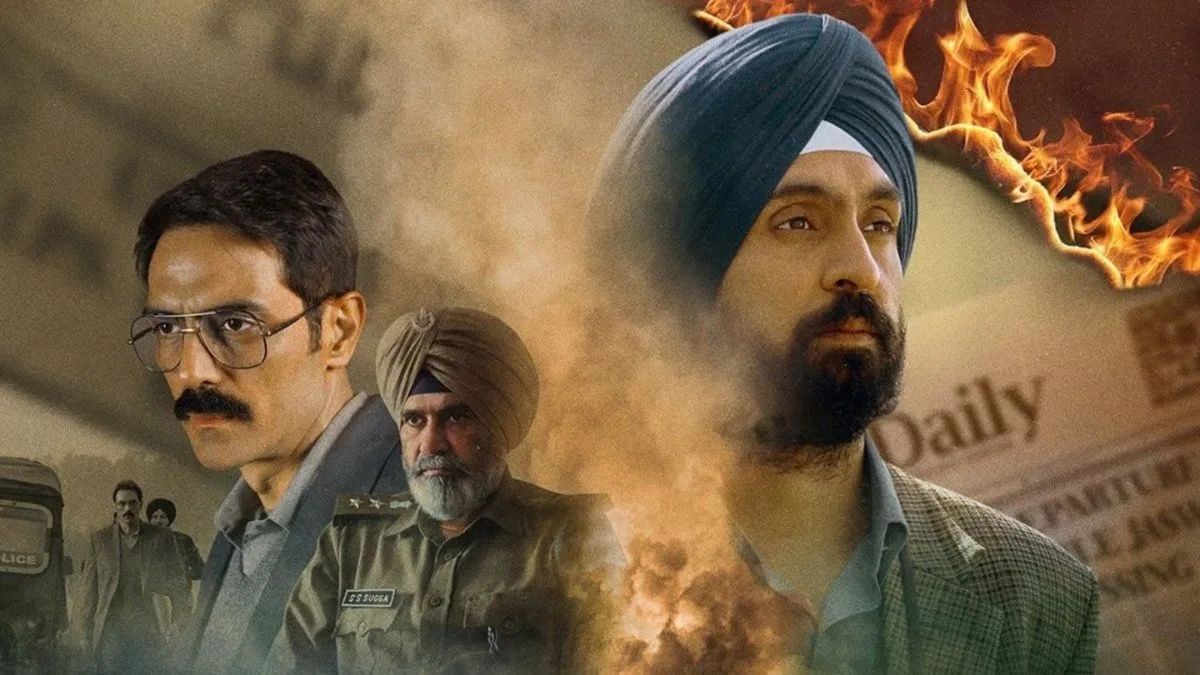
The struggle of filmmaker Honey Trehan to bring his film about a Sikh human rights activist to Indian audiences encapsulates a broader anxiety gripping the country's creative community. After nearly four years of negotiations with Indian film authorities over his movie "Satluj," Trehan eventually accepted 127 demanded alterations before abandoning hopes for theatrical release and turning instead to the ZEE5 streaming platform earlier this month. Within two days, however, the film vanished from the platform. ZEE5 offered no substantive explanation, merely citing "current developments," but news reports attributed the removal to government pressure over unspecified "security concerns."
The episode represents the latest flashpoint in an intensifying debate surrounding creative freedom in Indian cinema. Trehan characterised the government's actions as politically motivated interference, suggesting that India's Ministry of Information and Broadcasting was wielding censorship as an instrument to exert control over storytelling itself. "This is not the sign of a healthy nation," he remarked, arguing that authorities were using regulatory mechanisms to suppress narratives they found ideologically troublesome. The blocking of "Satluj" has become emblematic of what critics and industry observers increasingly describe as a troubling trend under Prime Minister Narendra Modi's administration.
Statistical evidence lends weight to these concerns. Parliamentary data reveals that during fiscal year 2025, India's main film certification body demanded modifications to 3,033 films before granting public screening approval. This figure represents more than a doubling from four years prior, suggesting a significant escalation in regulatory intervention. The Central Board of Film Certification, which oversees this process, has notably ceased publishing comprehensive annual reports detailing its activities since 2017, obscuring the specific nature and rationale behind these censorship decisions from public scrutiny.
The structural foundation for India's film censorship regime stretches back to colonial-era legislation, making state control of cinema content not entirely novel. However, analysts and industry observers contend that the character of censorship has fundamentally shifted under the current government. Sadanand Dhume, a senior fellow at the Council on Foreign Relations specialising in South Asian politics, observes that "the politics of the country has taken a sharp turn since the advent of Modi in 2014, and Bollywood is facing the downstream effects." This represents a qualitative transformation rather than merely quantitative expansion of existing regulatory powers.
Understanding India's censorship mechanism requires acknowledging its divergence from international democratic norms. Unlike age-based classification systems employed in the United States and most European nations, India's film board possesses direct authority to mandate editorial changes as a prerequisite for public exhibition. This power grants state authorities substantial control over narrative content itself, fundamentally distinguishing India's approach from systems where classification primarily determines audience age suitability while creative decisions remain with filmmakers. Few major democracies retain such direct governmental power over artistic content.
The Ministry of Information and Broadcasting has articulated its justification for censorship, stating to Parliament that alterations occur only when content allegedly violates principles concerning national "sovereignty and integrity," security, public order, decency, morality, defamation, contempt of court, or incitement to offence. Yet this expansive framing has proven malleable in application. The CBFC Chairperson, Shashi Shekhar Vempati, declined to address individual film decisions, maintaining institutional opacity around specific censorship determinations. The ministry claims the board has certified nearly 72,000 films over the past five years, suggesting systematic rather than exceptional intervention.
"Satluj," starring Punjabi actor Diljit Dosanjh, recounts the life of Jaswant Singh Khalra, a Sikh human rights campaigner who documented extrajudicial killings and police brutality during a violent counterinsurgency operation in Punjab during the 1980s and 1990s. This historical period remains politically sensitive, particularly given that Prime Minister Modi's Bharatiya Janata Party exhibits sustained concern regarding separatism. The contemporary geopolitical context has intensified this sensitivity following Canada's 2023 accusations that Indian government agents orchestrated the assassination of a Sikh activist in Vancouver, reviving international attention to Sikh independence movements and historical grievances.
Recent censorship decisions reveal patterns in what authorities permit or reject. While films celebrating patriotic narratives encounter minimal resistance—"Dhurandhar," a 2025 spy thriller depicting Indian intelligence operations against Pakistan, achieved certification with routine violence trims and became the highest-grossing Hindi film ever—movies exploring historical injustices, religious riots, or caste dynamics face substantially greater obstacles. "L2: Empuraan," a Malayalam-language film, underwent 24 post-release alterations after Hindu nationalist organisations objected to its portrayal of 2002 religious communal violence. "Phule," a biographical film about 19th-century caste reformers, required removal of caste-related terminology, while "Homebound," India's 2026 Academy Awards submission, secured clearance only after 11 cuts targeting caste and religious references.
The consequences extend beyond individual productions, shaping the broader ecosystem of Indian cinema. Filmmaker Onir, who operates professionally under a single name, expresses profound concern about creative erasure, describing the current moment as "one of the worst phases of Indian cinema" because "the variety of cinema, the kind of narratives that one wants to see, all kinds of stories—that is disappearing slowly." Onir himself encountered censorship pressure on his 2023 film "Pine Cone," when authorities objected to the word "gay" appearing in dialogue involving a nine-year-old character. The film achieved certification only after removing this reference, exemplifying how censorship restricts even oblique acknowledgment of marginalised identities.
Despite these institutional obstacles, "Satluj" has circumvented suppression through unconventional distribution channels. Trehan successfully premiered the film at the Cannes Film Festival in May, reviving what he described as heartbreaking circumstances surrounding its Toronto International Film Festival withdrawal in 2023. More remarkably, grassroots screenings have proliferated across Punjab, with community members downloading the film and organising viewings in temples, community centres, and village squares. These improvised exhibitions have transcended religious and economic boundaries, uniting diverse audiences—Hindu, Sikh, individuals of varying castes and socioeconomic backgrounds—in collective viewing experiences. Trehan characterises these developments as transformative: "What this film did, it brought the entire Punjab together."
For Malaysian readers and Southeast Asian observers, India's intensifying film censorship carries significant implications. India maintains the world's largest film industry by output volume, producing content that circulates throughout the region and globally. The suppression of narratives addressing historical injustice, religious tensions, and minority rights threatens a essential function of cinema as a medium for democratic dialogue. Moreover, India's experience demonstrates how populist governments across diverse democracies increasingly weaponise ostensibly neutral regulatory mechanisms to enforce ideological conformity. Malaysia, with its own complex relationship between government authority and creative expression, faces comparable pressures requiring sustained vigilance regarding institutional independence and artistic freedom.

