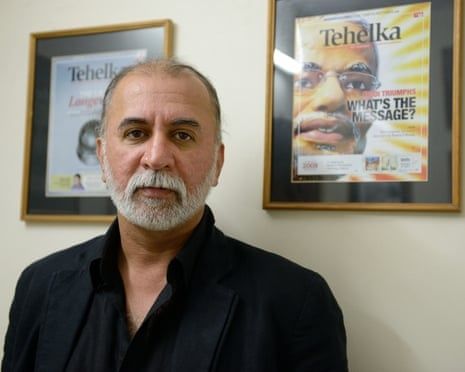
The Bombay High Court delivered a significant verdict on Thursday when it convicted Tarun Tejpal, 63-year-old founder and former editor of Tehelka magazine, of raping a junior colleague—a decision that reverses a lower court's acquittal three years earlier and reignites one of India's most closely watched sexual misconduct cases within the media industry.
Tejpal faced allegations stemming from an incident in November 2013, when the senior journalist was accused of assaulting a female reporter inside a lift at a luxury hotel in Goa during a corporate event. The accusation unfolded during a period when India's judicial system faced mounting pressure to address sexual violence following the fatal gang rape of a 23-year-old student aboard a New Delhi bus in December 2012—an attack that sparked massive public demonstrations and prompted legislative reforms to strengthen the country's rape laws.
The legal journey through India's courts has been protracted and controversial. After his arrest, Tejpal spent seven months in custody before India's Supreme Court granted him bail pending trial. A trial court in Goa subsequently acquitted him of all charges, including rape, sexual harassment, and wrongful restraint in 2021, a decision that many observers found troubling given the alleged victim's consistent account and investigative journalism standards typically applied elsewhere.
The Goa government mounted a legal challenge to that acquittal, bringing the case before the Bombay High Court. That appellate intervention has now resulted in Thursday's conviction, establishing accountability after nearly a decade of litigation. Sunita Sawant, the investigating officer who led the original police probe, spoke to journalists following the announcement, emphasizing the broader implications of the judgment for women across India's workforce. She framed the conviction as validating the courage required for victims to come forward within power-imbalanced environments.
The timing and circumstances of this case carried particular symbolic weight because of Tehelka's reputation as an investigative publication long committed to exposing corruption and championing marginalized communities. The magazine built its credibility on aggressive reporting about social injustice and institutional failures. The presence of such alleged misconduct at its leadership level—targeting a subordinate employee—created a devastating contradiction that undermined the publication's moral standing and editorial authority.
Tehelka's institutional credibility suffered irreparable damage following the 2013 incident. Though the magazine continues operations under different editorial stewardship, it has struggled to reclaim the prominence and reader trust it commanded in earlier decades. The scandal created a cautionary narrative about the gap between editorial principles and workplace conduct among some prominent figures in Indian media.
Tejpal maintains his innocence and has signalled his intention to challenge the conviction through India's appellate system. Sentencing is expected to follow the conviction announcement, though the specific penalty remains forthcoming. His defence team will likely pursue further legal remedies in higher courts, potentially extending this case's journey through India's judicial apparatus for additional years.
This conviction carries implications extending beyond the individuals involved. For women working in Indian media, journalism, and publishing sectors—spaces historically dominated by male editors and proprietors—the verdict demonstrates that power differentials and institutional positions do not shield perpetrators from accountability indefinitely. The case also highlights the importance of appellate review mechanisms that can correct potentially flawed or inadequately reasoned acquittals at trial level.
India's broader record on prosecuting sexual assault cases remains mixed, with conviction rates significantly lower than those in comparable democracies. The combination of lengthy investigative periods, delayed trials, stringent evidentiary standards, and occasionally inadequate judicial engagement with survivor testimony has resulted in numerous acquittals that frustrate victims and advocates. The Tejpal case, regardless of its ultimate outcome through remaining appeals, demonstrates that persistence through multiple court levels can eventually produce accountability.
The case also emerges against a backdrop of ongoing discussions within Indian media about workplace safety, professional ethics, and institutional accountability. High-profile sexual misconduct allegations against other prominent journalists and media figures have prompted industry-wide conversations about power dynamics, consent, and organizational responsibility. The conviction sends a signal that editorial authority and professional status do not constitute valid defences against allegations of sexual assault.
For Southeast Asian observers watching India's legal system grapple with complex sexual assault prosecutions, the Tejpal case illustrates both the possibilities and limitations of judicial remedies in addressing workplace misconduct. The decade-long timespan from initial complaint to appellate conviction reflects systemic challenges affecting survivors across the region, where lengthy court processes and evidentiary burdens often discourage victims from pursuing formal legal channels.

