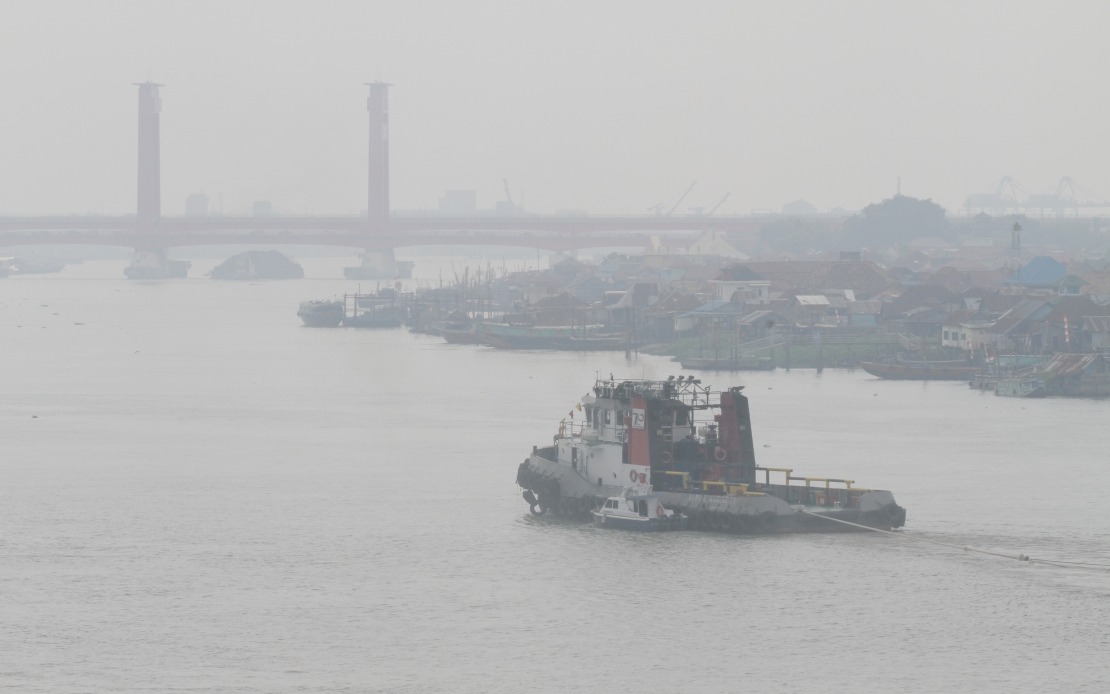
Indonesia has officially confirmed ongoing coordination with Malaysia to address the transboundary haze crisis, positioning weather modification operations in border regions as the immediate priority for the two nations. The announcement underscores the gravity of the current air pollution emergency, which has escalated dramatically this month as uncontrolled fires across West Kalimantan release thick smoke plumes that drift steadily northward into Malaysian airspace. This marks a renewed commitment between Jakarta and Kuala Lumpur to tackle a persistent regional challenge that has strained both economies and public health systems for decades.
The air quality deterioration has become impossible to ignore. Within Malaysian Sarawak, monitoring stations recorded Air Pollutant Index readings reaching 195 in several locations as of Friday morning—perilously close to the 201-plus threshold classified as very unhealthy. Across the strait, the impact extends inland to populous regions including Kuala Lumpur, Selangor, Penang, Kedah, and Perak, where residents face mounting respiratory risks and reduced visibility that disrupts daily commerce and transportation. The scale of pollution now affecting both nations' populations demonstrates why bilateral action has become urgent rather than optional.
Berton Panjaitan, Acting Head of Data, Information, and Disaster Communication at Indonesia's National Disaster Mitigation Agency (BNPB), outlined the scope of current discussions during a media briefing. Beyond weather modification protocols, the two governments are exploring expanded prevention frameworks, real-time monitoring systems, and mutual support mechanisms that could be activated when fire conditions deteriorate. This represents a meaningful deepening of the bilateral relationship on environmental governance, moving beyond reactive crisis management toward more systematic institutional cooperation. The emphasis on prevention signals both governments recognise that suppressing fires before they spread remains far more cost-effective than managing smoke after widespread ignition.
A pivotal breakthrough emerged from recent high-level talks between Malaysia's Natural Resources and Environmental Sustainability Minister Datuk Seri Arthur Joseph Kurup and Indonesia's Environment Minister Jumhur Hidayat on August 24. During those discussions, Jakarta granted Kuala Lumpur explicit permission to conduct cloud-seeding operations within Indonesian airspace—a sovereignty concession that reflects the severity of this season's fires and the political will from both capitals to prioritise public health over bureaucratic constraints. This airspace clearance enables Malaysian aircraft to operate freely in Kalimantan without seeking flight-by-flight approvals, substantially accelerating response times when conditions deteriorate rapidly.
While weather modification represents the immediate operational focus, the two nations are also exploring direct firefighting support. Malaysia has publicly signalled readiness to provide aerial water-bombing capacity and ground personnel if Indonesia formally requests such assistance through established diplomatic channels. However, Jakarta has not yet submitted an official request for these assets. Senior officials noted that the government remains receptive to expanding cooperation when urgent necessity dictates, suggesting that bureaucratic processes will not impede deployment should conditions warrant international firefighting intervention. This measured approach balances rapid response capabilities with diplomatic protocols that both sides respect.
The current haze episode reflects a stark reversal from recent years. The Malaysian Consulate in Pontianak documented that 2024 and 2025 experienced no severe haze events, creating a false sense that the region had escaped its historical seasonal curse. This year's deterioration consequently caught many communities unprepared. Schools across affected areas have shifted to online instruction, public institutions have mandated mask-wearing, and authorities have restricted non-essential outdoor activities. These measures impose significant economic and social costs, from lost educational continuity to reduced commercial activity in transport, hospitality, and retail sectors that depend on consumer movement.
The consulate's focus has necessarily shifted to safeguarding approximately 577 Malaysians registered across West Kalimantan, predominantly expatriates employed in resource extraction, construction, and services sectors. Their health and safety represent a direct national concern for the Malaysian government, adding a humanitarian dimension to otherwise technical bilateral negotiations. Previous experience provides some reassurance—during the 2023 haze episode, Malaysia's consulate contributed six water pumps to West Kalimantan's governor's office, demonstrating practical commitment beyond diplomatic rhetoric. Such contributions built goodwill that likely facilitated more recent airspace agreements and firefighting pledges.
The broader regional implications warrant careful analysis. Southeast Asia remains vulnerable to transboundary pollution that does not respect political borders, yet institutional mechanisms for managing such crises remain fragmented and inconsistently resourced. Malaysia and Indonesia, as the two largest ASEAN economies directly affected by recurrent haze episodes, have both incentive and capacity to establish regional best practices. Success in their bilateral coordination could create templates that smaller nations and less-resourced communities might emulate. Conversely, failure to contain West Kalimantan's fires would extend the air quality crisis into September and potentially October, seasons when fire suppression becomes more difficult and smoke transport patterns shift unpredictably.
Climate change dynamics underscore the urgency of these coordinated efforts. Rising temperatures and altered precipitation patterns have extended dry seasons across Borneo, creating conditions where fire ignition and spread occur more rapidly and extensively than historical baselines suggested. Weather modification—cloud-seeding to trigger precipitation—addresses symptoms rather than root causes, yet remains the most immediate intervention available when fires already burn. Longer-term solutions would require forest management reforms, agricultural practice changes, and emissions reductions across the broader region, initiatives that require years of implementation while current fires demand weeks of operational response.
The diplomatic framework underpinning this cooperation also deserves scrutiny. Both nations operate within the ASEAN Agreement on Transboundary Haze Pollution, a 1997 accord that established principles for cooperation but has faced persistent implementation challenges due to sovereignty concerns, resource constraints, and competing national priorities. Indonesia's explicit airspace permission to Malaysia represents the agreement operating as intended, yet such compliance remains inconsistent. Successful resolution of this month's haze crisis could strengthen political commitment to the agreement's mechanisms and encourage similar bilateral initiatives among other Southeast Asian partners facing seasonal transboundary pollution.

