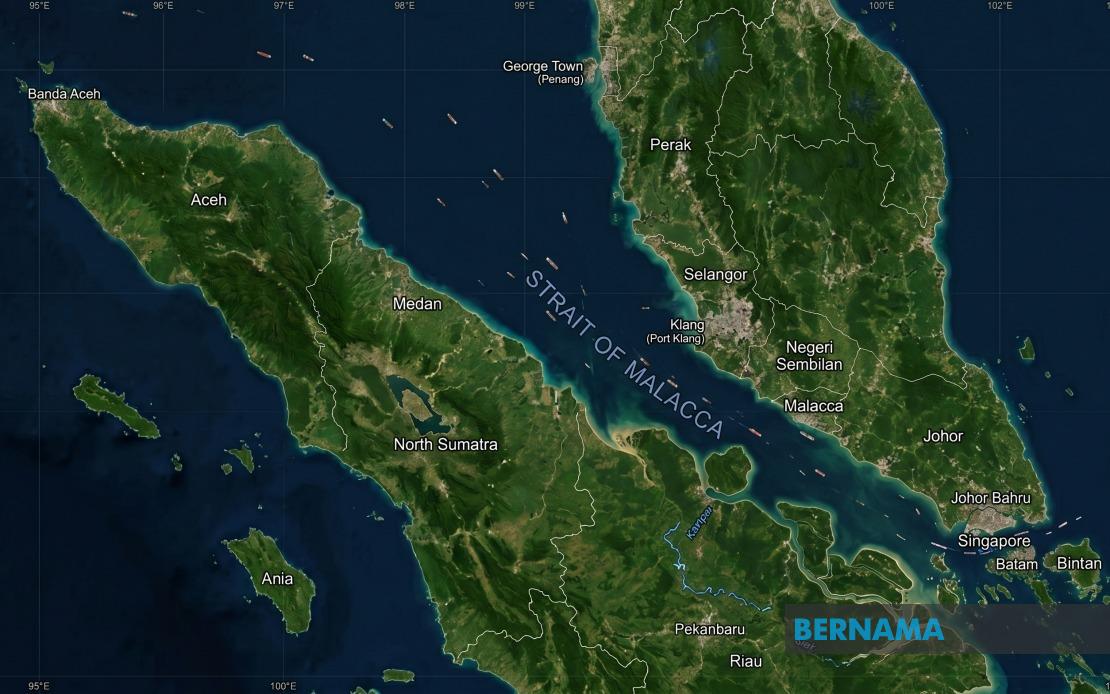
Indonesia and Singapore have renewed their commitment to protecting one of the world's most strategically vital maritime passages, with President Prabowo Subianto and Singapore Prime Minister Lawrence Wong making the pledge during their annual leaders' meeting in Jakarta on Monday. The two neighbouring nations, which directly border the Strait of Malacca, emphasised their shared responsibility in preserving the waterway as an open corridor for international commerce and navigation, underscoring the critical importance both countries place on maintaining stability in this crucial chokepoint through which roughly a quarter of global maritime trade passes.
The reaffirmation came as the leaders met for the second annual Indonesia-Singapore Leaders' Retreat at Istana Merdeka, a forum that has become central to managing bilateral relations between the two Southeast Asian powers. During their joint press conference, Prabowo outlined how Indonesia and Singapore's partnership extends beyond narrow bilateral concerns to encompass regional security architecture. Both leaders highlighted their commitment to the 1982 United Nations Convention on the Law of the Sea (UNCLOS), the international legal framework that governs maritime conduct and establishes principles for freedom of navigation and resource exploitation in international waters.
What distinguishes this pledge from previous statements is the explicit recognition that safeguarding the Strait of Malacca involves far more than traditional security concerns. Prabowo identified three interconnected challenges requiring coordinated attention: maritime pollution from vessel operations, the prevention of accidents that could trigger environmental catastrophe or disrupt shipping, and the persistent threat of piracy that occasionally disrupts commerce and endangers seafarers. These issues directly affect Indonesia and Singapore's economic interests and impose practical governance responsibilities on countries bordering the waterway, making their stewardship both a matter of national concern and international obligation.
The bilateral discussion also encompassed broader regional dynamics, with both leaders reaffirming ASEAN's foundational principle that international disputes should be resolved through peaceful dialogue and diplomatic channels rather than coercion or military posturing. This positioning carries particular significance given growing geopolitical tensions in Southeast Asia, including ongoing disputes over maritime boundaries and resource claims in contested waters. By explicitly linking their commitment to the Strait of Malacca with ASEAN's peaceful dispute resolution framework, Indonesia and Singapore are signalling to the international community that major regional actors remain committed to rules-based approaches despite external pressures that might incentivise confrontation.
Prabowo emphasised that resolving misunderstandings and potential misperceptions between nations should occur through open dialogue conducted in a spirit of friendship, a diplomatic formulation that suggests ongoing efforts to manage differences without allowing them to escalate into formal disputes. This approach reflects the pragmatic relationship both countries have cultivated over decades, balancing distinct national interests with recognition of mutual vulnerabilities and shared prosperity. For Malaysia and Thailand, the Indonesian and Singaporean commitment to inclusive coordination represents an acknowledgment that protecting the Strait of Malacca cannot be a bilateral or even trilateral undertaking, but requires the participation of all littoral states who depend on its security and stability.
The timing of this renewal also reflects preparations for a significant diplomatic milestone. Indonesia and Singapore will mark the 60th anniversary of formal diplomatic relations next year, and Prabowo expressed confidence that intensified cooperation would strengthen bilateral ties while contributing to broader Southeast Asian stability, economic growth, and shared prosperity. The annual leaders' retreat format itself represents institutional commitment to maintaining high-level dialogue, suggesting both countries view regular engagement at the presidential and prime ministerial level as essential infrastructure for managing an increasingly complex bilateral relationship and addressing emerging challenges.
For Malaysian readers and policymakers, the Indonesian-Singaporean emphasis on coordinated protection of the Strait of Malacca carries direct implications for Malaysia's own maritime security policy and its role as a co-littoral state. Malaysia's economic dependence on secure passage through these waters remains absolute, making the maintenance of orderly, stable conditions a cornerstone of national prosperity. The explicit commitment by Indonesia and Singapore to work with Malaysia and Thailand suggests these two larger powers recognise that legitimacy and effectiveness in managing the Strait require inclusive approaches that respect the rights and responsibilities of all bordering nations, not just the largest or most powerful ones.
The discussions encompassed regional and global issues that could affect both Indonesia and Singapore, reflecting recognition that maritime security cannot be isolated from broader geopolitical dynamics. Rising powers, strategic competition between major global actors, and transnational challenges including climate change and maritime security threats all influence how countries approach their responsibilities in the Strait of Malacca. By framing their partnership as preparation for future cooperation rather than merely managing current challenges, Prabowo and Wong positioned Indonesia-Singapore ties as foundational to Southeast Asian stability in an era of significant structural change.
Wong's Sunday evening arrival in Jakarta for the retreat underscored the bilateral nature of engagements despite their multilateral implications. The annual retreat format provides structured opportunity for leaders to move beyond prepared statements and formal diplomacy to engage substantive issues in depth. Prabowo characterised the gathering as reflective of the special relationship between Indonesia and Singapore, a description that acknowledges both the historical depth of bilateral ties and their contemporary strategic importance to regional equilibrium.
The renewed commitment to the Strait of Malacca also carries implications for maritime governance more broadly across Southeast Asia. As countries grapple with increasing vessel traffic, environmental pressures, and security threats, the Indonesian-Singaporean partnership model of coordinated protection—combining bilateral commitment with multilateral coordination—offers lessons for other regions facing similar challenges. For Malaysia, the prominence of the Strait of Malacca in these high-level discussions reinforces the waterway's centrality to regional strategic thinking and justifies continued investment in Malaysian maritime security capabilities and institutional capacity.

