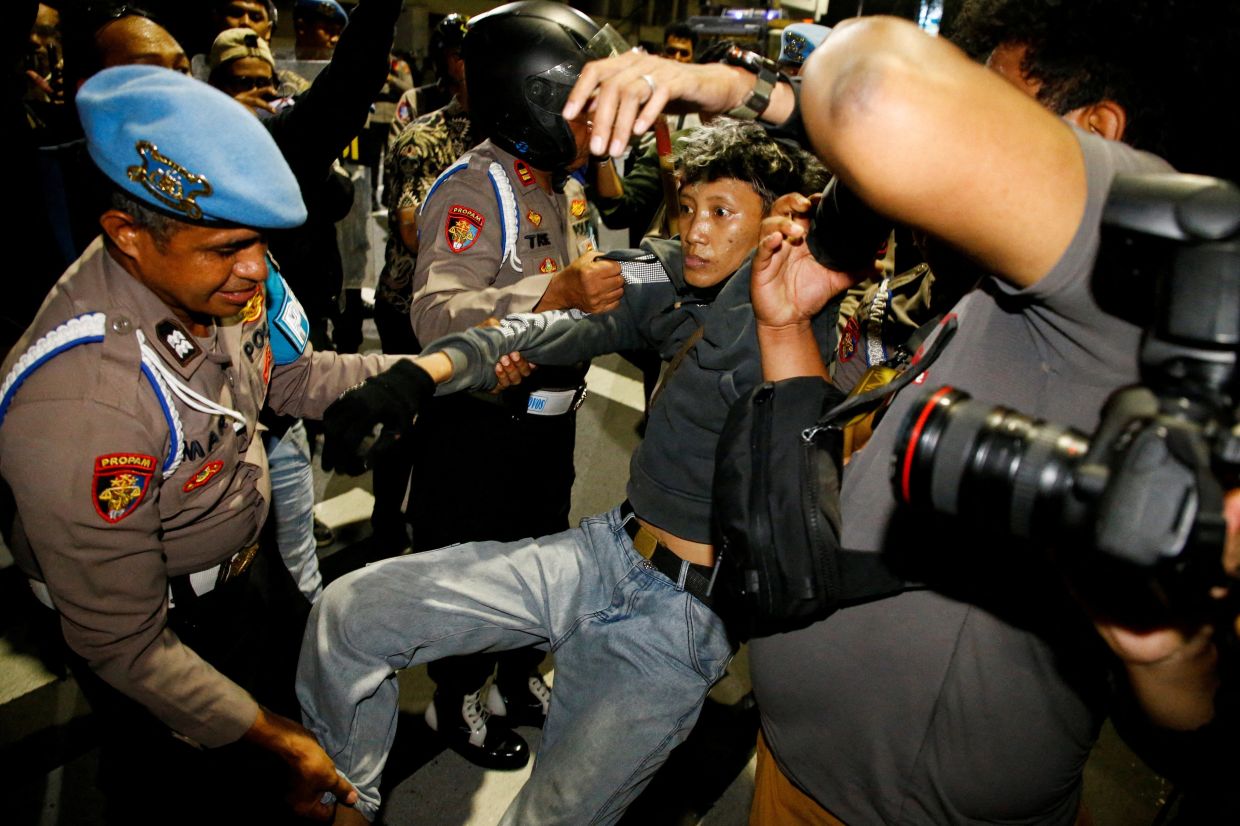
Police in Surabaya, Indonesia's second-largest city, have filed charges against four people in connection with an anti-government demonstration that took place on Friday, according to local law enforcement officials. The action, announced Sunday, came after around 100 demonstrators gathered near a government building to voice opposition to recent policy decisions that have stirred considerable public discontent across the archipelago.
The protest centred on two contentious government initiatives: a substantial increase in fuel prices and a troubled free school meals programme that has become engulfed in controversy. The fuel price decision, implemented earlier in June, represented a roughly 30 per cent increase in non-subsidised gasoline costs, a significant burden for ordinary Indonesians already grappling with cost-of-living pressures. The free meal scheme, meanwhile, was intended as a flagship anti-malnutrition initiative but has become mired in allegations of financial mismanagement and, more alarmingly, widespread food safety failures.
Surabaya police chief Luthfie Sulistiawan reported that some attendees at the rally became confrontational, throwing objects including firecrackers and rocks at government facilities. These actions prompted police to employ what officials termed "firm actions" to manage the crowd and restore order. The police department ultimately arrested 24 people during the incident on Friday but released the majority without formal charges, a common practice in Indonesia for first-time or minor offenders at demonstrations.
Of those detained, four individuals have now been formally charged with property destruction and assault against police officers. An additional six people remain under investigation after authorities found evidence of drug use, complicating their legal status and extending the ongoing inquiry into the protest's circumstances. The differentiated approach to charging reflects attempts by authorities to distinguish between core organisers or those involved in violence and peripheral participants.
The Surabaya demonstration is part of a broader wave of public discontent sweeping Indonesia's major urban centres. Jakarta, the capital, has witnessed particularly large student-led protests where thousands have taken to the streets demanding government action on both fronts. Students have specifically called for reversal of the fuel price increases and cessation of the multi-billion-dollar free meal programme, signalling that opposition cuts across age groups and is not confined to any single demographic.
The fuel price hike must be understood within Indonesia's complex energy position. As Southeast Asia's largest economy and a significant oil producer, Indonesia nevertheless functions as a net importer of petroleum products, making it vulnerable to global market fluctuations. The Middle East conflict has disrupted global oil supplies, tightening markets and pressuring government finances. Facing substantial fiscal strain, Jakarta opted to reduce fuel subsidies, a politically painful but economically argued necessity to preserve budgetary stability.
However, the free meal initiative has proven more contentious still. Originally presented as an innovative anti-poverty measure targeting child malnutrition—a legitimate public health concern in developing economies—the programme has been plagued by implementation failures. Tens of thousands of people have fallen ill following consumption of meals distributed under the scheme, triggering investigations into food safety protocols, storage conditions, and supplier oversight. Simultaneously, anti-corruption investigations have uncovered procurement irregularities and suspect financial flows, undermining public confidence in government competence.
For Malaysian observers, the Indonesian unrest underscores shared regional challenges facing middle-income Southeast Asian nations. Rising energy costs, ambitious welfare initiatives, and implementation gaps between policy intention and ground-level execution are familiar themes across the region. The Surabaya charges also illustrate how governments balance civil liberties and order—police released most detainees quickly, avoiding escalation while still deterring major disruption, though critics contend the selective prosecution of those charged may reflect political selectivity.
The partial suspension of the free meal programme represents a tacit government acknowledgment of serious problems, yet full reversal remains unlikely given political investment and developmental rhetoric. Instead, Indonesian authorities appear to be recalibrating rather than abandoning the scheme, even as investigations continue and public trust erodes. For policymakers across Southeast Asia, the episode serves as a cautionary tale: popular initiatives require rigorous planning, transparent procurement, and robust quality assurance to avoid catastrophic public relations damage and genuine harm to vulnerable populations.
The broader political implications remain uncertain. While these protests reflect genuine public grievances rather than organised opposition movements, they test President Joko Widodo's administration's capacity to manage dissent and deliver on governance promises. How authorities handle the charged individuals and whether they meaningfully address underlying concerns about fuel affordability and meal programme integrity will significantly influence public sentiment heading into electoral cycles and shape confidence in government institutions more broadly.

