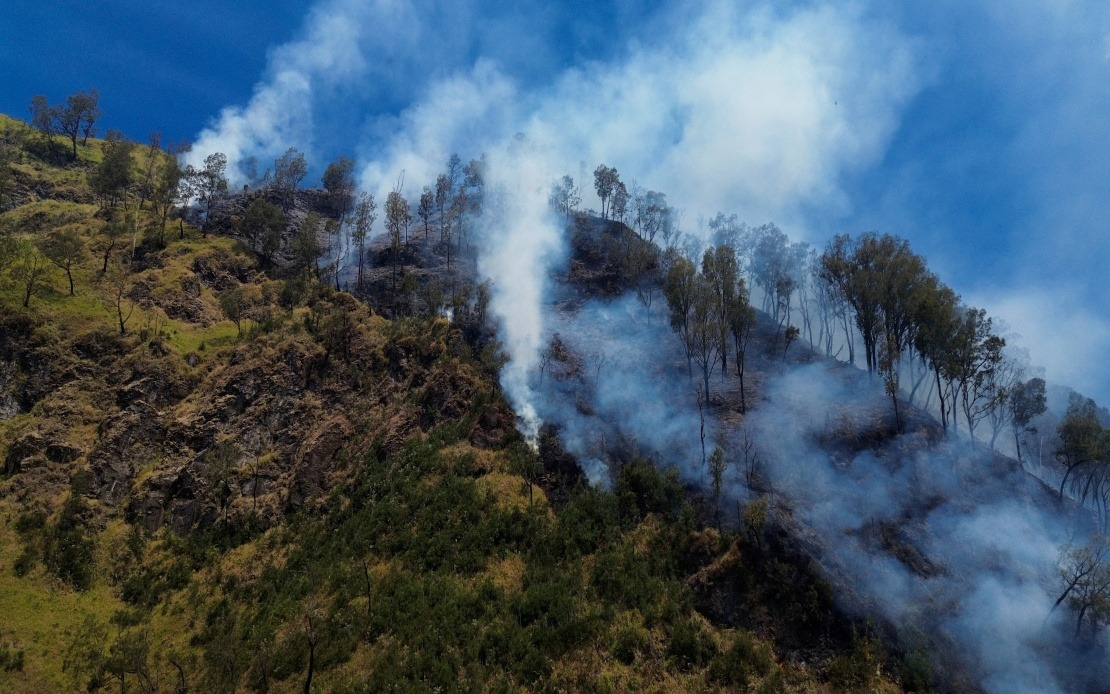
Indonesia's most visited volcano, Mount Bromo, has been sealed off to all visitors as authorities combat a significant forest fire sweeping across the Bromo Caldera region in East Java. The Bromo Tengger Semeru National Park authority implemented the closure at 10 pm on Saturday, prioritising both visitor safety and the efficiency of ongoing firefighting operations. The decision affects all five principal access points to the iconic 2,329-metre peak, which normally attracts thousands of domestic and international tourists annually.
The comprehensive closure encompasses the Cemorolawang entrance in Probolinggo Regency, the Wonokitri gateway in Pasuruan Regency, and three separate access routes through Malang Regency—Jemplang and Coban Trisula—plus the Senduro entrance in Lumajang Regency. Park authorities have attempted to mitigate inconvenience for visitors by allowing those who purchased tickets through online platforms during the closure period to either reschedule their trips once operations resume or receive full refunds. However, the indefinite nature of the suspension means no timeline has been provided for when Mount Bromo will reopen to the public.
According to Abdul Muhari, head of the National Disaster Management Agency's Data, Information, and Communication Centre, the wildfire has consumed approximately 176.20 hectares of vegetation across Probolinggo and Malang regencies since igniting on Monday. The fire has proven tenacious, with active hotspots continuing to emit dense smoke as of Saturday evening. Ground conditions at the site, characterised by moderate wind speeds, have complicated containment efforts and created unpredictable fire spread patterns across the caldera's terrain.
The response has mobilised significant aerial resources, with two water-bombing helicopters each capable of discharging 1,000 litres of water deployed to support ground firefighting teams. This represents a substantial commitment of resources by Indonesian authorities, reflecting the strategic importance of bringing the situation under control swiftly. The helicopters work in tandem with ground crews, though volcanic terrain and altitude present ongoing operational challenges for aerial operations in the region.
The Mount Bromo incident represents part of a broader pattern of fire activity affecting Indonesia's protected areas during the current dry season. A separate but related forest fire broke out in the Sembalun Resort area of Mount Rinjani National Park in Lombok, located approximately 200 kilometres to the east. That blaze, which commenced at 8 pm on Friday, consumed roughly 30 hectares before firefighters succeeded in bringing it under control by approximately 1.30 am on Saturday—demonstrating the intensity of firefighting operations across multiple locations simultaneously.
For Malaysian travellers and tourism operators, the Mount Bromo closure carries immediate practical implications. The volcano ranks among Southeast Asia's most accessible and photogenic peaks, particularly popular with Malaysian tour groups and adventure tourists. Many Malaysian companies maintain regular tour schedules to the site, and the indefinite closure disrupts bookings and tour itineraries throughout the region. The situation underscores the vulnerability of tourism infrastructure in Southeast Asia to natural hazards, particularly during dry seasons when fire risk escalates substantially.
The underlying causes of both the Bromo and Rinjani fires remain under investigation by Indonesian authorities. Initial inquiries will likely focus on whether the fires resulted from human activity—including careless tourism practices, agricultural clearing, or intentional burning—or whether natural factors such as spontaneous ignition in dry vegetation played a role. Given Indonesia's history of large-scale forest fires, particularly during El Niño years when drought conditions intensify, establishing causation is critical for implementing preventative measures ahead of future fire seasons.
The Mount Bromo closure also highlights broader regional vulnerabilities in the transboundary haze and fire phenomenon that periodically affects Southeast Asia. While this particular fire remains localised to East Java, uncontrolled forest fires in Indonesia have historically spread smoke across Malaysia, Singapore, and Brunei, creating transnational air quality challenges. The incident serves as a reminder that effective fire management in Indonesia's protected areas requires sustained investment in prevention infrastructure, early detection systems, and rapid response capabilities.
For the local communities surrounding Mount Bromo, particularly the Tenggerese ethnic group who inhabit the caldera region, the closure creates economic hardship as tourism represents a critical income source. The suspension of all tourism activities eliminates immediate employment and commercial opportunities at guesthouses, restaurants, guide services, and transport operations that depend on visitor flows. Economic recovery will depend on how quickly authorities can stabilise the fire situation and reopen access to this globally significant natural site.
Indonesian authorities have not yet provided a timeline for reassessing conditions and potentially reopening the park. The decision to suspend operations indefinitely reflects appropriate caution given the unpredictable nature of the fire and ongoing dry conditions. Authorities will likely maintain this stance until multiple consecutive days pass without new ignition incidents and active hotspots have been fully extinguished, after which environmental assessments can determine whether vegetation damage and ground conditions permit safe visitor access.

