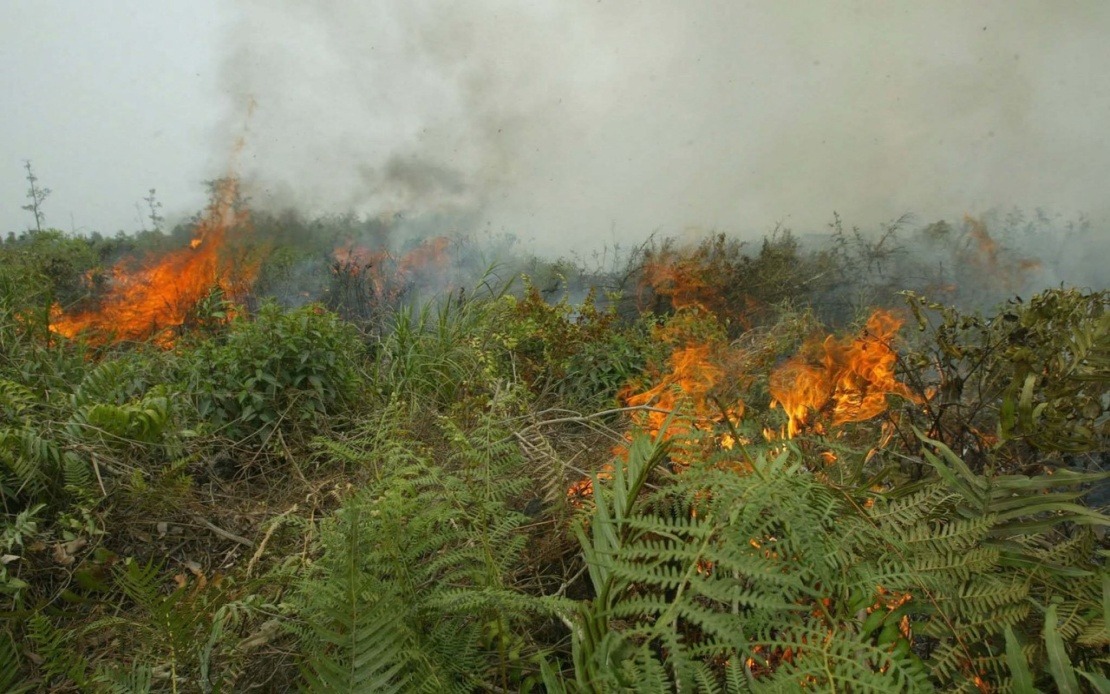
Indonesia is grappling with an intensifying crisis of forest and land fires across its eastern regions, particularly in Kalimantan where conditions have deteriorated markedly. The situation in West Kalimantan has become especially alarming, with thermal hotspots surging dramatically by more than 3,500 in a single day to reach 7,377 by Monday, according to authorities monitoring the disaster. This near-doubling of detected fire activity reflects the severity of the uncontrolled burning sweeping through one of Southeast Asia's most biodiverse regions, raising immediate concerns about ecological damage and transboundary impacts.
The National Disaster Mitigation Agency's Data and Communication Centre, headed by Berton Panjaitan, provided detailed figures revealing the geographic spread and intensity of the crisis. In West Kalimantan alone, not only did hotspots surge dramatically, but the number of active fire spots also increased by 88 to reach 104, while air quality deteriorated so severely that visibility plummeted below one kilometre in affected zones. The agency's monitoring systems indicate that conditions are worsening rather than stabilizing, a troubling indicator given the dry season timeline and the region's vulnerability to fire propagation.
Conditions across Kalimantan's other provinces present a more mixed but still concerning picture. Central Kalimantan showed a marginal decrease in hotspots, declining by 147 to 5,244, yet paradoxically the number of confirmed fire spots expanded by 16 to reach 72, suggesting fires may be consolidating into larger burning areas. South Kalimantan witnessed a more significant reduction in hotspots, falling by 405 to 504, though fire spots there also rose by 33 to 55, maintaining pressure on local resources. These patterns indicate that fires are not uniformly distributed and response efforts must remain flexible and regionally tailored.
Sumatra, Indonesia's western island and the closest region to Malaysia and Singapore, remains an active concern zone. South Sumatra presented particularly worrying developments, with hotspots increasing by 209 to 1,013 during the monitoring period, suggesting expansion of burning activity rather than containment. By contrast, Riau and Jambi provinces showed some improvement, with hotspots declining from higher levels, and fire spot numbers also decreasing across both provinces. This uneven geographic pattern complicates coordinated response strategies and suggests that fire management must address localized factors rather than applying uniform solutions.
The human toll of these fires extends far beyond the immediate destruction of forest ecosystems. Deputy Health Minister Prof Dante Saksono Harbuwono highlighted the significant public health crisis unfolding, noting that approximately 5.5 million people across Sumatra and Kalimantan inhabit areas experiencing air quality degradation from smoke. The health service has documented some 13,500 cumulative cases of acute respiratory infection (ISPA) recorded across July and August, with 4,082 individuals still actively suffering from this condition as of the previous Sunday. Particularly concerning is Harbuwono's assessment that health impacts from smoke this year substantially exceed those experienced during the previous fire season, indicating that either fire intensity or population exposure has increased considerably.
Medical authorities are maintaining active monitoring and coordination with local health offices to manage the respiratory crisis, yet the scale of affected population raises questions about healthcare system capacity in these regions. The prevalence of ISPA cases, whilst significant, likely represents only diagnosed and reported cases, with many more individuals experiencing respiratory distress in rural and remote areas where medical access remains limited. This epidemic dimension of the fire crisis adds urgent pressure to containment efforts, as each day of ongoing fires brings additional health burden to vulnerable populations.
Responsibility for fire prevention has led environmental authorities to take action against commercial actors whose concessions overlap with burning areas. Indonesia's Environment Ministry has identified 42 companies operating in forest and land concessions where fires have been detected via satellite monitoring. Deputy for Environmental Law Enforcement Rizal Irawan explained the methodology of identifying these entities, involving overlay analysis of satellite hotspot data against official concession mapping. The verification process involves staged inspection, with 19 companies currently undergoing detailed field verification whilst the remainder await secondary-stage examination.
The regulatory framework invoked applies strict liability to concession holders regardless of whether fires were deliberately set or ignited through other causes. This principle means companies face potential administrative or civil sanctions simply by virtue of fires occurring within their licensed areas, placing responsibility on operators to maintain comprehensive prevention and response infrastructure. However, enforcement effectiveness depends on adequate inspection capacity and follow-through, and questions remain about whether 42 identified companies represent adequate accountability or represent only the most obvious cases identifiable through satellite data.
Indonesia's efforts to manage transboundary impacts of fire-related haze reflect recognition that this crisis extends beyond its borders. Environment officials have coordinated with neighbouring countries through established ASEAN mechanisms, including a recent ministerial-level meeting held in Bali involving Indonesia, Malaysia, and Singapore. This diplomatic engagement acknowledges that smoke and haze drift across maritime boundaries and affect air quality and health in neighbouring territories, requiring cooperation on shared monitoring and prevention standards. Such coordination remains essential given prevailing wind patterns that carry Indonesian haze toward Malaysia and Singapore during the dry season.
On the prevention front, Indonesia has established 95 Fire Care Community groups, comprising approximately 1,425 trained personnel distributed across six provinces in Sumatra and Kalimantan identified as particularly fire-prone. These community-based organizations represent grassroots approaches to early detection and rapid response, embedding firefighting capability within affected regions. An additional 35 community groups are targeted for establishment during the current year, suggesting acknowledgment that existing capacity remains insufficient for the scale of fire activity. Meanwhile, the government sent notices to 2,226 companies requiring personnel and equipment preparedness for fire prevention and response, with roughly 80 per cent subsequently reporting readiness and the remaining 20 per cent still outstanding in compliance.
The gap between reported readiness and actual capacity represents a potential vulnerability in response systems. Companies self-reporting readiness may possess varying levels of genuinely functional prevention infrastructure, and the remaining non-responsive 20 per cent of firms may represent either companies with genuine resource constraints or those unwilling to invest in compliance. Bridging this implementation gap will require ongoing regulatory pressure and possibly incentive structures encouraging companies to view fire prevention as core operational necessity rather than regulatory burden.
Looking forward, the combination of escalating hotspots in West Kalimantan, expanding health impacts, and mixed enforcement progress suggests Indonesia faces a prolonged crisis requiring sustained commitment and resource allocation. The regional implications extend to Malaysia and Singapore, which experience transboundary haze impacts, justifying continued ASEAN-level coordination. Underlying this fire crisis remain questions about land use policy, agricultural practices, and enforcement of existing regulations that will determine whether response becomes more effective or merely addresses symptoms of deeper structural issues in Indonesia's forest management systems.

