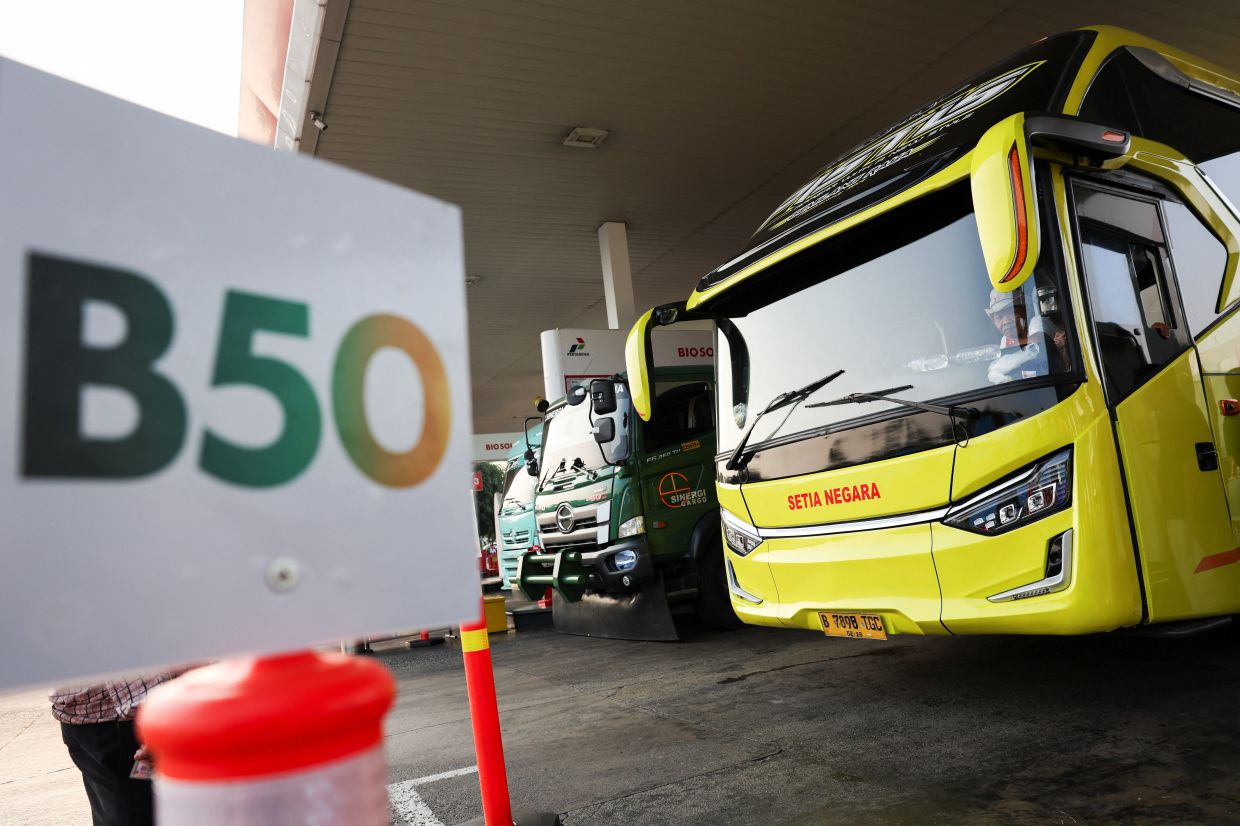
Indonesia has taken another significant step in its long-running effort to harness its vast palm oil reserves for domestic energy security by formally launching its B50 biodiesel programme, a move that promises to fundamentally reshape the nation's fuel consumption patterns and further entrench palm oil's role in the energy sector. Energy Minister Bahlil Lahadalia announced at a ceremony in Karawang, West Java, that the upgraded mandate will lift biodiesel blending from the current 40% to 50%, a shift that will require the country to consume between 16.3 million and 17 million metric tons of crude palm oil annually—a meaningful increase from the present 15.2 million tons. The ambitious programme reflects Jakarta's determination to capitalise on its position as the world's largest palm oil producer while simultaneously reducing the foreign exchange drain from diesel imports, a dual objective that has long animated Indonesian energy policy.
The economic implications for Indonesia's import bill are substantial. Government data indicates that the B50 transition will pare this year's fuel import expenditure by 170 trillion rupiah, equivalent to approximately US$9.41 billion—a figure that underscores the considerable savings available through domestic fuel production. The contrast with 2025 projections, which show savings of roughly 133 trillion rupiah, suggests that full implementation and operational efficiency gains could deliver even greater returns as the programme matures. For a country perpetually conscious of its current account position and foreign reserve levels, such savings represent meaningful macroeconomic relief, particularly given prevailing global energy prices and supply chain uncertainties that have periodically disrupted fuel availability in Southeast Asia.
President Prabowo Subianto's visible endorsement of the scheme at the Karawang event signals that biodiesel expansion enjoys the highest political backing, though his remarks hint at internal policy discussions about how aggressively Indonesia should pursue palm oil mandates. Prabowo disclosed that he had advocated for an even more ambitious B100 pure biodiesel mandate, but his cabinet had cautioned that such a step lacked technical feasibility and market readiness. Instead, ministerial advice coalesced around the B50 level as a sufficiently transformative threshold to eliminate import dependency while remaining operationally achievable across Indonesia's refinery and distribution infrastructure. Nevertheless, Prabowo's public statement that authorities should continue investigating a 60% blend reveals the administration's underlying conviction that palm oil's energy potential remains underexploited, signalling that further escalation could follow once implementation challenges at the B50 level are resolved.
The palm oil industry itself faces both opportunity and complexity under the new framework. The previous B40 programme had allocated 15.64 million kilolitres of biodiesel this year, representing a 4.68% increase over last year's consumption of 14.94 million kilolitres, demonstrating that demand for palm-based fuel has been climbing steadily. The transition to B50 will require substantially larger volumes—the energy ministry estimates demand for between 16.7 million and 18 million kilolitres of fatty acid methyl ester (FAME), the technical term for biodiesel derived from palm and other vegetable oils. This expansion will necessitate coordinated investment across the supply chain, from plantation management and crushing facilities to refineries and blending terminals, presenting opportunities for integrated producers but also operational challenges given global commodity market volatility and competing uses for palm oil in food and cosmetics sectors.
A notable gap in the programme's rollout is the government's incomplete allocation of production quotas to biodiesel manufacturers and blenders. Although the B50 mandate has been formally announced, the energy ministry has not yet issued revised allocation figures for the new programme, leaving industry participants in a period of uncertainty regarding their permitted production volumes and market share. The energy ministry has indicated that businesses will have until the end of September to exhaust their remaining B40 inventory before the higher blend takes effect, providing a transition window but also creating logistical complexity in managing dual-blend supply chains during the overlap period. This sequencing issue has prompted industry calls for clarity on quota distribution, particularly among smaller players who lack the buffer stocks of larger integrated companies and face greater cashflow pressure during transition phases.
The B50 programme must be understood within the broader context of Indonesia's energy independence strategy and its approach to climate commitments. Prabowo framed the initiative as evidence of Indonesia's leadership in global carbon emission reduction efforts, positioning biodiesel expansion as both an economic policy and an environmental contribution. This framing, however, remains contentious internationally, as biodiesel from palm oil cultivation has faced scrutiny from environmental advocates concerned about deforestation, peatland degradation, and emissions from land-use change. Indonesia's counter-argument emphasises that its biodiesel programme displaces imported fossil fuels and that domestic palm oil is increasingly cultivated on previously cleared lands rather than through new forest conversion. The success of this narrative in international forums will partly depend on transparent sustainability certification and verifiable supply-chain management, areas where Indonesian implementation has historically faced questions from developed-market policymakers and environmental groups.
For Southeast Asian observers and policymakers across the region, Indonesia's B50 rollout carries instructive implications regarding the political economy of renewable energy transitions in developing markets. Unlike wealthy nations that can subsidise renewable adoption or mandate costly emissions reductions, Indonesia has anchored its energy transformation to a commodity it abundantly produces and can monetise, creating a politically durable coalition of government, industry, and rural interests around biodiesel expansion. Other ASEAN members with substantial palm oil sectors, notably Malaysia, have pursued comparable biodiesel mandates, and Indonesia's implementation experience—including its quota management approach and technical standards—may influence policy design elsewhere in the region. Conversely, the programme also illustrates how renewable energy transitions in commodity-rich nations can reinforce existing export-oriented economic structures rather than fundamentally diversifying energy sources or accelerating innovation in alternative technologies.
Looking ahead, the energy ministry's acknowledgment that research into a 60% blend will commence reflects an administration convinced that palm oil mandates remain politically and economically viable, despite potential constraints. The sequencing from B40 to B50 to potential B60 represents an incremental approach that allows operational systems and supply chains to adapt between each threshold elevation. However, such a trajectory also presumes sustained palm oil availability, stable global prices for the commodity, and absence of supply disruptions—assumptions that cannot be taken for granted in an era of climate volatility and geopolitical resource competition. Moreover, further biodiesel expansion could eventually confront physical constraints in plantation capacity or competing demand from food, feed, and industrial sectors, limiting how far Indonesia can push blending percentages without triggering palm oil price spikes that would undermine the programme's economic rationale. The government will need to monitor these dynamics closely as implementation proceeds.

