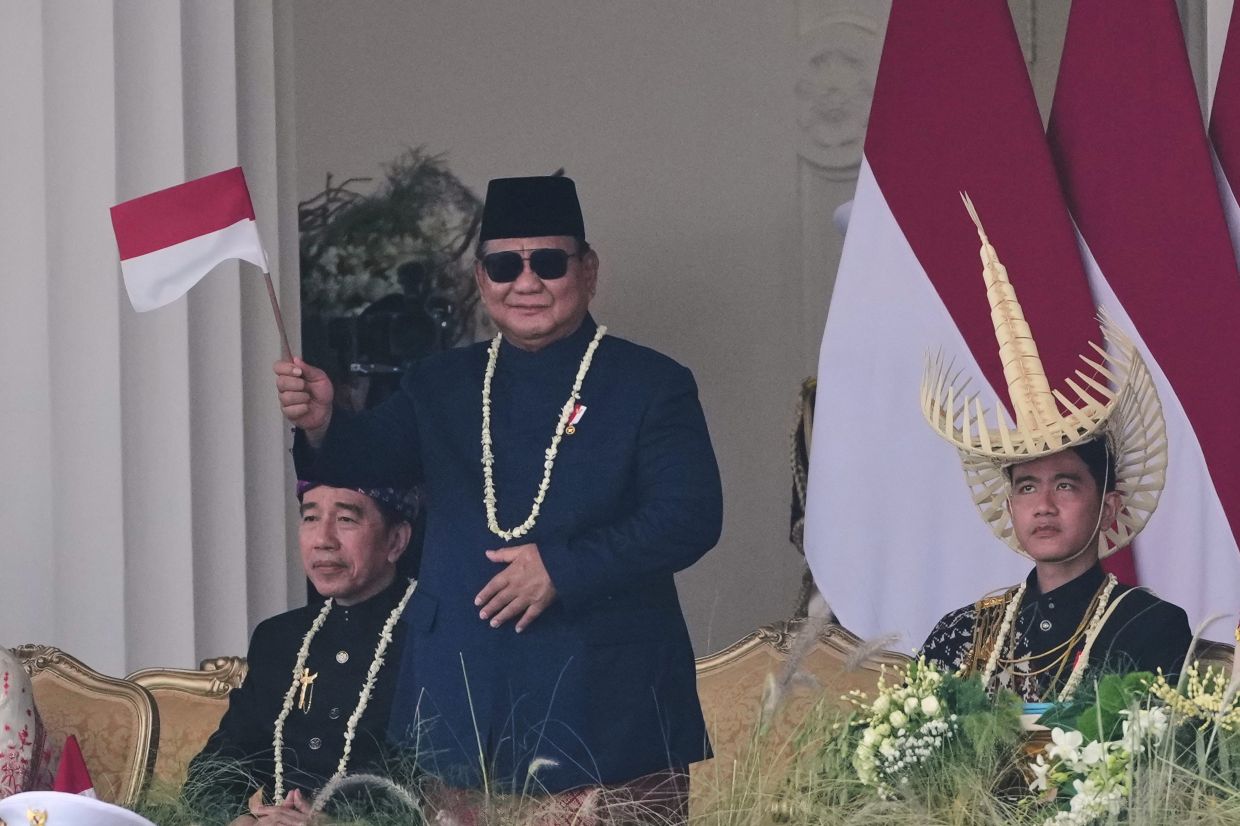
President Prabowo Subianto presided over Indonesia's 81st Independence Day commemoration in Jakarta on Monday, steering the nation through a celebration shadowed by tragedy unfolding thousands of kilometres away. The ceremony at Merdeka Palace proceeded as scheduled despite the ongoing humanitarian crisis in East Nusa Tenggara, where a catastrophic earthquake had struck Flores Island just two days prior, killing 53 people and leaving hundreds of structures damaged. The juxtaposition underscored the delicate balance national leaders must maintain between honouring the country's founding moment and responding to real-time disasters affecting millions of citizens.
Dressed in formal national attire—a navy beskap complemented by a black peci and a jasmine garland—Prabowo commanded the flag-hoisting ceremony with deliberate solemnity. The proceedings unfolded with traditional pageantry, featuring cultural performances and a ceremonial parade that transported the national flag replica and the original Proclamation text from the National Monument to the presidential palace. The symbolic journey was accompanied by 114 cavalry troops and 45 military police officers on motorcycles, emphasizing both the grandeur and security protocols surrounding the event. Yet the formality carried an undercurrent of seriousness as organisers acknowledged the nation's immediate suffering.
The earthquake that struck Flores early Saturday morning registered 7.7 magnitude and proved extraordinarily destructive for a region already vulnerable to seismic activity. According to the National Disaster Mitigation Agency (BNPB), approximately 5,400 residents were forced to evacuate their homes in the immediate aftermath. The subsequent seismic activity tested the resilience of survivors and rescue personnel alike—nearly 1,000 aftershocks of varying intensities rippled through the region over the following days, prolonging the trauma and hampering recovery efforts. On the very morning of the Independence Day ceremony in Jakarta, a 5.8-magnitude quake struck offshore, located about 39 kilometres north of NTT at a depth of 10 kilometres, reminding the nation that the disaster remained active and unpredictable.
The human toll extended beyond fatalities. Medical facilities across Flores reported more than 130 injured persons, a significant proportion suffering fractures and traumatic injuries requiring extended hospitalisation. These figures, though smaller than the death toll, represented the broader scope of suffering affecting the community. Many survivors faced compounded challenges—loss of shelter, damaged livelihoods, and the psychological toll of repeated seismic events. The 7.7-magnitude initial quake ranked among the more significant seismic events to strike the region in recent years, and its destructive capacity reflected the vulnerability of infrastructure and building standards in some parts of eastern Indonesia.
Acknowledging the crisis, Prabowo led the ceremony's attendees in a solemn moment of silence dedicated to honouring national heroes and fallen citizens. He explicitly called upon participants to offer prayers for those affected by the unfolding disaster, weaving the tragedy into the Independence Day narrative. This gesture represented an attempt to maintain national unity and solidarity at a moment when divisions between celebration and calamity could have fractured public sentiment. The inclusion of disaster victims in the ceremony's spiritual framework signalled that commemorating independence need not exclude recognition of contemporary suffering.
The government's response structure became visible through notable absences from the Jakarta ceremony. State Secretary Prasetyo Hadi explained that several senior ministers had redirected their attention to East Nusa Tenggara rather than attending the capital's festivities. Coordinating Minister for Human Development Pratikno, Home Minister Tito Karnavian, Public Works Minister Dody Hanggodo, and Deputy Health Minister Benjamin Paulus Octavianus were all stationed in affected areas, overseeing disaster response coordination and resource distribution. This deployment reflected a deliberate prioritisation: even on the nation's most symbolically significant day, governance demanded a presence where citizens faced immediate, life-threatening challenges.
The government's logistical response involved multiple ministries addressing distinct aspects of the crisis. The Home Ministry typically coordinates evacuation and security operations, while the Public Works Ministry mobilised engineering resources to assess structural damage and plan reconstruction. The Health Ministry managed medical response, operating field clinics and coordinating patient transport to functional hospitals. This distributed responsibility model allowed the central ceremony in Jakarta to proceed while substantive relief efforts continued in the east. However, such division also raised questions about the adequacy of resources available for a disaster of this magnitude affecting a region historically underserved by national infrastructure investment.
When questioned about whether Prabowo himself might travel to Flores to demonstrate presidential engagement with affected communities, Prasetyo offered carefully measured responses that avoided commitment. He indicated that the government would assess the situation's development before determining whether a presidential visit was logistically feasible or strategically necessary. Such caution reflected awareness that presidential visits to disaster zones, while symbolically important, also consume security resources and can disrupt ongoing relief operations. The statement suggested decision-making would remain contingent on evolving circumstances rather than predetermined protocol.
For Malaysian observers, the Indonesian experience carried resonance given the region's shared seismic vulnerability. Both nations sit within the Pacific Ring of Fire and have experienced major earthquakes with devastating consequences in recent decades. The Flores earthquake recalled the December 2004 Indian Ocean tsunami that affected both countries, or more recently, the 2015 Tanjung disaster earthquakes. Indonesia's challenge in balancing national celebration with disaster response underscores the reality facing Southeast Asian governments: economic development and infrastructure building must account for geological hazards that will inevitably interrupt normal governance and disrupt planned events.
The sequence of events also illuminated communication patterns within Indonesia's crisis management structure. The decision to proceed with Independence Day ceremonies, coupled with the deployment of ministers to the disaster zone, suggested confidence that existing response mechanisms could function without presidential presence in Jakarta being essential. This reflected either robust institutional capacity or potential gaps in coordinating simultaneous demands. For Southeast Asian nations studying disaster governance, Indonesia's 81st Independence Day offered a practical case study in maintaining institutional stability and national morale during crises—a balance between honouring what unites a nation and urgently addressing what currently divides it.
Moving forward, the aftermath of the Flores earthquake would likely shape policy discussions around building codes, early warning systems, and emergency preparedness infrastructure across eastern Indonesia. The near-simultaneous occurrence of independence celebrations and natural disaster presented policymakers an opportunity to reflect on national resilience and the relationship between commemorating past struggles for independence and preparing for future environmental challenges that threaten stability.

