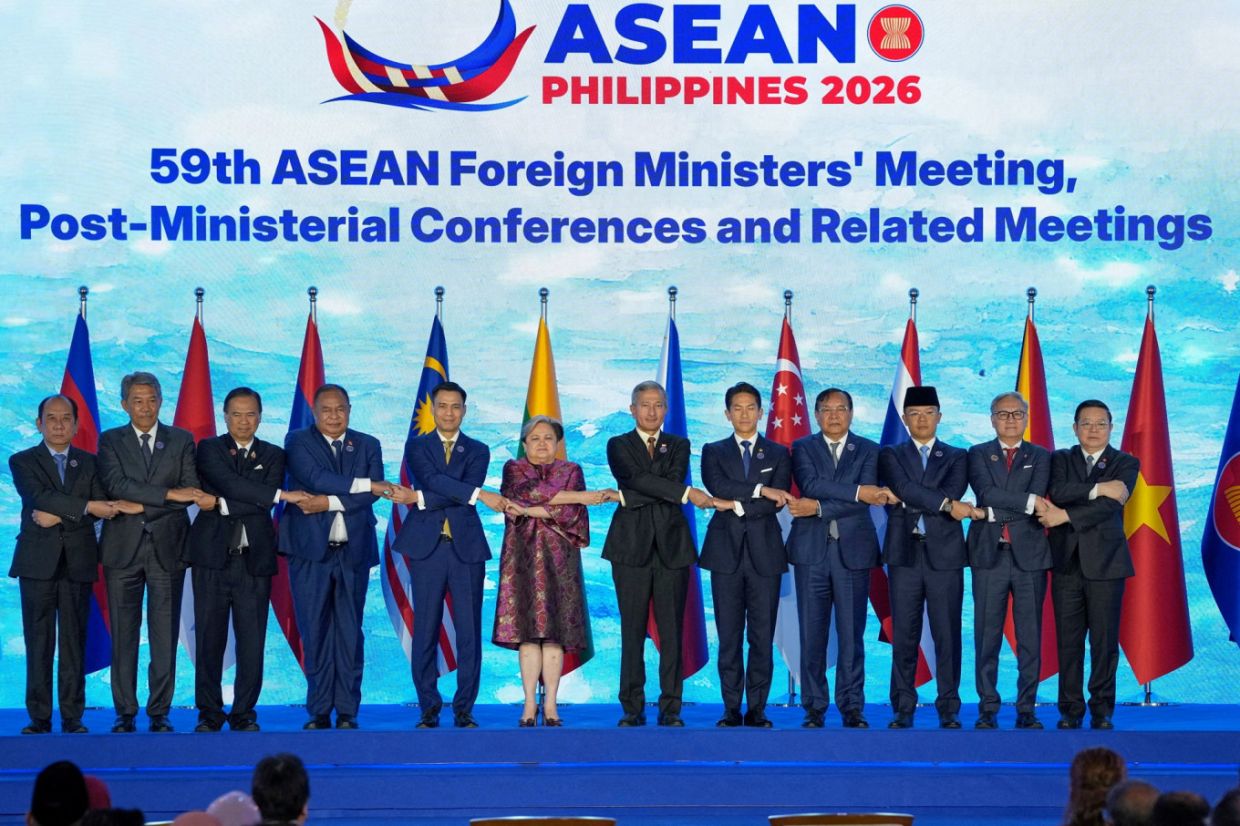
Indonesia has pressed the Association of Southeast Asian Nations to transform its carefully crafted commitments into demonstrable, material outcomes through stronger implementation of regional agreements and more effective external partnerships. The appeal reflects growing anxieties within the bloc about whether Asean can maintain its relevance and influence amid an increasingly volatile geopolitical landscape marked by Middle Eastern tensions, maritime disputes, and internal instability across the region.
Foreign Minister Sugiono articulated this challenge during the 59th Asean Foreign Ministers Meeting held in Manila on Tuesday, where diplomatic representatives from all 11 member states convened for preliminary discussions before engaging with dialogue partners on Wednesday. The timing proved significant, as mounting global crises have exposed vulnerabilities in Asean's ability to respond with unified positions and coordinated action, raising fundamental questions about the bloc's strategic direction and operational effectiveness.
The agenda encompassed a daunting array of interconnected issues that threaten regional prosperity and stability. Economic ramifications stemming from the Middle Eastern conflict have already begun rippling through Southeast Asian markets, while the protracted South China Sea territorial disputes continue to fester without resolution. Simultaneously, Myanmar's ongoing political turmoil remains unresolved despite years of diplomatic engagement, presenting what many regard as an embarrassing test of Asean's capacity to influence even its own members.
Sugiono emphasized that the bloc has reached a decisive juncture requiring demonstration of institutional credibility. By recalling Asean's achievement in May—when member states amended the charter to formally incorporate Timor-Leste as the 11th member—he highlighted the organization's capacity for institutional evolution. Yet he posed a pointed question that underlined the gap between aspiration and accomplishment: "Can Asean deliver on its promises?"
The Middle Eastern conflict's destabilizing effects have grown impossible to ignore for Southeast Asian policymakers. Beyond immediate humanitarian concerns for nationals working in affected regions, the bloc faces serious economic headwinds as energy supply disruptions and shipping uncertainties roil regional markets. The joint statement issued following Tuesday's closed-door plenary acknowledged these multifaceted impacts, explicitly addressing the bloc's collective interest in mitigating socio-economic consequences while maintaining pathways for healthcare access and social support for vulnerable populations.
Particularly troubling for Southeast Asian capitals is how the energy crisis has subtly shifted negotiating dynamics on the South China Sea. As traditional energy supplies from Middle Eastern sources face disruption through the Strait of Hormuz, member states have increasingly turned toward China as an alternative supplier—particularly for renewable energy technologies. Philippine data illustrates this dependency shift starkly: solar panel imports from China more than doubled during the first five months of this year compared with the equivalent 2023 period. This asymmetry of economic reliance potentially weakens Asean's collective leverage in ongoing negotiations over a Code of Conduct governing the disputed waterway.
The Code of Conduct negotiations represent perhaps the most consequential item on Asean's agenda. After two decades of discussions, the process remains incomplete despite broad acknowledgment that maritime rules-based governance would strengthen the entire region. Sugiono stressed that the 24-year wait for concrete regulatory frameworks has extended long enough, arguing that a region bound by transparent rules possesses inherently greater stability and prosperity than one where power dynamics dominate. His statement carried implicit criticism of the glacial pace of progress and suggested impatience is mounting within Indonesian leadership over Asean's inability to conclude this fundamental agreement.
Myanmar's political catastrophe received sustained attention despite persistent divisions among member states regarding appropriate engagement strategies. The Five-Point Consensus, which Asean developed as its peace roadmap for Myanmar, has struggled to generate meaningful progress toward democratic restoration or even humanitarian improvement. Tuesday's retreat session devoted specifically to reviewing implementation mechanisms reflected recognition that existing approaches require recalibration. Philippine Foreign Secretary Theresa P. Lazaro indicated that ministers had agreed to reassess how progress metrics are defined and had contemplated structural reforms to Asean's special envoy mechanism, with substantive review targeted for completion by November's leaders' summit.
The discord surrounding Myanmar policy reveals deeper fractures within Asean's consensus-based decision-making framework. Some member states advocate firmer stances toward the military government, while others prioritize maintaining engagement channels and view confrontational approaches as counterproductive. This fundamental disagreement has prevented Asean from articulating unified messaging and undermines the bloc's capacity to influence developments in Nay Pyi Taw. Sugiono's reference to "progressive" views among member states suggested cautiously optimistic movement, yet the requirement to extend review processes into November indicated substantial disagreements remain unresolved.
The Manila meeting's continuation into Wednesday with Asean's major dialogue partners—including the United States, China, and Russia—will test the bloc's ability to present coherent regional positions while navigating competing great power interests. These external partnerships carry heightened stakes given the multiplying geopolitical challenges confronting Southeast Asia. The convening represents an opportunity for Asean to demonstrate whether it can mobilize its collective diplomatic weight and economic significance into meaningful influence over the regional security environment.
Indonesia's pointed questioning of Asean's commitment to delivery reflects Jakarta's frustration with what it perceives as growing performance gaps between the bloc's rhetorical ambitions and practical achievements. As the region's largest and most influential member state, Indonesia has invested substantial diplomatic capital in Asean's institutional structures and decision-making processes. The skepticism evident in Sugiono's remarks suggests patience is wearing thin across key Southeast Asian capitals regarding whether the association can realistically resolve the accumulating challenges threatening regional peace and prosperity.

