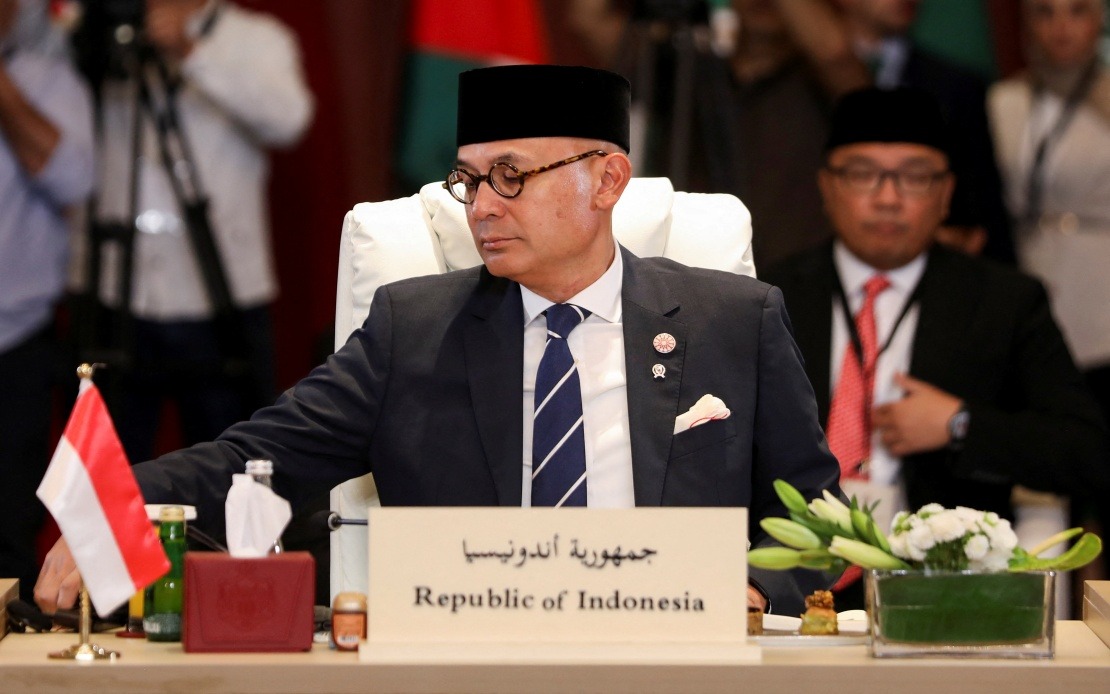
Indonesia has made an urgent appeal for the international community to establish a unified and comprehensive coalition backing the Palestinian cause, emphasising that this struggle transcends religious boundaries and concerns all nations committed to justice and international law. Speaking at the Ministerial Meeting on Jerusalem in Amman, Jordan, on Wednesday, Deputy Foreign Minister Arrmanatha Nasir—representing Foreign Minister Sugiono—stressed that the Palestinian issue demands a coordinated response that moves beyond fragmented, ineffective diplomatic gestures.
The core of Indonesia's argument centres on a strategic observation: Israel has consistently exploited international division to advance its agenda with impunity. By presenting a fractured global response, the international community has inadvertently enabled continued violations without meaningful consequences. Nasir called explicitly for the abandonment of outdated diplomatic frameworks that have failed to produce substantive results, instead advocating for approaches grounded in strategic coherence and collective resolve.
Indonesia's diplomatic initiative comprises five concrete proposals designed to strengthen the international response to the Palestinian situation. First, the country advocates for developing a unified strategic vision anchored in solidarity and common purpose. Second, Jakarta insists on rigorous enforcement of international law and compliance with International Court of Justice rulings—a particularly significant point given the ICJ's recent advisory opinion on Israeli settlements. Third, Indonesia proposes accelerating international recognition of Palestinian statehood, currently an incomplete objective that weakens Palestinian negotiating leverage. Fourth, strengthened protection mechanisms for the Al Aqsa Mosque must be established, alongside commitment to Gaza's reconstruction and development. Fifth, Indonesia emphasises the importance of fostering Palestinian national unity and preserving the mandate of the United Nations Relief and Works Agency for Palestine Refugees in the Near East (UNRWA), which provides essential services to millions.
The context for this intervention reflects profound shifts in West Asian geopolitics. The expansion of Israeli settlements in the West Bank continues unabated despite international condemnation. Military operations in Gaza, Syria, and Lebanon have intensified civilian suffering and regional instability. Simultaneously, escalating tensions between the United States and Iran introduce additional layers of complexity and danger. These converging developments underscore why Indonesia argues that isolated national responses prove inadequate; only coordinated international pressure can reshape the political calculus in ways that advance Palestinian interests.
Indonesia's historical position on Jerusalem holds particular diplomatic weight. The country reaffirmed its support for the Hashemite Custodianship over holy sites, including Al Haram Al Sharif, reflecting Jakarta's recognition of Jordan's custodial role and the broader Islamic world's spiritual investment in Jerusalem's status. This framing allows Indonesia to position itself not merely as an advocate for Palestinian rights but as a guardian of sacred Islamic heritage, lending additional legitimacy and urgency to its diplomatic campaign.
The Amman gathering itself represented a significant diplomatic achievement, drawing together foreign ministers and senior officials from Malaysia, Algeria, Saudi Arabia, Iraq, Egypt, Türkiye, Tunisia, Somalia, Pakistan, Morocco, Palestine and Qatar, alongside the League of Arab States' Secretary-General. The breadth of participation demonstrates that Palestinian concerns command attention across the Muslim world and beyond, though the absence of Western nations underscores the North-South diplomatic divide on this issue.
The joint statement adopted at the conclusion reflected convergence on several key principles. Participants rejected unilateral relocation of diplomatic missions to Jerusalem as violations of international law—a pointed reference to the United States decision and pressure on other nations to follow suit. The meeting called for strengthened Palestinian institutions specifically in Jerusalem, recognising that institutional capacity in the occupied territories directly affects Palestinians' ability to govern themselves and prepare for statehood. Significantly, the ministerial group endorsed coordinated media campaigns to publicise Israeli actions and their destabilising effects on regional and international security.
For Malaysia and other Southeast Asian nations, Indonesia's initiative carries important implications. Southeast Asian countries maintain diverse interests in Middle Eastern affairs, ranging from significant Palestinian diaspora communities to economic ties with various regional actors. Indonesia's call for strategic unity without explicitly demanding nations abandon existing relationships offers a diplomatic framework through which Southeast Asian capitals can strengthen Palestinian advocacy without sacrificing pragmatic engagement with other parties. The emphasis on international law and ICJ rulings provides legally defensible grounds for enhanced diplomatic activism.
The Palestinian cause has historically animated Indonesian foreign policy, reflecting both historical Islamic solidarity and Jakarta's broader commitment to anti-imperialism and self-determination. By framing the Palestinian issue as a universal human rights concern rather than purely a religious one, Indonesia attempts to broaden the coalition beyond traditional supporters. This rhetorical strategy recognises that sustainable international pressure requires buy-in from non-Muslim nations and secular governments concerned with international legal order and humanitarian principles.
Yet Indonesia's diplomatic push faces significant structural obstacles. Western nations, particularly those allied with the United States, remain unlikely to alter their approach substantially. The Abraham Accords normalisation agreements between Israel and Arab states complicate the unity Indonesia seeks. Internal Palestinian divisions between Fatah and Hamas continue to undermine collective Palestinian negotiating capacity. Without addressing these factors, even well-intentioned international coalitions struggle to translate rhetoric into tangible policy changes.
The emphasis on UNRWA's mandate reflects recognition that humanitarian infrastructure directly shapes Palestinian civilian welfare and stability. Efforts to undermine UNRWA's operations, whether through funding restrictions or institutional pressure, become therefore not merely administrative matters but fundamental threats to Palestinian survival and dignity. Indonesia's insistence on protecting this agency signals serious commitment to Palestinian material welfare, not merely symbolic gestures.
Indonesia's Amman initiative should be understood as part of a broader Jakarta strategy to position itself as the Muslim world's primary diplomatic voice on Palestinian matters. By articulating specific, implementable proposals rather than merely restating solidarity, Indonesia demonstrates willingness to translate moral commitment into strategic action. Whether these efforts materialise into concrete outcomes depends largely on whether other nations match Jakarta's diplomatic intensity with corresponding policy adjustments and whether internal Palestinian politics can achieve the unity that external support alone cannot create.

