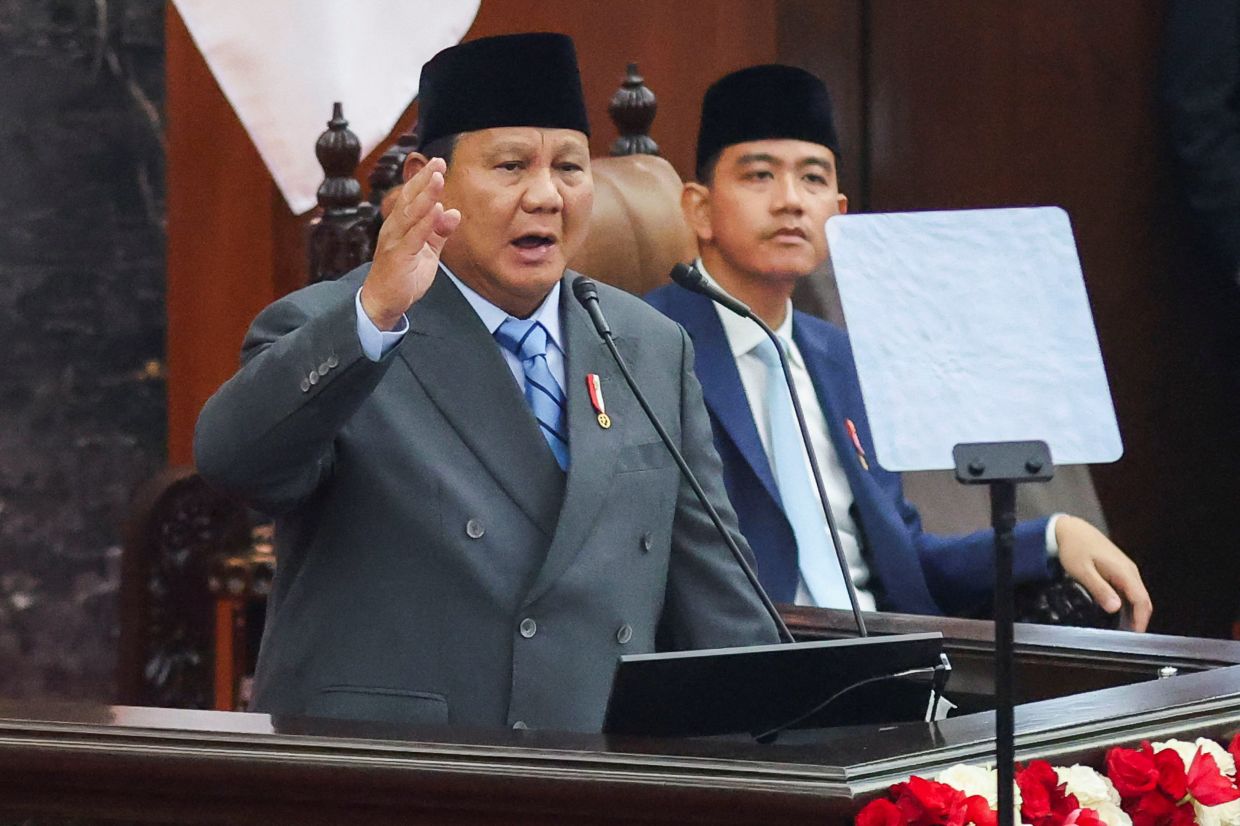
Indonesia is embarking on what its government describes as potentially the largest corporate restructuring in the world, with President Prabowo announcing plans to eliminate more than 750 state-owned enterprises by the close of 2024. The aggressive overhaul represents a dramatic shift in how Southeast Asia's largest economy manages its sprawling public sector, which the president revealed contains far more entities than previously understood. Speaking during his state of the nation address to parliament, Prabowo outlined a sweeping consolidation programme that will reduce the total number of state enterprises from 1,074 to fewer than 300, leaving only those deemed genuinely productive and valuable to the nation.
The discovery of the true scale of state ownership came as a surprise even to the administration itself. When Indonesia established the Danantara sovereign wealth fund last year to oversee state assets, officials uncovered the staggering figure of 1,074 state-owned enterprises operating across the economy. This revelation shocked the president, who had initially believed the number stood somewhere between 300 and 400. The discrepancy illustrates a fundamental problem plaguing the Indonesian state: a lack of centralised oversight and accountability across the public sector. Many of these enterprises, Prabowo argued, operate with minimal responsibility to national interests, functioning as autonomous entities more concerned with self-preservation than contributing to broader economic goals.
Central to the government's case for restructuring is an alleged pattern of financial deception within state enterprises. Prabowo characterised the problem bluntly, claiming that many firms consistently report fictitious profits while simultaneously reporting losses to different audiences. This accounting manipulation speaks to deeper governance failures that have allowed corruption and mismanagement to fester within Indonesia's public institutions. The president's willingness to publicly accuse enterprise boards of fabricating figures suggests the administration intends to project a tough stance against both corruption and incompetence, positioning the restructuring as a necessary corrective measure rather than a routine administrative adjustment.
The consolidation effort has already yielded tangible results according to official figures. Some 290 enterprises have been closed to date, generating what the government claims is approximately 50 trillion rupiah in annual savings through eliminated overhead costs. These savings derive from reducing executive compensation packages, shutting redundant offices, and cutting discretionary spending on vehicle fleets and business travel. The administration projects that by year-end, further closures will push total savings to over 70 trillion rupiah, equivalent to more than 2.8 billion US dollars. For a developing economy managing fiscal pressures and inflation concerns, such cost reductions represent meaningful resources that could theoretically be redirected toward public services or debt reduction.
Beyond eliminating inefficient entities, the restructuring programme has reportedly strengthened the financial performance of remaining state enterprises. Prabowo cited a dramatic 75 per cent increase in profitability from the previous year, with state enterprises collectively generating 326 trillion rupiah in profits. Whether this improvement reflects genuine operational improvement or simply the removal of loss-making entities from consolidated accounts remains an open analytical question. Nevertheless, the figures allow the administration to argue that selectivity and consolidation produce better outcomes than maintaining a bloated portfolio of underperforming operations.
Addressing the corruption dimension that underlies these problems, Prabowo proposed establishing a special court to investigate management and boards of state enterprises retrospectively over the past three decades. This investigative mechanism would operate outside normal judicial channels, suggesting the administration believes standard courts lack either capacity or sufficient independence to properly examine the systemic failures that characterised state enterprise governance. The proposal reflects Indonesia's ongoing struggle with graft despite numerous institutional reforms, including strengthened anti-corruption laws and the establishment of dedicated investigative commissions. The country's continued ranking of just 34 out of 100 on Transparency International's 2025 Corruption Perceptions Index underscores how deeply embedded corrupt practices remain within both public and private sectors.
Yet alongside the punitive approach, Prabowo offered a carrot to incentivise cooperation. The president suggested lawmakers consider extending a form of amnesty for those willing to acknowledge past wrongdoing and embrace reform. This combination of investigation and forgiveness reflects a pragmatic recognition that purely adversarial approaches to institutional reform often encounter resistance and obstruction. By offering a path to forgiveness for those who cooperate, the government may aim to accelerate information gathering and smooth the transition toward reformed governance structures. The effectiveness of such an amnesty in actually generating genuine reform rather than merely facilitating evasion remains uncertain.
The political context for this restructuring extends beyond administrative efficiency. Public anger over rising living costs has made corruption a rallying cry for protesters across Indonesia and the wider region. High oil prices stemming from Middle East tensions have exacerbated inflation, particularly affecting food and transport costs. Against this backdrop, the free school meals programme that the president championed has attracted criticism for its cost relative to results. Though Prabowo reaffirmed commitment to the initiative, framing it as essential given that one in four Indonesian children suffer from stunting, he acknowledged the need for improved execution and cost discipline. This balancing act reflects how economic pressures have forced the administration to defend signature policies while simultaneously projecting fiscal responsibility.
The administration maintains an optimistic outlook despite current economic headwinds and global uncertainties. Prabowo insisted that Indonesia remains both food and energy secure and expressed confidence that economic growth will reach six per cent by the end of 2026. Current performance sits at 5.3 per cent in the second quarter following 5.6 per cent in the first quarter, though economists have repeatedly questioned the reliability of Indonesia's official growth statistics. The government's emphasis on growth metrics contrasts with the president's stated belief that expansion itself should not be the ultimate objective. Instead, Prabowo framed economic policy as fundamentally concerned with improving living standards for ordinary Indonesians, particularly the poorest segments of society.
For Malaysian observers, Indonesia's state enterprise restructuring offers instructive lessons about managing sprawling public sectors and combating embedded corruption. The discovery that Indonesia's government itself lacked accurate knowledge of how many state enterprises it owned suggests that transparency and centralised asset management represent foundational challenges across Southeast Asian economies. Indonesia's approach combining consolidation, investigation, and selective amnesty may inspire or caution policymakers elsewhere considering similar reforms. The success or failure of this initiative will likely influence how other regional governments approach their own public sector governance challenges in coming years.

