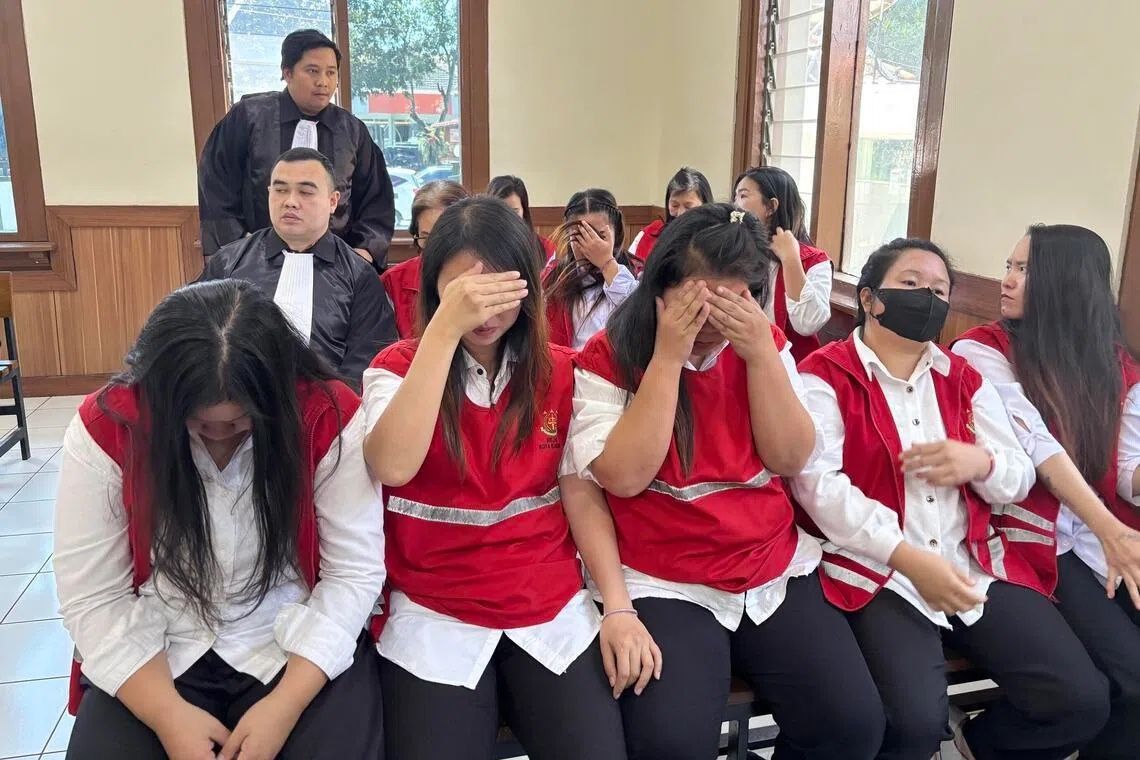
Indonesian prosecutors on Tuesday presented their case against 19 defendants accused of operating a baby trafficking network that has been described as one of the country's largest cross-border human trafficking cases in recent memory. The court heard demands for sentences ranging up to a decade in prison for those convicted of trafficking at least 34 infants during a two-year period, marking a significant escalation in Indonesia's efforts to combat organised trafficking of vulnerable children.
The case centres on the alleged activities of 70-year-old Lie Siu Luan, known informally as Lily or Popo, who investigators identified as the mastermind orchestrating the syndicate's operations. According to prosecutors, Lie oversaw nearly every aspect of the trafficking network, from identifying and recruiting babies from pregnant women or new mothers to preparing falsified documentation and coordinating the transportation of infants across international borders. At least 12 of the trafficked infants were placed in Singapore, with each child commanding a price of between 200 and 250 million rupiah, equivalent to approximately S$18,110.
At the Bandung District Court hearing, prosecutor Cucu Gantina outlined the charges against the accused, seeking to establish that Lie deliberately recruited, harboured, transported and received persons for exploitative purposes in violation of Indonesian law. The prosecution's position reflects the gravity with which authorities view the syndicate's operations and underscores the complex logistics required to move infants internationally through fraudulent adoption channels. The case has exposed significant vulnerabilities in cross-border child protection mechanisms and raised questions about oversight of adoption procedures in both Indonesia and Singapore.
The prosecution's sentencing recommendations differentiated between levels of culpability within the network. Prosecutors demanded the maximum 10-year sentence for Astri Fitrinika, identified as a principal recruiter who directly approached pregnant women and new mothers to offer payment for their babies. Similar sentences were sought for Djaka Hamdani and Elin, both allegedly involved in recruitment activities, as well as for Lai Su Hua, accused of manufacturing false adoption documentation. The remaining 14 defendants, characterised as caretakers who provided temporary housing and care for the infants pending transfer, faced recommendations for five-year sentences, reflecting their supporting rather than leadership roles.
The emotional response from defendants during the hearing underscored the weight of the accusations. Both Lie and Astri became visibly upset as the prosecutor detailed the charges, a reaction their legal representatives would later characterise differently. Lie's attorney, Sendi Sanjaya, contested the fundamental legal basis for the most serious charges, arguing that the critical element of exploitation had not been substantiated. He emphasised that trial evidence demonstrated the trafficked children were maintained in good health and their locations remained documented throughout their placement, suggesting that the conduct fell short of constituting criminal exploitation under Indonesian law.
The defence strategy appears to hinge on distinguishing between unlawful adoption facilitation and actual exploitation. Sanjaya's assertion that the children were properly cared for and accounted for represents an attempt to reframe the charges, though the argument faces a significant obstacle: the very act of trafficking infants through fraudulent channels and separating them from biological mothers for financial gain would ordinarily constitute exploitation under international human trafficking definitions. The approach nonetheless suggests that defence counsel intends to challenge the prosecution's narrative regarding the syndicate's intentional harm to the children.
Astri's legal representative, Hendri Samuel Tampubolon, adopted a different approach by attempting to establish distinctions in culpability within the defendant group. Tampubolon expressed frustration that his client faced identical sentencing recommendations to Lie, despite arguing that Astri operated under Lie's direction and control rather than as an independent decision-maker. He also highlighted Astri's cooperation with law enforcement during investigation and prosecution phases, an argument frequently considered in sentencing matters as evidence of remorse or willingness to facilitate justice. Such cooperation, Tampubolon suggested, warranted differentiation in sentencing between the alleged mastermind and subordinate participants.
The investigation that led to charges was initiated in July 2025 following a report from a West Java resident who had become suspicious of recruitment communications. Dani Hidayat had joined an online adoption community on Facebook while his wife was pregnant and received an unsolicited approach from Astri offering 8 million rupiah in exchange for his child. The casual nature of this contact—a direct financial proposition through a social media platform—demonstrates how openly and brazenly the syndicate apparently operated, suggesting inadequate monitoring of adoption-related communications on mainstream platforms.
International cooperation has emerged as essential to this prosecution. Singapore and Indonesian authorities announced in January a coordinated response to the case, reflecting recognition that trafficking networks operating across the Strait of Malacca require bilateral investigation and prosecution. During trial testimony, Lie identified four Singaporeans allegedly serving as adoption intermediaries, referred to in court records only by aliases: "Petter," "John," "Mr Tan" and "Mr Chew." The involvement of Singapore-based agents raises important questions about oversight mechanisms in the city-state's adoption sector and whether similar networks may have operated previously without detection.
The case exemplifies vulnerabilities in adoption systems across the region that prioritise speed and accessibility over rigorous vetting and verification. Pregnant women and new mothers facing economic hardship became targets for recruitment, a dynamic reflecting broader socioeconomic disparities within Indonesia. The syndicate's apparent ease in obtaining falsified documents and transporting infants internationally suggests systemic weaknesses in administrative controls and border screening procedures. These vulnerabilities have implications extending beyond this specific case, as they indicate that similar trafficking networks could potentially operate undetected in the region.
The trial's next phase will see the defendants present their formal legal defences, with hearings scheduled for the following week. The defence case represents a critical juncture where legal arguments regarding exploitation, coercion and voluntary participation will be tested against evidence and testimony gathered during investigation. The outcomes of these proceedings will significantly influence sentencing determinations and may establish important precedents for how Indonesian courts prosecute complex trafficking cases involving multiple participants and cross-border elements.
For Malaysia and the broader Southeast Asian region, this case serves as a stark reminder of the trafficking risks that persist within adoption and child welfare systems despite regulatory frameworks. The case demonstrates that sophisticated criminal networks can exploit gaps between legitimate adoption processes and inadequate verification mechanisms. Regional governments, particularly Malaysia, may need to reassess oversight of adoption agencies, tighten documentation requirements and improve cross-border information sharing to prevent similar networks from establishing operations. The prosecution's efforts in Bandung will be closely watched as indicators of the region's commitment to protecting vulnerable children from organised exploitation.

