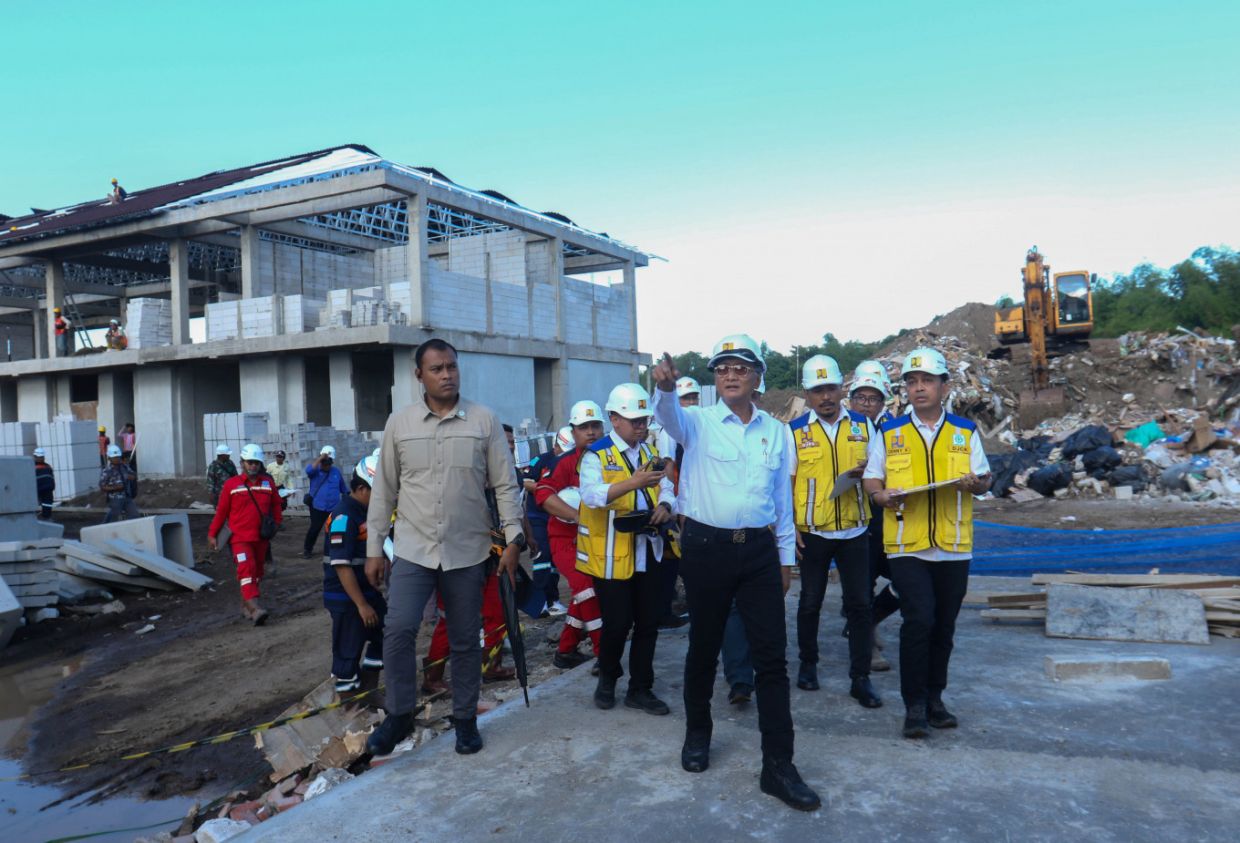
Indonesia's Public Works Minister Dody Hanggodo has drawn considerable criticism following the disclosure that his wife and daughter were listed as part of an official government delegation traveling to the United States for a United Nations-convened meeting. The controversy highlights growing concerns about transparency in government operations and the appropriate boundaries between ministerial duties and family involvement in state-sponsored activities, issues that resonate across Southeast Asia where similar governance challenges persist in various administrations.
The dispute became public after a ministry document circulated widely on social media, revealing that eight individuals were scheduled to travel to New York between July 13 and 19. The letter, signed by Ministry Secretary-General Apri Artoto on June 29, explicitly named Irma Hermawati, Hanggodo's wife, and Aurellia Tsabitha Meidirama, his daughter, as delegation participants. The document further specified that Irma would travel using a diplomatic passport while Aurellia would hold an ordinary travel document, suggesting different official statuses for the two family members.
The delegation's stated purpose was to represent Indonesia at the High-level Meeting on the Midterm Review of the New Urban Agenda, a gathering organised by the United Nations General Assembly and coordinated by the UN Human Settlements Programme, scheduled for July 16 and 17 in New York. Urban development policy remains increasingly important across the Asia-Pacific region, as nations grapple with rapid urbanisation, infrastructure demands, and sustainable city planning. Indonesia's participation in such international forums is legitimate and necessary, but the inclusion of family members in such delegations raises questions about representational roles and official necessity.
The disclosure triggered substantial public backlash, particularly given President Prabowo Subianto's administration has launched an austerity programme aimed at reducing unnecessary government expenditures. Online criticism centred on whether the minister's family members contributed essential expertise or representation that justified their inclusion, or whether their participation represented an unnecessary extension of ministerial privilege. The timing of such a controversy during an austerity drive amplifies perceptions of inconsistency between government messaging about fiscal discipline and actual ministerial practices.
Ministry officials have attempted to deflect concerns by emphasising that no state budget would fund the family members' expenses. Apri stated that if Irma and Aurellia participated in the journey, they would cover all associated costs from personal resources. He further clarified that the inclusion of both individuals in travel documents served primarily to facilitate visa applications through the Foreign Ministry, and he defended the diplomatic passport issuance for the minister's wife as consistent with existing regulations. These explanations, while technically addressing the financial aspect, do not fully address the legitimacy questions surrounding their official delegation status.
However, these assurances have failed to satisfy either public opinion or government oversight bodies. Maneger Nasution, a member of Indonesia's Ombudsman office, called for substantially greater transparency regarding the inclusion decision and requested detailed clarification about how the ministry would prevent the use of state facilities or publicly financed resources for the family members' participation. Nasution emphasised that beyond financial accounting, the ministry must demonstrate that the participation was legally justified, free from conflicts of interest, and involved no abuse of ministerial authority for personal benefit.
The controversy also acquires additional significance given Hanggodo's background in business and politics. Before his current position with the Democratic Party, the 60-year-old minister maintained business connections with Andi "Haji Isam" Syamsuddin Arsyad, a South Kalimantan businessman whose enterprises are involved in President Prabowo's substantial food estate project in Merauke, South Papua. These pre-existing relationships raise questions about potential conflicts of interest and whether ministerial decisions consistently prioritise public welfare over private advantage, concerns that extend to questions about who receives institutional benefits and access.
Previously, Hanggodo alleged that a "deep state" had attempted to undermine him after an internal audit document from his ministry was leaked, which contained allegations that influential figures sought to implicate him in a corruption case. That prior controversy, combined with the current family delegation incident, establishes a pattern of governance questions surrounding the minister's tenure and decision-making processes. Taken together, these developments suggest ongoing tensions between the minister and oversight institutions attempting to enforce accountability standards.
For Malaysia and other Southeast Asian nations observing these developments, the Hanggodo controversy illustrates broader institutional challenges common across the region. The tension between ministerial discretion and public accountability, the appropriate use of official designation for family members, and the capacity of oversight bodies to impose meaningful scrutiny on senior officials remain recurring governance issues. Indonesia's Ombudsman response demonstrates that institutional checks exist, though their effectiveness in changing behaviour or imposing consequences remains uncertain, a dynamic familiar to regional observers.
The incident also raises practical questions about how government delegations should be structured and which roles genuinely require official status versus what constitutes family accompaniment that should remain private. As Asian governments increasingly integrate family members into official activities, establishing clearer guidelines about representational necessity, cost transparency, and conflict-of-interest management becomes increasingly important. Malaysia and other nations wrestling with similar transparency challenges may find lessons in how Indonesia's oversight institutions respond to this particular controversy and whether consequences follow.

