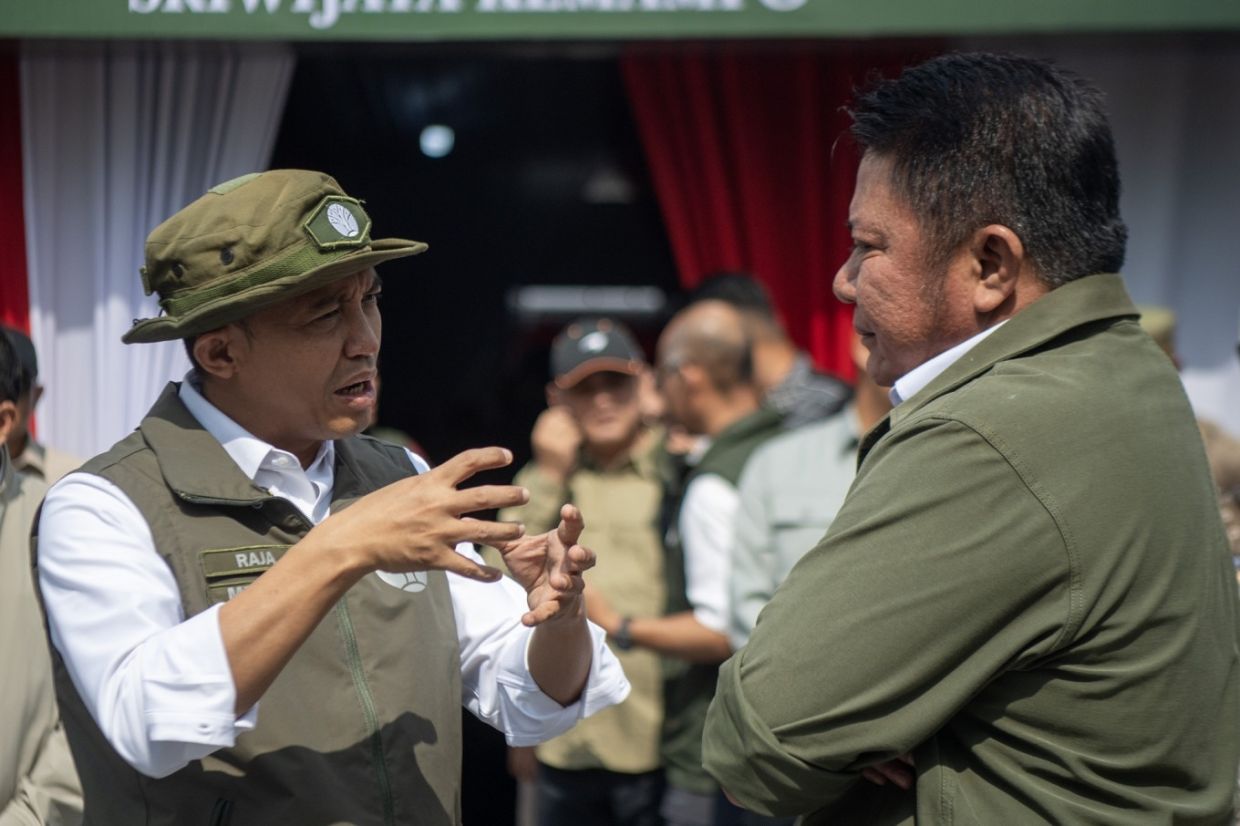
Indonesia's Corruption Eradication Commission (KPK) has reopened its investigation into Forestry Minister Raja Juli Antoni on suspicion that he did not fully return alleged bribes received from a regional official, casting a shadow over the minister's credibility and raising fresh questions about whether high-level government officials are properly complying with the country's stringent anti-corruption framework.
The focus of the probe centres on a discrepancy between the amount of illicit money the minister previously acknowledged receiving and the total sum allegedly handed over by Suhardiman Amby, the regent of Kuantan Singingi in Riau province. According to KPK spokesperson Budi Prasetyo, investigators are examining reports of this gap in the figures reported by Raja Juli and the actual amount transferred during what officials say was an improper gift-giving arrangement. The minister's explanation that he rejected and returned the funds is now under intense scrutiny as authorities attempt to establish the precise flow of money.
The alleged incident traces back to a June 2 meeting between the Forestry Ministry and the Kuantan Singingi administration, during which the regent reportedly presented Raja Juli with an envelope containing Singapore dollars. The KPK has determined that the envelope initially held S$14,000, equivalent to approximately US$10,919. Beyond this direct transfer to the minister, several other forestry officials also allegedly received S$12,500 in kickbacks from various Kuantan Singingi officials, suggesting a broader pattern of attempted influence across multiple government functionaries. These subsidiary payments underscore the systematic nature of what investigators believe was a calculated effort to secure ministerial favour.
Raja Juli reported the incident to the KPK on July 3, claiming he had declined the improper gift and had returned the envelope to Kuantan Singingi Police headquarters on June 12, merely ten days after the fateful meeting. The minister's account suggests he acted with appropriate rectitude by immediately rejecting and reporting the bribery attempt. However, the emerging investigation challenges this narrative, with the anti-corruption body now questioning whether the full amount was genuinely returned or whether some portion remained in his possession. This discrepancy, however small, carries significant legal and political implications in a nation where public trust in government officials remains fragile.
The legal framework governing such conduct is unambiguous: under Indonesian law, public officials must report improper gifts to the KPK rather than to police, and they must do so within thirty days of receiving them to avoid criminal prosecution. Violations of this protocol carry severe penalties, including up to twenty years imprisonment and fines of Rp 1 billion—approximately US$55,867. For a cabinet-level minister, such penalties would represent catastrophic career destruction and personal ruin, making the current investigation potentially consequential for Raja Juli's political future.
The suspected bribery appears connected to a larger forestry concession matter. The Kuantan Singingi administration had proposed that the ministry reclassify over 1,800 hectares of limited production forest (HPT) designated land in the regency, a decision that would unlock commercial or developmental opportunities for the region. Investigators are examining whether the cash transfers were incentives designed to influence the ministry's evaluation of these reclassification requests, transforming what might appear as routine administrative courtesy into calculated corruption. Such forest conversion decisions affect regional economies, Indigenous land rights, and environmental sustainability, making the corruption allegations particularly sensitive within both conservation and development circles.
Prior to the June meeting, Raja Juli had allegedly convened with Suhardiman at least three separate occasions during April, May, and June, according to Budi's disclosure. The frequency of these encounters suggests either sustained negotiation or deliberate relationship-building, though investigators have not yet publicly clarified whether the meetings were coordinated elements of a larger scheme or coincidental contacts. The pattern of repeated engagement provides prosecutors with potential evidence of systematic rather than impulsive misconduct.
Suhardiman himself faces serious legal jeopardy. The regent, a politician affiliated with President Prabowo Subianto's Gerindra Party, was arrested and designated as a suspect in late June after the KPK discovered he had allegedly received kickbacks from his own regional secretary, Zulkarnain, in exchange for official appointment. The KPK subsequently expanded the investigation to encompass the alleged payments to the Forestry Ministry, linking the regent's apparent bribery network to central government institutions. This expansion demonstrates how anti-corruption investigators often uncover widening circles of misconduct through systematic document analysis and witness interviews.
The situation has intensified political pressure on Raja Juli, who additionally serves as secretary-general of the Indonesian Solidarity Party (PSI). Members of the House of Representatives Commission IV, responsible for forestry oversight, have demanded clarification from the minister. Yet Raja Juli conspicuously absent himself from a scheduled meeting with Commission IV on July 14, with Deputy Chair Alex Indra Lukman from the Indonesian Democratic Party of Struggle (PDI-P) explaining that the minister was undertaking an umrah pilgrimage at that time. This absence, whether justified or strategic, has invited speculation about whether Raja Juli is maintaining operational normalcy or attempting to avoid hostile questioning during a sensitive investigation phase.
The Forestry Ministry has issued a formal statement reaffirming its commitment to full cooperation with the KPK investigation and pledging to furnish any requested data or documentation. Ministry officials have emphasized that no forest reclassification decisions have been finalized to date regarding Kuantan Singingi's proposals, with recent submissions either rejected or pending further technical verification. This assertion appears designed to rebut any suggestion that the alleged bribes successfully influenced actual policy outcomes, though the absence of immediate tangible results does not necessarily exonerate the recipients from accepting improper consideration.
For Malaysian observers, this case illuminates the persistent challenges facing even institutionally robust anti-corruption bodies when confronting high-level official misconduct. The KPK's determination to reopen investigative lines and scrutinize apparent inconsistencies in ministerial accounts demonstrates institutional independence and commitment to accountability. Yet the investigation also reveals how senior officials can navigate complex procedures and exploit bureaucratic ambiguities, from claiming police rather than KPK reporting to arguing umrah commitments prevent legislative accountability. The case suggests that regardless of enforcement infrastructure's sophistication, political culture and institutional transparency remain foundational to meaningful anti-corruption progress across Southeast Asia.

