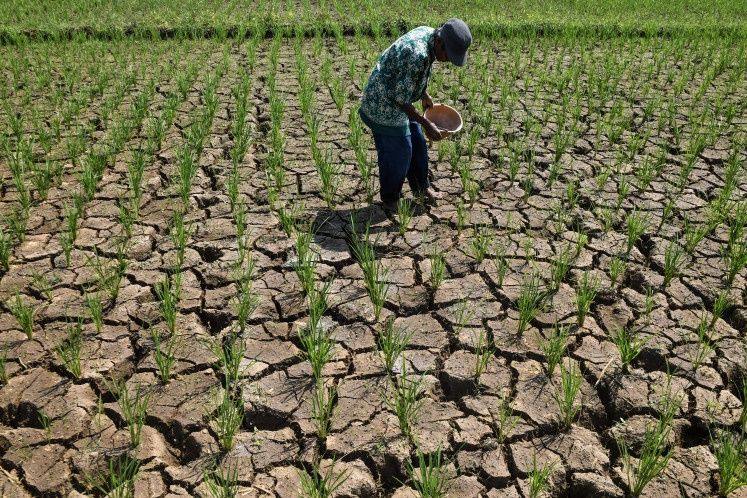
Indonesia's struggle with water scarcity is accelerating as climate conditions deteriorate and the El Niño phenomenon strengthens its grip on the archipelago. Regions stretching from Yogyakarta to East Java are grappling with acute drinking water shortages, while weather forecasts suggest the crisis could persist and worsen through the critical farming months ahead. The National Disaster Mitigation Agency (BNPB) has mobilised resources across affected districts, yet officials acknowledge that existing emergency responses may prove inadequate if rainfall patterns remain suppressed as predicted.
Three additional regions—Gunungkidul in Yogyakarta, Semarang in Central Java, and Jember in East Java—were formally added to the crisis list following BNPB's latest assessment, bringing approximately 700 more households into the affected population. This expansion comes as authorities already struggle to serve more than 7,100 households across previously identified hotspots including Cilacap, Klaten, and Jepara in Central Java; Bantul in Yogyakarta; and multiple districts across West Java and Maluku. Water distribution trucks now operate as lifelines in communities where traditional supply systems have dried up, a temporary solution that underscores the urgency of the unfolding situation.
Government agencies have activated formal emergency protocols to expedite relief operations. Gunungkidul instituted a 90-day drought alert in June, while West Java followed suit this month, enabling faster mobilisation of resources and bypassing normal bureaucratic procedures. West Lombok declared an outright drought emergency on June 15, affecting approximately 3,600 households, while Banten remained in assessment mode as authorities weighed whether to declare a province-wide alert. These administrative designations matter considerably in the Indonesian system, as they unlock pre-positioned funds and allow regional governors to reallocate budgets toward emergency water distribution without legislative approval.
The meteorological foundation for this crisis lies in El Niño conditions—elevated sea surface temperatures across the Pacific Ocean that disrupt established weather patterns and suppress rainfall across Southeast Asia. Indonesia's Meteorology, Climatology and Geophysics Agency (BMKG) has characterised this year's dry season as potentially "extreme," a designation that carries serious implications for agricultural output and household food security. By mid-June, more than one-third of Indonesia's climate zones had formally transitioned into dry season conditions, with nearly half the nation already experiencing below-normal precipitation. The situation will intensify further, with BMKG forecasting that more than 80 percent of the archipelago will receive below-normal rainfall during the critical July-to-September period when agricultural water demands peak.
This convergence of climatic stress and farming calendars represents a significant threat to national food production. The government has implemented various countermeasures, including adjustments to planting schedules and promotion of drought-resistant crop varieties, measures that BMKG climatology deputy Ardhasena Sopaheluwakan outlined as essential to minimise harvest failures. Agriculture Minister Amran Sulaiman has publicly assured Indonesians that the ministry has adopted proactive strategies, particularly expanded irrigation pump deployment to sustain water availability throughout the planting cycle. The government has sought to calm market concerns by repeatedly emphasising that national rice reserves remain at historically elevated levels, theoretically sufficient to meet domestic demand through the coming year and buffer against potential supply disruptions.
Despite these reassurances, food security concerns linger among policymakers and analysts. Experts have cautioned that prolonged drought coupled with inadequate water infrastructure investment could trigger rice price inflation and jeopardise the nation's agricultural self-sufficiency goals. The House of Representatives' Commission IV, which supervises agriculture and fisheries portfolios, has pressed the government to accelerate support in vulnerable regions, particularly through provision of seeds, fertilisers, mechanical equipment, and livestock feed. These interventions acknowledge that drought impacts ripple through multiple agricultural sectors, from crop production to animal husbandry, requiring coordinated policy responses rather than singular water-focused initiatives.
However, the reliance on emergency tanker distribution and temporary measures masks deeper structural vulnerabilities in Indonesia's water management systems. Bagas Yusuf Kausan, a researcher at think tank Yayasan Amerta Air Indonesia, argues that sustainable solutions demand substantial investment in piped water infrastructure operated by regional utilities (PDAM), particularly in chronically drought-prone areas. Such infrastructure, he suggests, should be subsidised to ensure affordability for poorer communities that currently bear disproportionate burdens during water crises. This perspective reflects a growing recognition among policy analysts that annual drought cycles have become normalised in certain regions, necessitating permanent infrastructure solutions rather than episodic emergency responses.
Environmental degradation amplifies the drought's severity, a factor that often receives less political attention than climate variables. Land conversion for urban development, agricultural expansion, and industrial purposes has reduced water catchment areas and diminished groundwater recharge capacity across multiple regions. Simultaneous depletion of aquifers through unregulated extraction has left many communities increasingly vulnerable to rainfall shortfalls, as depleted underground reserves can no longer buffer seasonal dry periods. Kausan contends that the government should leverage the current El Niño crisis as a political moment to strengthen regulatory oversight of land-use conversion, particularly in water catchment zones and areas supplying critical aquifers. Without such intervention, future dry seasons will likely inflict comparable or worsening hardship regardless of climate patterns.
For Malaysian observers, Indonesia's drought crisis carries regional implications. As the region's largest agricultural producer, Indonesia's harvest disruptions affect regional food prices and supply security, potentially influencing Malaysian import costs for staple foods. The crisis also illustrates the vulnerability of Southeast Asian infrastructure to climate variability, a pattern Malaysia must consider in its own long-term water and agricultural planning. Indonesian government responses—both successes in emergency coordination and failures in long-term infrastructure investment—offer comparative lessons for regional policymakers contemplating climate resilience strategies. The broader context suggests that without substantial investment in water infrastructure and environmental protection across the region, recurring droughts will continue imposing significant economic and social costs throughout Southeast Asia.

